
Facing pressure from lawmakers on both sides of the aisle, the Justice Department's internal watchdog announced on April 23, 2026 that it would conduct a formal audit into how the agency managed the release of records tied to the Jeffrey Epstein investigation — a process marred by missed deadlines, uneven redactions, and the unintended disclosure of alleged victims' personal information.
The Office of Inspector General (OIG), an independent arm of the Justice Department, confirmed it is examining the agency's compliance with the Epstein Files Transparency Act, a bipartisan law signed in November 2025 that directed the DOJ to make nearly all investigative materials related to Epstein and his former associate Ghislaine Maxwell available to the public.
The review covers three core concerns: how records were gathered and identified for release, how redaction decisions were made, and how the department responded to problems that emerged after documents began going online — including a temporary takedown of thousands of files after victims' identities were inadvertently published.
Deputy Inspector General William M. Blier announced the audit, which will be overseen by Don Berthiaume — named just days earlier as President Trump's nominee for permanent Inspector General. The timing drew attention given ongoing questions about the OIG's responsiveness during the current administration.
The law, catalogued as Public Law No. 119-38, gave the DOJ until December 19, 2025 to release the bulk of its Epstein-related holdings. The department missed that deadline, eventually posting roughly 3.5 million pages by late January 2026 — a figure that represents only about half of the total documents identified as responsive to the statute.
Republican and Democratic lawmakers have both publicly questioned the DOJ's rollout. Among the chief complaints: certain names of wealthy and powerful individuals allegedly connected to Epstein's network appeared heavily shielded, while some alleged victims were left exposed without adequate protection — the reverse of what the law's limited exemptions intended.
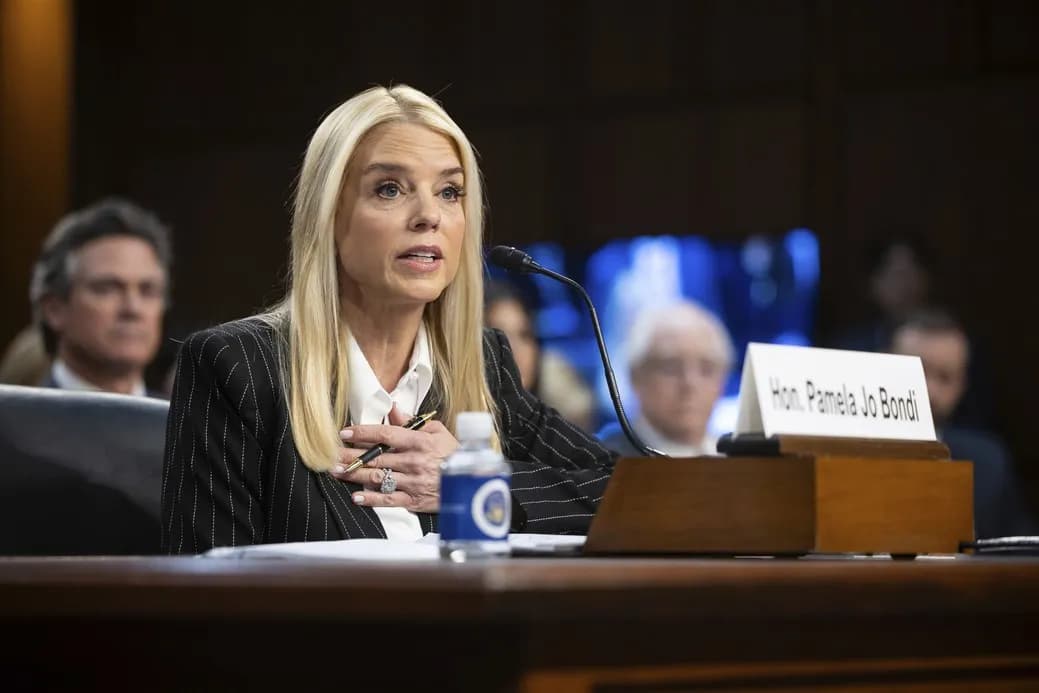
The controversy contributed to the dismissal of former Attorney General Pam Bondi earlier this month. Administration officials said President Trump grew increasingly dissatisfied with how the Epstein file release was being handled, viewing the public backlash as a political liability.
A DOJ spokesperson did not immediately respond to requests for comment on Thursday's announcement.
Department officials have argued that attorneys worked under an extraordinarily compressed timeline to review millions of documents, and that any disclosure of victim information was unintentional. They have also pointed to the volume of material released as evidence of greater transparency than predecessor administrations. That argument has done little to quiet critics who say the redactions protecting certain high-profile figures raise serious questions about selective enforcement of the law.
The OIG pledged to issue a public report on its findings, though officials acknowledged that investigations of this complexity often require years to complete. For advocacy groups and members of the public who have closely followed the Epstein saga, the audit represents at least a formal acknowledgment that the release process fell short.
Epstein, a financier who cultivated relationships with prominent figures across politics, finance, and entertainment, was arrested in July 2019 on federal sex trafficking charges filed under Case No. 1:19-cr-00490 in the Southern District of New York. He died in a Manhattan federal jail the following month under circumstances officially ruled a suicide — though that determination has never fully extinguished public skepticism.
A 2023 OIG investigation into Epstein's death faulted Bureau of Prisons employees for negligence in failing to follow proper protocols but did not challenge the FBI's suicide finding. Maxwell, convicted in December 2021 on multiple counts related to grooming and trafficking minors for Epstein, is currently serving a 20-year prison sentence.
The new audit injects fresh scrutiny into the DOJ at a moment when the Inspector General's office has itself faced criticism. Watchdog advocates have argued the OIG has been insufficiently vocal about sweeping personnel changes at the Justice Department under the Trump administration, including the dismissal of dozens of prosecutors and agents who previously led investigations into the president and his allies.
"The OIG will evaluate the DOJ's processes for identifying, redacting, and releasing records in its possession as required by the act.
— DOJ Office of Inspector General Announcement, April 23, 2026
Core Focus Areas of the OIG Audit
Collection and Production: How the DOJ identified and gathered materials covered under the transparency law.
Redaction Review: Whether guidance used to withhold information was applied consistently and lawfully — including concerns that victims were exposed while powerful figures were over-protected.
Post-Release Accountability: How the department addressed fallout from publishing sensitive material, including the temporary removal of thousands of documents.
Background and Wider Context
The Epstein Files Transparency Act passed with rare bipartisan support, reflecting broad public demand for accountability in a case that has lingered in the national consciousness for years. The law's passage in November 2025 came after sustained pressure from advocacy organizations, journalists, and lawmakers who argued the public had a right to understand the full scope of Epstein's conduct and the network of individuals who enabled it.
The DOJ's portal at justice.gov/epstein currently hosts the released materials, though the second half of identified documents remains outstanding. The OIG has not indicated a specific timeline for completing its review.
Case at a Glance
✓ Original case: 1:19-cr-00490 (RMB), Southern District of New York
✓ Transparency law signed: November 2025 (Public Law No. 119-38)
✓ Initial deadline missed: December 19, 2025
✓ Pages released by January 2026: ~3.5 million (approx. 50% of total)
✓ OIG audit launched: April 23, 2026
✓ Former AG Bondi dismissed: April 2026
✓ IG nominee: Don Berthiaume
The audit is expected to take considerable time. Its conclusions could shape how the DOJ and future administrations handle large-scale transparency mandates in politically sensitive investigations.
What Comes Next
With the audit now formally underway, attention shifts to whether the OIG will find that the DOJ's redaction decisions were legally justified — or whether the record shows that powerful individuals received preferential protection at the expense of the law's transparency mandate.
The findings, whenever they arrive, are likely to reignite debate over accountability in a case that has already reshaped careers, prompted congressional hearings, and sustained public fascination for years. For now, the Inspector General's review is the most concrete mechanism available to assess whether the law meant to bring closure instead created new controversies.
Observers across the political spectrum say they will be watching closely to see whether the audit produces substantive accountability or becomes another chapter in a saga defined by unanswered questions.