
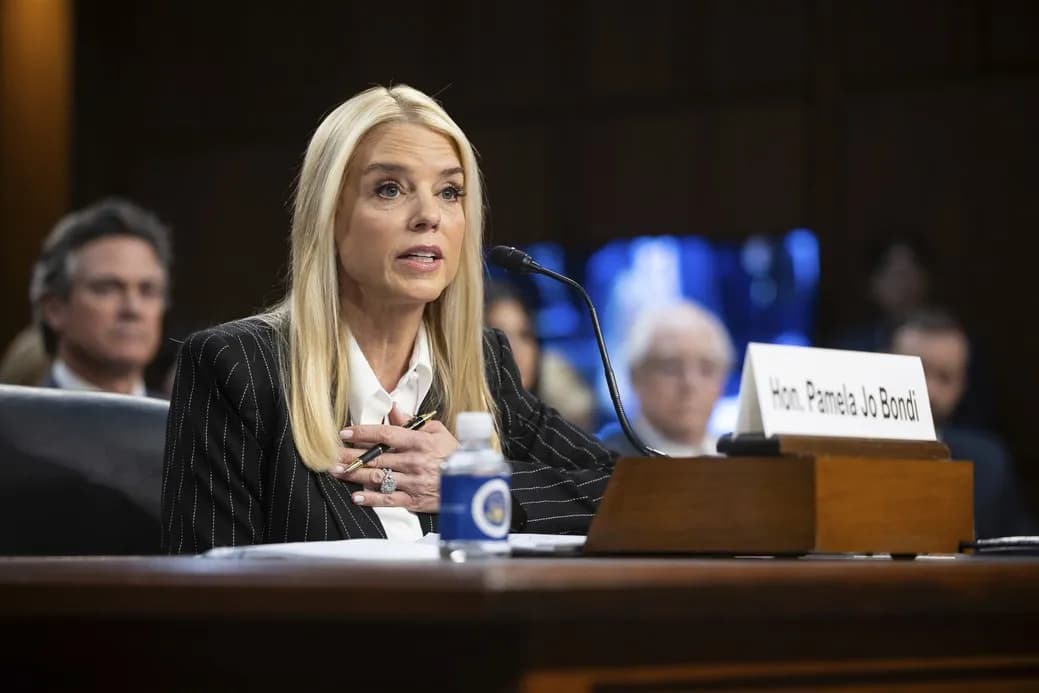
Attorney General Pam Bondi received a subpoena from Congress on Tuesday. She was called to answer questions concerning the Justice Department's sex trafficking investigation into Jeffrey Epstein. The subpoena also addressed the agency's management of millions of files connected to the disgraced financier. The Committee on Oversight and Government Reform ordered Bondi to attend for a deposition on April 14, following a vote earlier this month supported by five Republicans.
A US congressional committee said Tuesday that it has subpoenaed Attorney General Pam Bondi to testify behind closed doors in its investigation into the late convicted sex criminal Jeffrey Epstein. Bondi is required by the subpoena to give a sworn deposition to the House Oversight Committee on April 14.
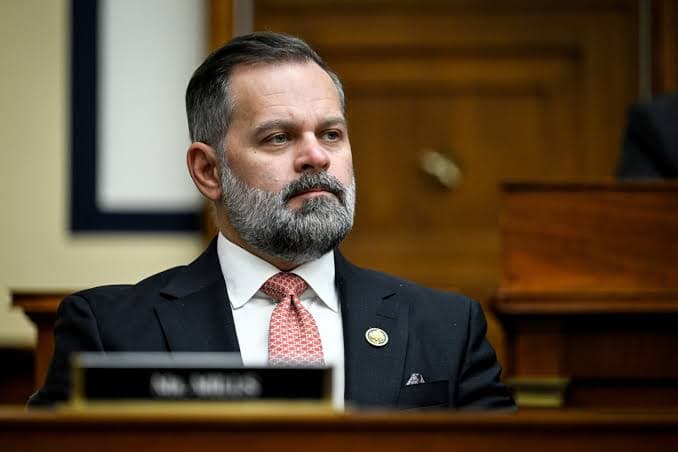
Representative James Comer of Kentucky, the Republican chairman of the House Oversight Committee, said in a letter to Bondi on Tuesday that the panel needs details about the Justice Department's acquisition, analysis, and distribution of Epstein-related data. The Republican chairman noted that his committee is looking into the "possible mismanagement" of the investigation.
This isn't just a single hearing; it's about the public's right to know the whole truth. The subpoena of Attorney General Pam Bondi over the Jeffrey Epstein files taps into long-running concerns that powerful people may have been protected or that key details were kept out of view. If lawmakers believe information was mishandled or hidden, it could seriously damage trust in the Department of Justice.
"As Attorney General, you are directly responsible for overseeing the Department's collection, review, and determinations regarding the release of files pursuant to the Epstein Files Transparency Act, and the Committee therefore believes that you possess valuable insight into these efforts.
— Rep. James Comer, House Oversight Committee Chairman
"The Committee has questions regarding the Department of Justice's handling of the investigation into Jeffrey Epstein and his associates and its compliance with the Epstein Files Transparency Act," Rep. James Comer told Bondi in a letter. "As Attorney General, you are directly responsible for overseeing the Department's collection, review, and determinations regarding the release of files pursuant to the Epstein Files Transparency Act, and the Committee therefore believes that you possess valuable insight into these efforts," according to his letter.
Lawmakers have protested that the redactions in the Justice Department's files appear to exceed the Epstein Files Transparency Act's narrow exclusions. The department has also denied to publish a considerable amount of documents, citing legal protections. Bondi is accused of concealing the names of Epstein's prominent associates in its release of millions of records about the late financier.
The effort comes weeks after Nancy Mace filed a demand to subpoena Bondi, accusing the Justice Department of a "cover-up" in releasing the Epstein documents.
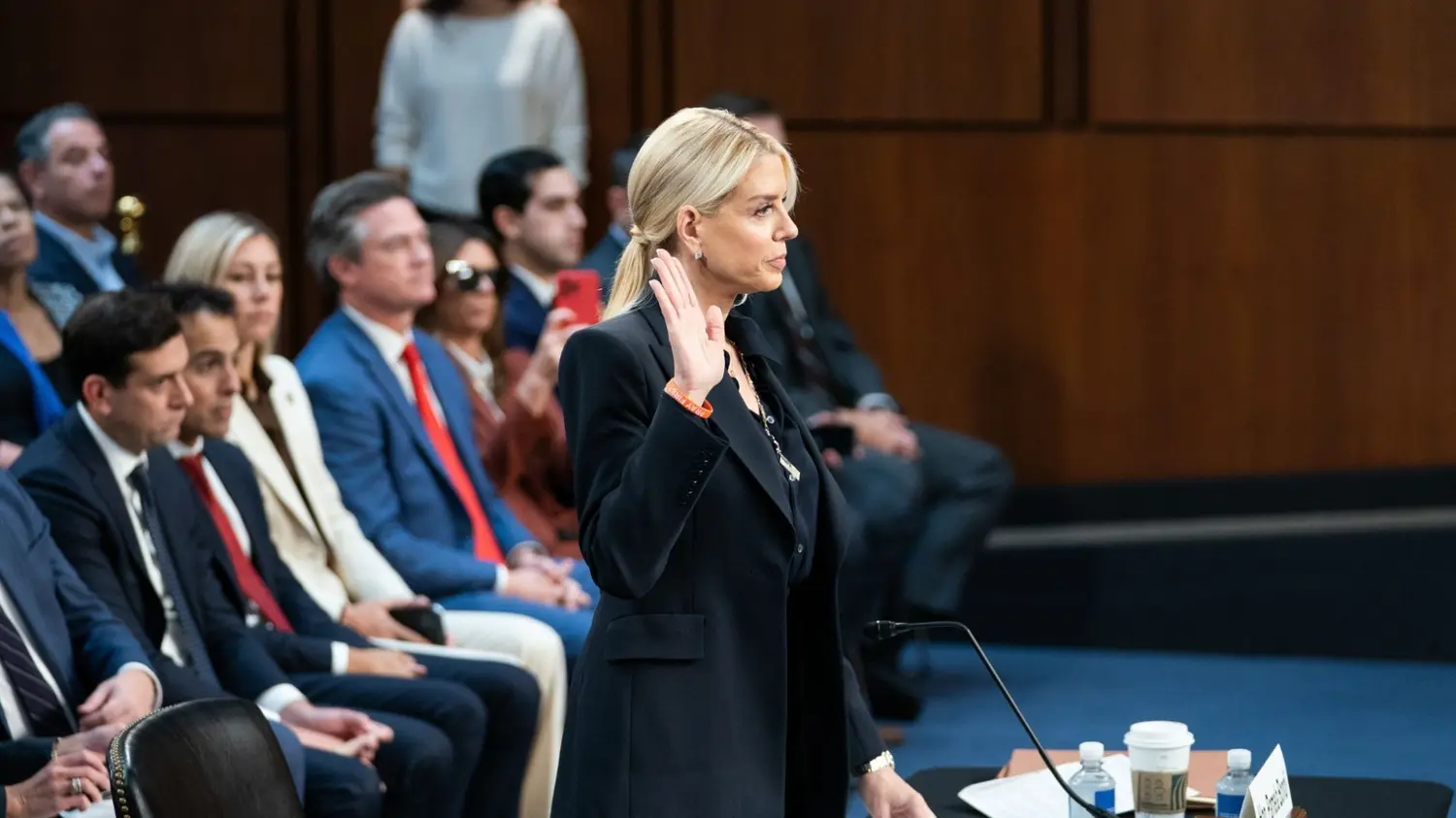
On Tuesday, the agency said the subpoena was "completely unnecessary." A Justice Department official stated that the subpoena was "completely unnecessary" because lawmakers were able to privately study unredacted versions of the Epstein files at a Justice Department facility. Bondi and Deputy Attorney General Todd Blanche were scheduled to hold a private briefing for committee members on Wednesday.
Justice Department Response and Defense
"Lawmakers have been invited to view the unredacted files for themselves at the Department of Justice, and the Attorney General has always made herself available to speak directly with members of Congress," the agency said in a statement. The agency stated that it looks forward to "continuing to provide policymakers with the facts."
Bondi stated that more than 500 Justice Department lawyers worked on a tight timetable to evaluate massive amounts of material. Officials at the Justice Department admitted mistakes in the materials' distribution, but denied that they had safeguarded any prominent individuals.
The Justice Department's inability to defend against the subpoena highlights significant dissatisfaction among President Donald Trump's supporters with Bondi's handling of document review and release. The Trump administration has faced continual political issues since the files' release in December, with critics accusing the department of concealing key records and over-redacting others.
Political Fallout and Ongoing Controversy
In other cases, victims have criticized the government for improper redactions that revealed personal information. The Justice Department has also received criticism for failing to redact the names of Epstein's victims. After millions of documents were made public, the agency received bipartisan criticism, with senators accusing it of failing to conceal some identifying information about survivors while safeguarding the identities of individuals who were not victims.
The Epstein files have followed Bondi throughout her time as attorney general. Some Trump fans accused her of covering up when the Justice Department said in July that it would not release any new information relating to its Epstein investigations.
Background on Epstein Case and Broader Context
Epstein had tight links to influential political and commercial elites before and after his 2008 conviction for soliciting prostitution from a child. He was arrested again in 2019 and died in custody while facing federal sex-trafficking allegations. His death was declared as suicide.
✓ Epstein convicted in 2008 for soliciting prostitution from a child
✓ Re-arrested in 2019 on federal sex-trafficking charges
✓ Died in custody in 2019 — death declared suicide
✓ November 2024: Trump signed the Epstein Files Transparency Act into law
✓ December 2024: DOJ released millions of Epstein-related documents
✓ March 2026: House Oversight Committee votes to subpoena AG Bondi
✓ April 14, 2026: Bondi required to give sworn deposition to committee
Trump claims he severed relations with Epstein years before his 2008 conviction, and he has constantly denied seeing any evidence of sex trafficking. Law enforcement authorities have not accused him of any criminal action involving Epstein.
What Comes Next
Last November, Trump signed legislation passed by Congress requiring the Justice Department to reveal any materials resulting from its investigations into Epstein. If Bondi appears, she will join a growing number of prominent figures who have testified before the House Oversight Committee, including former President Bill Clinton and former Secretary of State Hillary Clinton.
What happens when Bondi goes in front of the House Oversight Committee is what really matters now. People will be paying close attention to how much she says, whether any new information comes out about the Epstein investigation, and whether this turns into a bigger political fight over openness or even more subpoenas and deeper investigations.
The Justice Department has maintained that lawmakers already have access to unredacted files through a dedicated DOJ viewing facility, and that Bondi has always been available to speak with members of Congress directly. Whether that position satisfies the committee — or whether the April 14 deposition proceeds as ordered — will determine the next chapter in one of Washington's most politically charged ongoing disputes.
Lawmakers have been invited to view the unredacted files for themselves at the Department of Justice, and the Attorney General has always made herself available to speak directly with members of Congress.— Department of Justice statement
The subpoena marks a significant escalation between Congress and the Justice Department over the release and management of the Epstein files. With the April 14 deposition deadline set, both sides face pressure to either reach an agreement or prepare for a public confrontation that could reshape the political debate over government transparency and the handling of one of the most scrutinized criminal cases in recent American history.