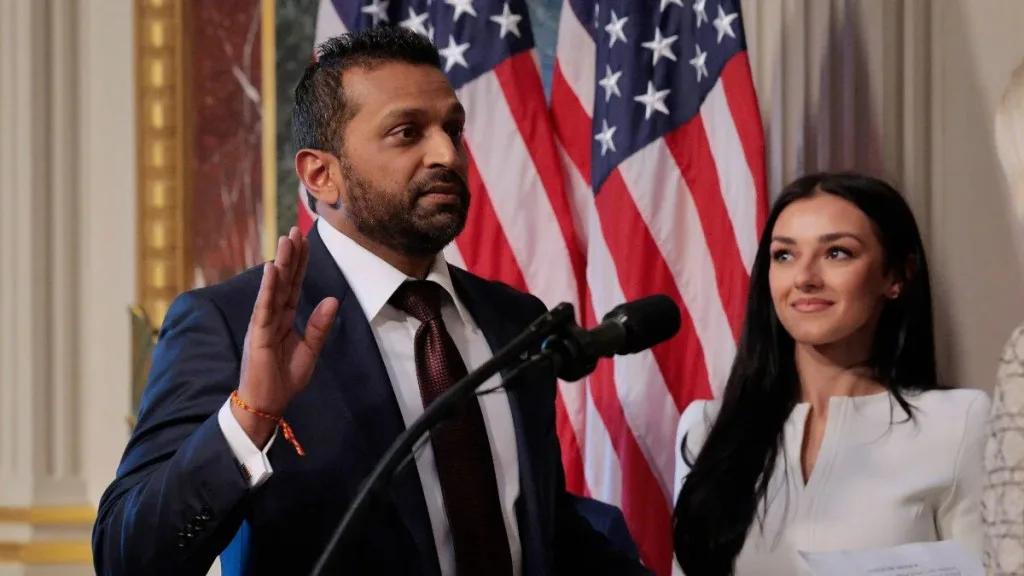
A federal law enforcement agency has turned its investigative machinery on a member of the press — a development that has sent a chill through American newsrooms and ignited a fierce debate over the boundaries of executive power, press freedom, and the appropriate use of government resources. The New York Times reported this week that the FBI launched an inquiry into one of its own journalists after she published a story scrutinizing the personal security arrangements of the bureau's director, Kash Patel.
The journalist at the center of the controversy is Elizabeth Williamson, a Times reporter whose February 28 article examined allegations that Patel had assigned four FBI agents to provide around-the-clock protection for his girlfriend, Alexis Wilkins, a country music singer. According to the report, those agents accompanied Wilkins on trips to the United Kingdom, Illinois, and Nashville — journeys that critics argued had little to do with the national security duties the bureau is tasked with carrying out.
The Times, citing a source with direct knowledge of the matter, reported that FBI agents began searching law enforcement databases for information about Williamson in March 2026 — weeks after the Wilkins story appeared. Investigators reportedly discussed whether her newsgathering activities could be characterized as a potential violation of federal stalking laws, a suggestion that legal experts and press freedom advocates described as alarming and without precedent in recent memory.
"The FBI's attempt to criminalize routine reporting is a blatant violation of Elizabeth's First Amendment rights and another attempt by this administration to prevent journalists from scrutinizing its actions. It's alarming. It's unconstitutional. And it's wrong.
— Joseph Kahn, Executive Editor, The New York Times
Joseph Kahn, the Times' executive editor, did not mince words in responding to the reports. In a statement published by the newspaper, Kahn characterized the FBI's actions as a direct assault on constitutional protections for journalism. He argued that treating standard news-gathering methods as potential criminal conduct represented not just a legal overreach, but a deliberate effort by the current administration to insulate itself from accountability and public scrutiny.
Kahn's statement underscored that Williamson had done nothing beyond the routine work that investigative reporters perform every day — gathering information, interviewing sources, and verifying facts before publication. The suggestion that such activity might fall under a stalking statute, press advocates noted, would effectively criminalize the entire practice of accountability journalism involving public officials.
Patel responded to the controversy during an appearance on Fox News, denying that a formal investigation was underway while simultaneously defending his position. He argued that Williamson's original reporting had placed Wilkins in danger by exposing her publicly, and that protecting both himself and those close to him fell within the bureau's responsibilities. 'The reality is that this same reporter delivered a baseless story which caused a direct threat of life to my girlfriend,' Patel told the program's host. 'We're going to protect not only me and my loved ones, but every American that is threatened.'
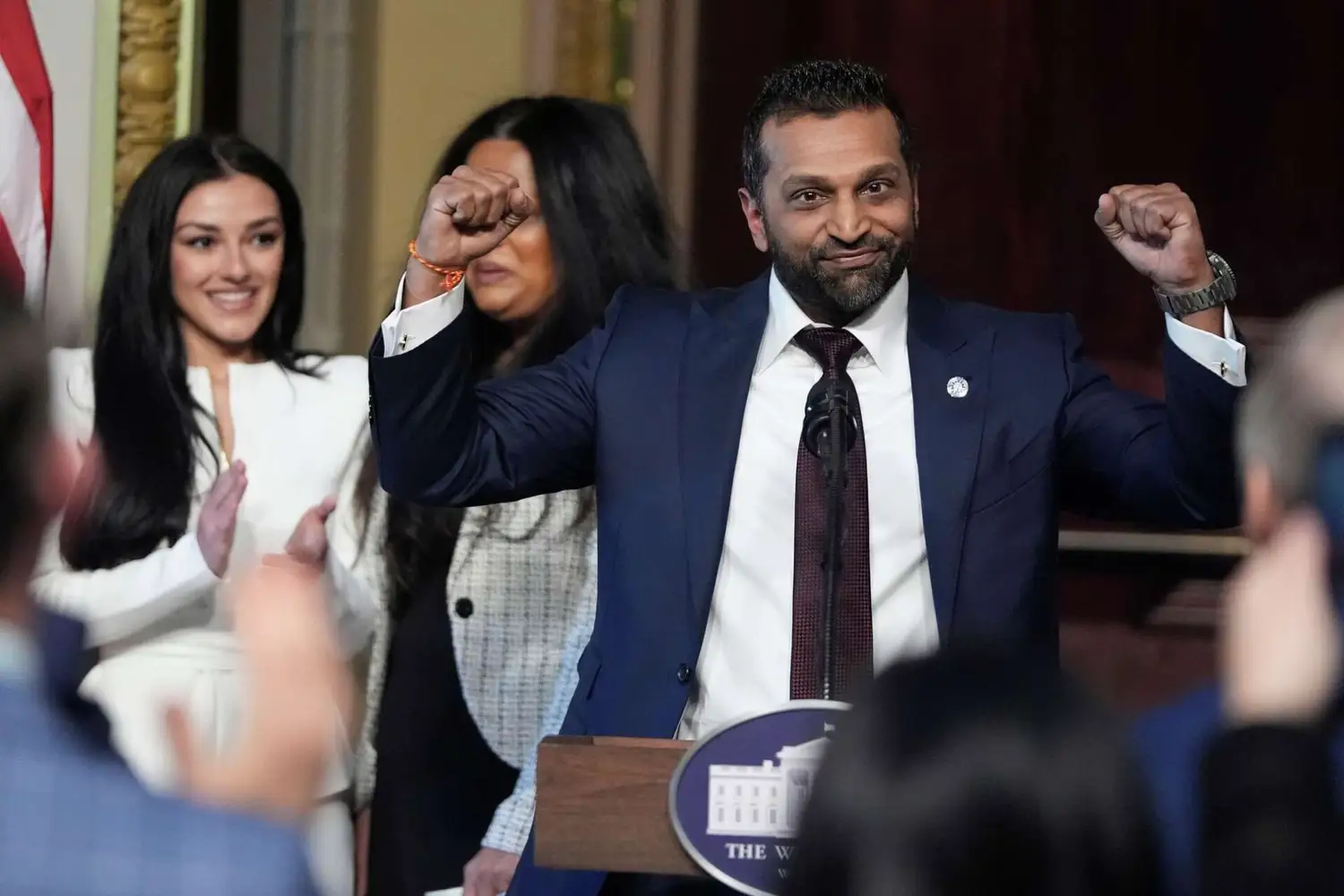
The FBI, in a statement directed to the Times, acknowledged that agents had reviewed concerns about what it characterized as 'aggressive reporting techniques' that the bureau believed crossed into stalking-adjacent behavior. The bureau also stated, however, that it would not be proceeding with a formal case against Williamson — a clarification that did little to quiet the storm of criticism the episode had already generated.
A Pattern of Confrontation With the Press
The inquiry into Williamson did not emerge in isolation. It is the latest and perhaps most aggressive chapter in a sustained pattern of antagonism between Patel and major news organizations that have reported critically on his leadership of the FBI.
Earlier this week, Patel followed through on a previously announced legal threat and filed a $250 million defamation lawsuit against The Atlantic and one of its journalists, Sarah Fitzpatrick. The lawsuit stems from an article that described what multiple current and former officials characterized as a troubling pattern of behavior at the bureau's highest level — including claims of excessive alcohol consumption, rescheduled briefings, and unexplained absences during the early weeks of Patel's tenure.
The Atlantic's reporting was grounded in accounts from six individuals described as current or former officials with direct knowledge of the FBI director's schedule. Patel's legal team dismissed the piece as 'a sweeping, malicious and defamatory hit piece' and filed the complaint in U.S. District Court for the District of Columbia. Democrats in Congress have separately called on Patel to submit to alcohol testing, a demand the director has not publicly acknowledged.
The Fox News interview in which Patel addressed the Williamson inquiry was itself revealing. The host, Sean Hannity, used the segment to air grievances of his own against the Times, referencing past coverage of his views and suggesting he had explored legal action. The pairing of Patel's denial with Hannity's editorial complaints underscored how thoroughly the FBI director's relationship with the press has come to resemble a political rather than institutional dynamic.
What the February Report Actually Said
At the heart of the controversy is a piece of journalism that raised substantive questions about the appropriate use of federal law enforcement resources. Williamson's original article, published on February 28, reported that Patel had directed four FBI agents to provide full-time personal protection for Wilkins — a private citizen whose relationship with the director gave her no formal claim on bureau security services.
The story documented that those agents had traveled with Wilkins on multiple occasions: to the United Kingdom, to Illinois, and to Nashville, Tennessee. The trips, the reporting suggested, bore the character of personal accompaniment rather than operational necessity, and critics in and outside government argued that deploying trained federal agents for such purposes represented a misuse of both personnel and taxpayer funds.
The article did not allege criminal conduct on Patel's part. It raised pointed questions about the use of institutional resources for personal benefit — the kind of accountability reporting that has long been considered a core function of a free press in a democratic society. That the bureau would subsequently turn its investigative capabilities toward the reporter who wrote it is what elevated the episode from a government controversy to a press freedom crisis.
Legal scholars and First Amendment attorneys who reviewed the reported facts were nearly uniform in their assessment: using a federal database search to explore whether a reporter's newsgathering could be framed as stalking is, at minimum, an extraordinary and deeply troubling use of law enforcement authority. Several noted that the chilling effect of such an inquiry — regardless of whether formal charges ever materialize — is itself a form of institutional pressure on the press.
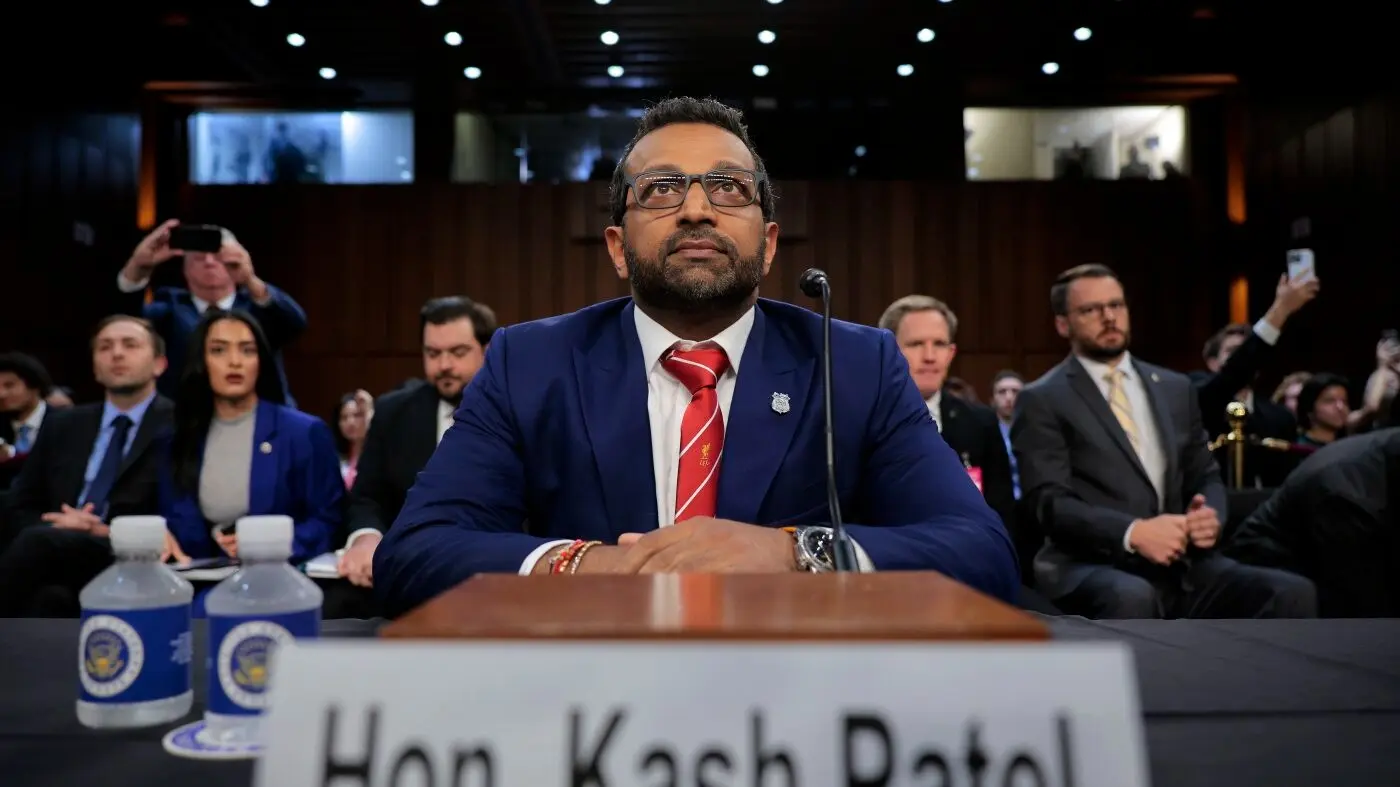
Key Facts
The following facts are drawn from reporting by The New York Times, statements by the FBI, and public comments by Kash Patel, as of April 24, 2026.
✓ Elizabeth Williamson, a New York Times reporter, was the subject of an FBI inquiry beginning in March 2026
✓ The inquiry followed her February 28, 2026 article on Kash Patel's use of FBI agents to protect his girlfriend, Alexis Wilkins
✓ FBI agents searched law enforcement databases for information about Williamson and discussed potential stalking law violations
✓ The FBI stated it will not pursue a formal case against Williamson
✓ Times Executive Editor Joseph Kahn called the inquiry a First Amendment violation and 'unconstitutional'
✓ Kash Patel denied a formal investigation was underway, saying Williamson's reporting endangered Wilkins
✓ Patel filed a separate $250 million defamation lawsuit against The Atlantic over reporting on his alleged alcohol use
✓ The Atlantic's reporting cited six current and former officials familiar with Patel's schedule
✓ Democrats have separately called on Patel to undergo alcohol testing
✓ No charges have been filed against Williamson as of the date of publication
Press freedom organizations including the Reporters Committee for Freedom of the Press are monitoring the situation. The FBI has not publicly released documentation of the inquiry or provided formal comment beyond its statement to the Times.
The Broader Stakes for Press Freedom
What makes the Williamson episode particularly significant is the institutional identity of the actor involved. Aggressive rhetoric directed at the press from political figures has become a familiar feature of the current administration's public posture. The active deployment of FBI investigative tools against a journalist for her published reporting represents something qualitatively different — a crossing of the line from political hostility to state action.
The First Amendment protections that govern newsgathering in the United States are broad and well-established. Courts have repeatedly affirmed that reporters working on matters of public concern enjoy substantial constitutional shelter from legal harassment based on their methods of information-gathering, even when those methods involve persistent inquiry, database searches, or repeated contact with reluctant sources. The suggestion that Williamson's conduct might constitute stalking would, if pursued, have required prosecutors to advance an argument that legal experts across the political spectrum regard as extraordinarily weak.
That the FBI ultimately declined to move forward with a case does not eliminate the significance of what was reportedly considered. The documented fact that agents searched databases for information about a journalist and discussed the theoretical criminal framing of her work is, by itself, the kind of institutional behavior that invites serious oversight scrutiny — from Congress, from inspectors general, and from the courts.
The cumulative picture that has emerged in recent weeks — a director pursuing a defamation lawsuit against one major publication, his bureau conducting investigative inquiries into a reporter at another — suggests a leadership posture toward the press that is unlike anything seen at the FBI in the modern era. Whether that posture reflects a deliberate strategy, an impulsive reaction to critical coverage, or something in between, its effect on journalistic practice and the willingness of sources to speak candidly with reporters is difficult to separate from the intent behind it. Newsrooms across the country are watching, and so are the courts.
Investigating a journalist for standard reporting is inappropriate. The FBI's attempt to criminalize routine reporting is a blatant violation of Elizabeth's First Amendment rights.— Joseph Kahn, Executive Editor, The New York Times, April 2026
The question of where this episode leads remains open. The FBI has said it will not pursue a case. Patel has denied wrongdoing. But the Times has made clear it intends to defend its reporter and its reporting — and the episode has already drawn the attention of lawmakers, legal scholars, and press freedom organizations who see in it a template for institutional pressure that does not require a conviction to succeed. The record of what was reportedly considered, and by whom, now exists. What is done with it is a matter still being written.