
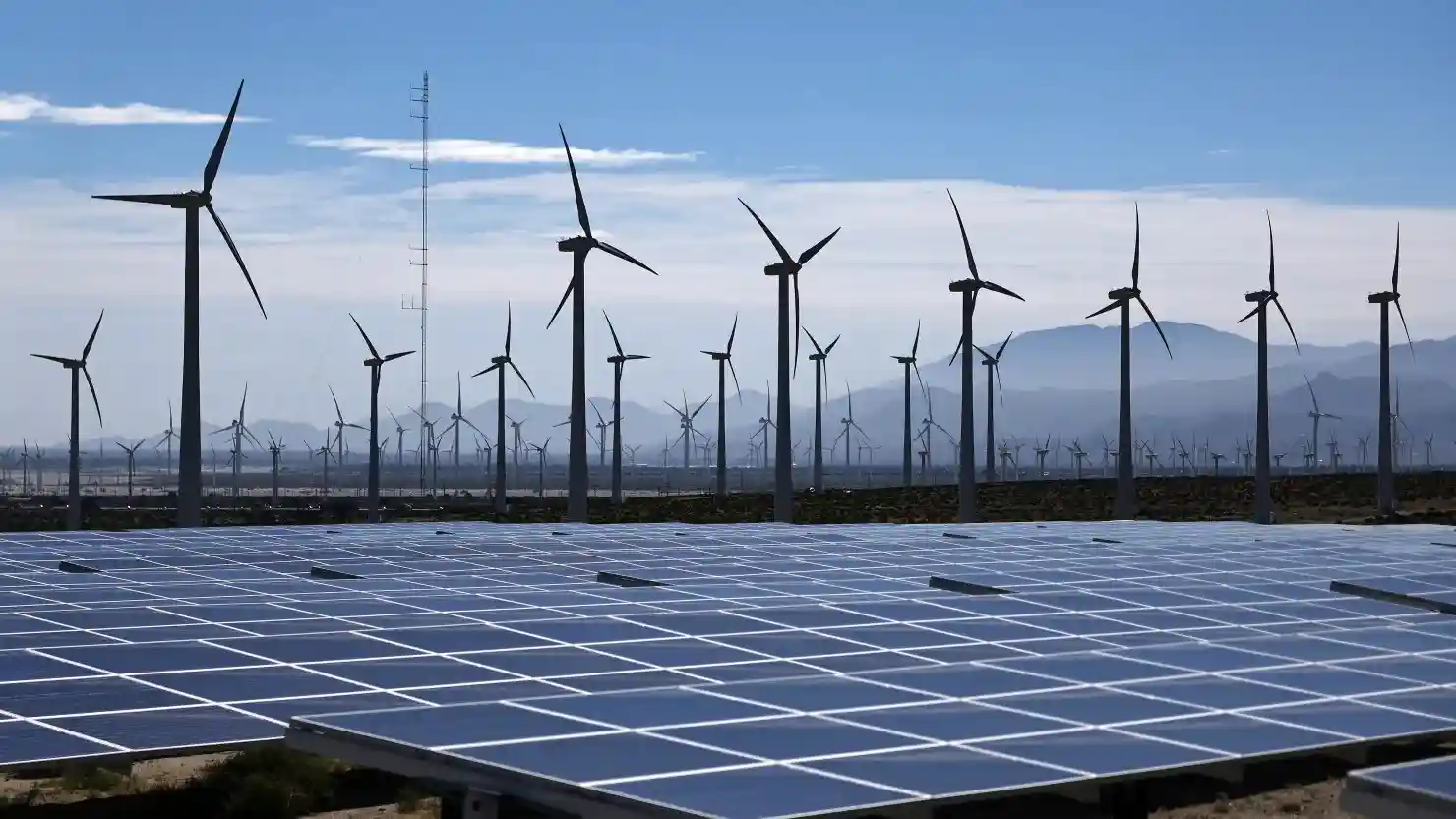
A federal judge in Boston has handed the renewable energy industry a significant legal victory, issuing a preliminary injunction Tuesday that blocks a set of Trump administration permitting policies that wind and solar developers say have effectively shut down the approval pipeline for new clean energy projects across the United States. The ruling marks one of the most consequential judicial challenges yet to the administration's aggressive push to steer federal energy policy away from renewables and toward oil, coal, and natural gas.
Chief U.S. District Judge Denise Casper, sitting in Boston and appointed to the federal bench by President Barack Obama, granted the injunction after finding that the plaintiffs — a coalition of nine wind and solar advocacy groups and trade associations — had a strong likelihood of prevailing on the merits. The coalition includes RENEW Northeast and the Alliance for Clean Energy New York, among others.
The groups had argued that the Interior Department and related federal agencies had erected a maze of new procedural hurdles that effectively froze the permitting process for wind and solar installations. In a joint statement following the ruling, the organizations called it 'an undeniable victory for members of our coalition and the broader clean energy industry, as well as American households and businesses.'
The Policy at the Center of the Fight
The case zeroes in on an Interior Department memorandum issued in July that restructured the review process for wind and solar projects on federal land. Under that policy, virtually every stage of the permitting process — from early feasibility reviews to final approvals — was required to clear a three-tiered sign-off involving senior political appointees, including Interior Secretary Doug Burgum himself.
Renewable energy attorneys and industry insiders described the requirement as an intentional chokehold on project timelines. Permits that previously moved through administrative channels with relative efficiency were suddenly queued behind a bottleneck that showed no signs of clearing. Several developers reportedly canceled or suspended projects after weeks of silence from federal reviewers.
The plaintiffs argued in court that the July memorandum was adopted without any documented justification — a direct violation of the Administrative Procedure Act, which requires federal agencies to explain the reasoning behind significant policy changes. Judge Casper agreed, finding that none of the executive directives the department cited adequately explained or justified the three-tier review requirement.
A Broader Campaign Against Renewable Energy Approvals
Tuesday's ruling does not stand alone. It is the latest in a string of federal court decisions pushing back against administration attempts to slow-walk or outright cancel approvals for wind energy projects. Earlier this year, courts blocked efforts to halt construction on several multibillion-dollar offshore wind farms already underway along the Eastern Seaboard — projects that had secured approvals under previous administrations and had crews already on the water.
The administration has been openly hostile to wind and solar development since the earliest days of Trump's return to the White House. The president campaigned heavily on a platform of expanding domestic fossil fuel production, and executive orders signed in his first weeks back in office directed the Interior Department to root out what they described as policy 'preferences' for what the orders called 'expensive and unreliable' energy technologies — language that directly targeted wind and solar.
Defense Production Act and New Executive Actions
The legal battle unfolded just one day after the president signed a sweeping set of energy-related executive memorandums, invoking the Defense Production Act to accelerate output of oil, coal, and natural gas. The administration framed the move as necessary for national security and 'defense readiness,' a framing critics called a stretch of the law's original intent.
That same week, the Interior Department adopted a stricter reading of the Outer Continental Shelf Lands Act as it applies to offshore wind development — a move also blocked by Judge Casper's Tuesday order. The department had also begun classifying wind and solar projects as 'capacity dense,' a designation the plaintiffs say was engineered to disadvantage those technologies in the permitting queue compared to fossil fuel projects.
The Interior Department declined to engage directly with the court's findings. In a brief statement, a department spokesperson said the agency does not comment on pending litigation, adding only that 'America sets the global standard for energy production.' The White House had not issued a formal response to the ruling at the time of publication.
What the Ruling Means Going Forward
The preliminary injunction applies specifically to member organizations of the nine plaintiff groups, covering a wide swath of the domestic wind and solar development community. While it does not resolve the underlying legal questions permanently — those will be hashed out as the case proceeds — it effectively restores the pre-July permitting status quo for those developers while litigation continues.
Energy lawyers following the case say the decision is significant not just for its immediate practical effect but for the signal it sends about the legal durability of the administration's approach. By finding the plaintiffs likely to succeed on the merits at this early stage, Judge Casper's ruling suggests the administration may face an uphill battle defending its permitting framework if the case goes to trial.
The suit was originally filed in December by the coalition of clean energy organizations. At the time, attorneys for the plaintiffs described the cumulative effect of the administration's policies as placing wind and solar technologies into what one lawyer called a 'regulatory second-class status' — a characterization the court appeared to take seriously in weighing the injunction.
For the clean energy sector, Tuesday's decision offers a measure of relief after months of uncertainty. Developers who had been waiting out the permitting freeze may now be able to move stalled projects forward, though industry observers caution that the legal fight is far from over and the administration is likely to appeal.
The case is being closely watched by energy investors, state utility regulators, and lawmakers on both sides of the aisle as an early indicator of how aggressively courts will check the administration's energy agenda. With the U.S. electricity grid facing rising demand projections and states under pressure to meet clean energy mandates, the stakes of the permitting standoff extend well beyond the courtroom.