
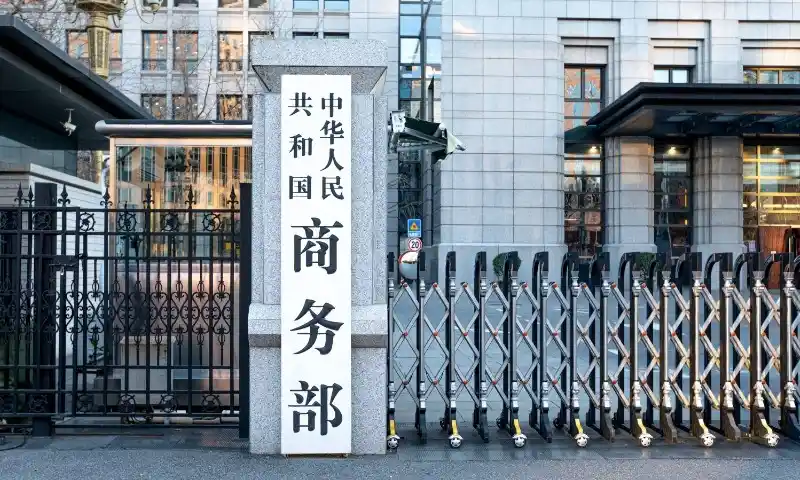
Beijing's Ministry of Commerce formally opened two trade barrier investigations into United States commercial practices on March 27, 2026, delivering a precisely calibrated counter-move after the Trump administration launched its own set of Section 301 inquiries earlier in the month. The Chinese probes were announced without advance warning and bear the hallmarks of a carefully orchestrated regulatory response — broad in scope, grounded in domestic statute, and timed to land before a high-stakes diplomatic summit that both governments have been working to arrange.
The Ministry of Commerce stated that both investigations were opened under Articles 41 and 42 of China's Foreign Trade Law, read in conjunction with the ministry's own regulations governing foreign trade barrier inquiries. Officials framed the measures as defensive actions to protect the rights and interests of relevant Chinese industries, and issued a formal declaration of opposition to the American probes that immediately preceded them.
The dual-track structure of Beijing's response mirrors the architecture of Washington's own actions. The Trump administration launched two separate Section 301 investigations on March 11 and March 12 — one aimed at what U.S. officials characterized as structural conditions of excess industrial capacity, underwritten in part by government subsidies, that distort export competition and undercut American producers across sixteen targeted economies; the second encompassing dozens of countries and framed around forced labor practices embedded in global supply chains. Beijing answered on both fronts.
"These investigations represent a proportionate and lawful response to unilateral measures that disrupt global production and supply chains and threaten the legitimate rights of Chinese enterprises in international markets.
— Chinese Ministry of Commerce official statement, March 27, 2026
The first of the two MOFCOM investigations is the broader of the pair. It examines U.S. policies that block or materially restrict the flow of Chinese-manufactured goods into American markets, alongside measures that curtail U.S. exports of advanced technology products to Chinese buyers. That second dimension is significant: China's regulators are formally characterizing restrictions on American technology sales to China as a trade barrier harmful to Chinese interests — a framing that inverts the argument typically advanced in Washington, where export controls on semiconductors, chip-manufacturing equipment, and artificial intelligence infrastructure are presented as matters of national security necessity.
The second investigation targets barriers that Chinese green energy exporters encounter in the U.S. market, including what Beijing characterizes as discriminatory import policies and restrictions on bilateral cooperation in renewable energy technologies. China has established dominant global market positions in solar panels, wind turbine components, and electric vehicle batteries — and has long maintained that American import restrictions in those sectors constitute economic protectionism operating under the cover of strategic and environmental justifications.
Both investigations are scheduled to run for six months, placing their anticipated completion in late September 2026. Ministry regulations allow for an extension of up to three additional months in cases of exceptional complexity, meaning the formal findings could arrive as late as December 2026 — well into what is expected to be a contentious period of tariff and budget deliberations in Washington.
The investigations represent the most formally structured legal response Beijing has mounted to the current administration's tariff offensive. Unlike direct retaliatory duties — which China has also deployed in separate actions — these probes create a documented evidentiary record that can be cited in proceedings before the World Trade Organization and in future bilateral negotiations. Several legal scholars who follow the bilateral trade relationship have noted that this institutional dimension may ultimately prove as significant as any finding the investigations themselves produce.
The Section 301 Trigger — and a Supreme Court Reversal
The proximate cause of Beijing's formal response was a pair of Section 301 investigations announced by the Office of the United States Trade Representative during the second week of March 2026. The first, issued March 11, targeted sixteen trading partners — China prominently among them — for allegedly maintaining structural conditions of excess industrial capacity and government subsidy regimes that distort global export competition. The second, issued March 12, cast a wider net across dozens of countries and was anchored in forced labor allegations.
Section 301 of the Trade Act of 1974 grants the executive branch broad investigative authority over foreign trade practices deemed unfair or discriminatory, and empowers it to impose duties or other trade countermeasures in response to findings of harm. Prior administrations have used the provision selectively. The current administration has deployed it more aggressively and across a substantially broader field of trading partners than at any point in the framework's recent history.
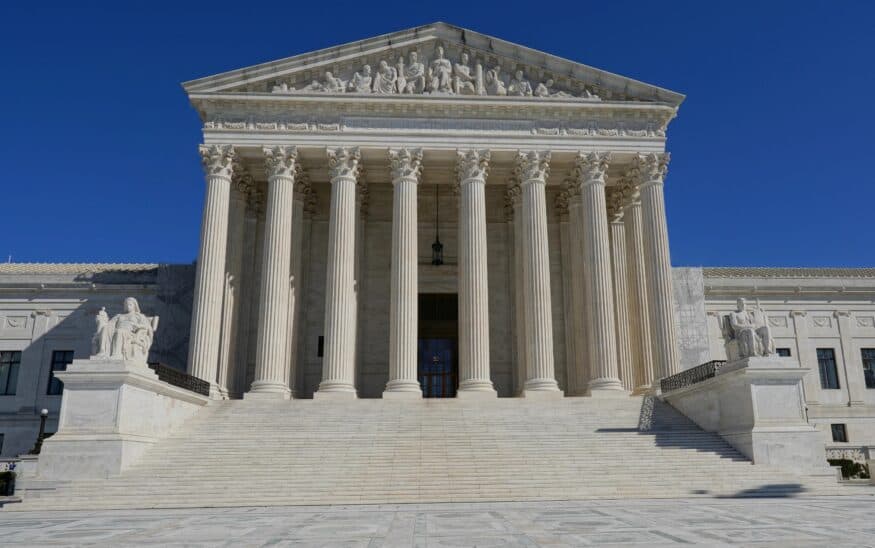
The decision to anchor the current round of trade actions in Section 301 authority — rather than the emergency economic powers statute the administration had previously favored — followed a consequential legal defeat. In February 2026, the United States Supreme Court struck down a tranche of tariffs the Trump administration had imposed under the International Emergency Economic Powers Act, finding that the executive's unilateral tariff authority under that statute had been stretched beyond its statutory bounds. The ruling drove a strategic pivot toward Section 301, a framework with a longer legal pedigree and a more elaborate investigative process that presents a harder target for procedural challenge.
Beijing's decision to respond with formal investigations of its own, rather than immediate counter-tariffs, reflects a reading of the current moment as one calling for strategic patience rather than escalatory brinkmanship. The probes create documented leverage without immediately triggering a new cycle of retaliatory action — a calibration that appears to reflect the diplomatic calendar as much as the legal framework.
Paris Talks, a Delayed Summit, and the Shadow of Iran
The regulatory exchange between Washington and Beijing is playing out against a diplomatic backdrop that has grown substantially more complicated in recent weeks. Ahead of a planned visit by President Trump to Beijing — originally scheduled for early April 2026 — trade representatives from both governments convened in Paris to lay groundwork for the summit and to manage the mounting friction over tariff and technology policy.
China's trade representative used the Paris meeting to put American counterparts on direct notice: the Section 301 investigations, as structured and targeted, posed a material risk to what officials on both sides had characterized as a fragile but functioning equilibrium in the bilateral economic relationship. The warning carried weight. The two governments had spent much of the preceding year rebuilding a working commercial arrangement following a period of particularly sharp confrontation, and Beijing made clear it would not allow the current round of American probes to unwind that arrangement without a formal answer.
The presidential summit that provided the diplomatic context for the Paris talks has since been delayed. President Trump postponed his China visit in the context of the continuing military conflict in Iran, a development that has absorbed significant bandwidth within the administration and complicated the foreign policy scheduling across multiple regions. As of late March 2026, the May summit remains on the calendar, though its precise timing is subject to conditions on the ground in the Middle East. The delay introduces uncertainty into both the diplomatic and trade tracks simultaneously.
Key Facts
The following facts are drawn from official statements by China's Ministry of Commerce and the Office of the United States Trade Representative, as well as reporting by the Associated Press, Reuters, Bloomberg News, the Wall Street Journal, and the Financial Times, as of March 30, 2026.
✓ China's MOFCOM launched two formal trade barrier investigations on March 27, 2026
✓ Investigation 1: Examines U.S. policies restricting Chinese goods from U.S. markets and limiting American advanced technology exports to China
✓ Investigation 2: Examines U.S. barriers to Chinese green energy exports and restrictions on renewable technology cooperation
✓ Legal authority: Articles 41 and 42 of China's Foreign Trade Law and MOFCOM rules on foreign trade barrier investigations
✓ Both probes scheduled to conclude within six months (by late September 2026), with a possible three-month extension
✓ Triggered by U.S. USTR Section 301 investigations launched March 11 and March 12, 2026, targeting 16 and 60-plus economies respectively
✓ U.S. Supreme Court struck down prior IEEPA-based tariffs in February 2026, prompting the administration's Section 301 pivot
✓ China's trade representative warned U.S. counterparts in Paris that Section 301 probes threatened hard-won bilateral trade stability
✓ President Trump's planned April Beijing visit postponed due to the Iran conflict; May summit remains tentatively on schedule
✓ No traditional MOFCOM case numbers assigned; investigations are formally identified by mandate scope and announcement date
✓ No new retaliatory tariffs have been announced by China in connection with these investigations as of March 30, 2026
✓ MOFCOM findings could form the evidentiary basis for future WTO dispute filings or further bilateral countermeasures
China's Ministry of Commerce did not publish formal docket-style case numbers for the two investigations, which are formally identified in ministry records by their mandated scope and the date of their public announcement. The ministry is expected to issue interim updates as the inquiries develop, consistent with its standard procedures under the Foreign Trade Law framework.
What the Probes Could Produce — and What They Signal
The near-term legal and economic consequences of the MOFCOM investigations will depend substantially on what the inquiry teams document over the coming months. Under China's Foreign Trade Law, a finding that U.S. trade practices constitute actionable barriers gives the ministry authority to recommend a range of countermeasures — from formal retaliatory duties to targeted restrictions on American imports or American firms operating within China. The breadth of that statutory toolkit means the investigations' ultimate leverage is difficult to quantify in advance.
The green energy dimension of the second probe carries particular weight. The previous administration's domestic manufacturing incentive legislation generated sustained friction with Beijing by channeling clean energy subsidies toward American producers at the explicit expense of Chinese competitors, which had spent years establishing commanding positions in global solar, wind, and battery markets. The current administration has preserved most of those restrictions while adding its own layer of import controls. Beijing's decision to subject that policy complex to formal legal scrutiny suggests it intends to press the issue not only in bilateral talks but in multilateral forums where the character of industrial policy has become a flashpoint.
The first probe — which encompasses both market access for Chinese goods and the structure of U.S. advanced technology export controls — engages one of the most sensitive and entrenched nodes in the bilateral relationship. Washington's export control architecture, built around restrictions on leading-edge semiconductors, chip-manufacturing equipment, and components essential to artificial intelligence infrastructure, has been a sustained source of tension. Chinese officials have consistently characterized those controls as an effort to suppress China's technological advancement rather than protect genuine security interests. Whether those measures constitute actionable trade barriers under China's domestic law and applicable WTO principles is a legal question the MOFCOM investigation is now formally positioned to examine.
Trade lawyers who specialize in the U.S.-China relationship have noted that Beijing's choice of legal instruments carries strategic meaning beyond the specific allegations under review. By anchoring its response in a formal statutory process — rather than relying on executive tariff retaliation alone — China signals to trading partners and international institutions that it is operating within a rules-based framework, a posture that Beijing's diplomatic representatives have explicitly contrasted with what they characterize as the Trump administration's preference for unilateral executive action. Whether that positioning generates meaningful multilateral support in forums like the WTO remains to be seen. But it represents a deliberate strategic calculation at a moment when both governments are simultaneously competing, negotiating, and observing each other's moves.
The hard-won stability in economic relations between our countries must not be placed at risk by unilateral measures inconsistent with the realities of modern global trade.— China's trade representative, Paris bilateral talks, March 2026
The six-month clock on China's trade investigations now runs concurrently with the diplomatic calendar surrounding a possible presidential summit, the progression of the U.S. Section 301 probes, and the continued legal uncertainty over tariff authority in U.S. courts following the Supreme Court's February ruling. Each track intersects with the others in ways that are difficult to fully anticipate. The outcome of any one of them could reshape the conditions under which the remaining disputes are resolved — or, if diplomacy stalls and investigations harden into findings, substantially escalated.