
A unanimous federal appeals court panel dealt California a significant legal setback on April 22, 2026, blocking the state from enforcing a law that would have required federal immigration agents operating in plain clothes to visibly display identification badges while conducting enforcement operations.
The 9th U.S. Circuit Court of Appeals sided with the Trump administration in the case United States of America v. State of California (No. 26-926), issuing a preliminary injunction against Section 10 of California's S.B. 805 — a statute formally known as the 'No Vigilantes Act' and codified under California Penal Code § 13654. The law had imposed misdemeanor penalties on federal agents who failed to wear visible identification.
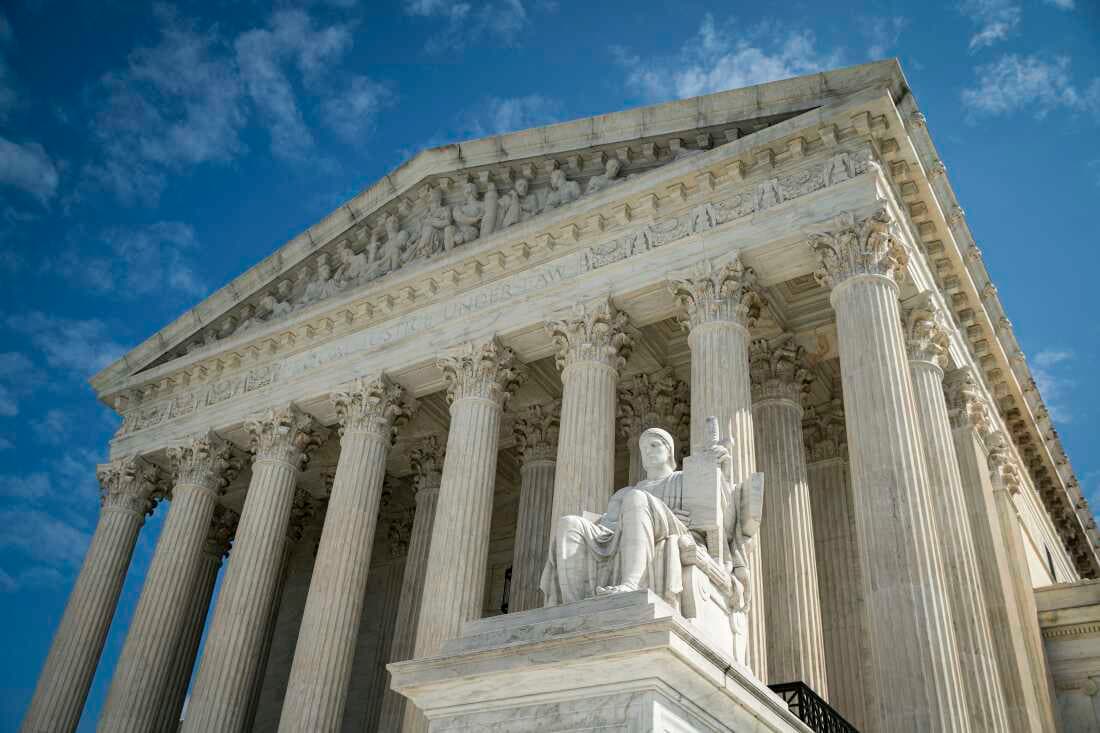
Writing for the three-judge panel, Judge Mark J. Bennett concluded that the California measure likely violates the Supremacy Clause of the U.S. Constitution, which establishes federal law as the supreme law of the land and bars states from directly regulating the conduct of the federal government. Judges Jacqueline Nguyen and Daniel Collins joined the opinion.
The court's reasoning was direct: when a state law targets the United States itself in carrying out its governmental functions, that law is void — regardless of how significant or minimal the interference with federal operations might appear. The analysis did not require weighing the degree of disruption to federal work, only confirming that the state was attempting to regulate it.
California's legal team urged the court to factor in the state's public safety concerns, arguing that residents and local law enforcement agencies had legitimate interests in knowing the identity of agents conducting enforcement sweeps in their communities. The panel declined, finding that once a Supremacy Clause violation is likely established, the balance of equities and public interest considerations tilt decisively in favor of the federal government.
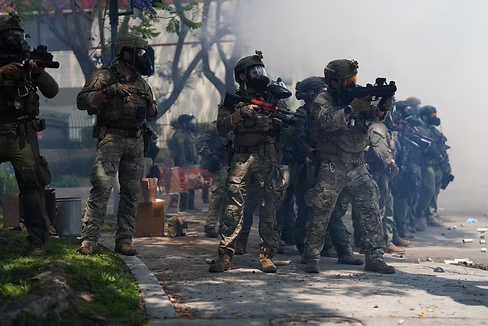
The statute was born out of widespread alarm during the early months of the Trump administration's renewed immigration enforcement push. Reports emerged across California of individuals detained by agents operating in casual clothing, lacking visible badges, and in some cases wearing face coverings — raising concerns among immigrant communities, civil liberties groups, and local officials about distinguishing legitimate federal law enforcement from unauthorized actors.
Governor Gavin Newsom signed S.B. 805 as part of a broader package of state legislation designed to impose accountability standards on federal immigration enforcement within California's borders. A companion measure — the 'No Secret Police Act' — sought to prohibit federal agents from wearing masks while on duty. That law was blocked separately on February 19, 2026, when a lower federal court issued its own injunction following a similar constitutional challenge by the Trump administration.
The U.S. Department of Justice filed suit against both laws in late 2025, arguing they unconstitutionally interfered with federal authority and created operational risks for agents whose identities could be exposed during sensitive operations. Oral arguments in the identification case were heard on March 3, 2026, before the April 22 ruling.
Acting U.S. Attorney General Todd Blanche publicly celebrated the outcome, stating on social media that the Justice Department stood in full support of ICE agents and describing the ruling as a significant win for federal law enforcement protection.
The ruling does not end California's legislative push to shape how federal agents operate within its borders. State lawmakers are currently advancing additional proposals, including measures that would prohibit federal immigration agents from being hired by California law enforcement agencies, and a separate bill that would make it easier for individuals to bring civil rights lawsuits against federal agents. Those efforts now proceed against the backdrop of a federal judiciary that has shown little tolerance for state attempts to directly regulate federal personnel.
The decision also draws on foundational constitutional precedent. An 1890 U.S. Supreme Court ruling has long established that states cannot criminally prosecute federal law enforcement officers acting within the lawful scope of their duties — a principle the 9th Circuit panel applied in the current context.
"If a state law directly regulates the conduct of the United States, it is void irrespective of whether the regulated activities are essential to federal functions or operations.
— Judge Mark J. Bennett, 9th U.S. Circuit Court of Appeals, Case No. 26-926
The 'No Vigilantes Act' was passed in late 2025 after Californians reported encounters with unidentified individuals conducting immigration sweeps — encounters that left communities and local authorities uncertain whether they were dealing with legitimate federal agents or private actors.
Supporters of the law framed it as a basic transparency measure. Critics, including the Trump administration, argued it crossed constitutional lines by dictating operational standards to a federal agency.
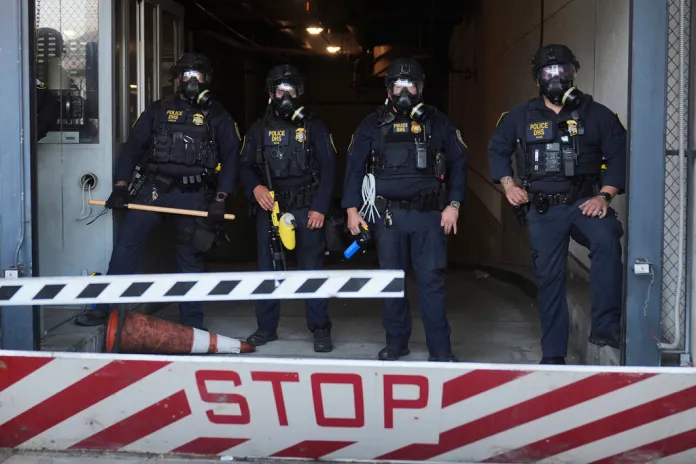
The companion mask ban, struck down two months earlier, was aimed at the same conduct. Together, the two laws represented California's most direct legislative challenge to the mechanics of federal immigration enforcement since the administration took office.
Key Legal Findings from the 9th Circuit Panel
Supremacy Clause violation: The court held California's ID requirement directly regulates the United States government, making it constitutionally void regardless of the extent of interference with federal operations.
Balance of equities: Once a Supremacy Clause violation is likely, the court found that public interest and equity considerations favor granting a federal injunction — the state's public safety arguments were not sufficient to override this conclusion.
Precedent applied: The panel drew on longstanding Supreme Court doctrine establishing that states cannot impose legal obligations on federal officers acting in the course of their duties.
Case Timeline and Broader Context
California's confrontation with the Trump administration over immigration enforcement has produced a steady stream of federal litigation since the administration took office. The identification and mask requirement laws were among the most operationally specific state measures attempted — targeting not the policy of immigration enforcement but the physical conduct of the agents carrying it out.
The successive injunctions against both laws suggest federal courts are drawing a firm line at state attempts to directly govern how federal personnel present themselves and operate, even when the state frames its interests in public safety terms.
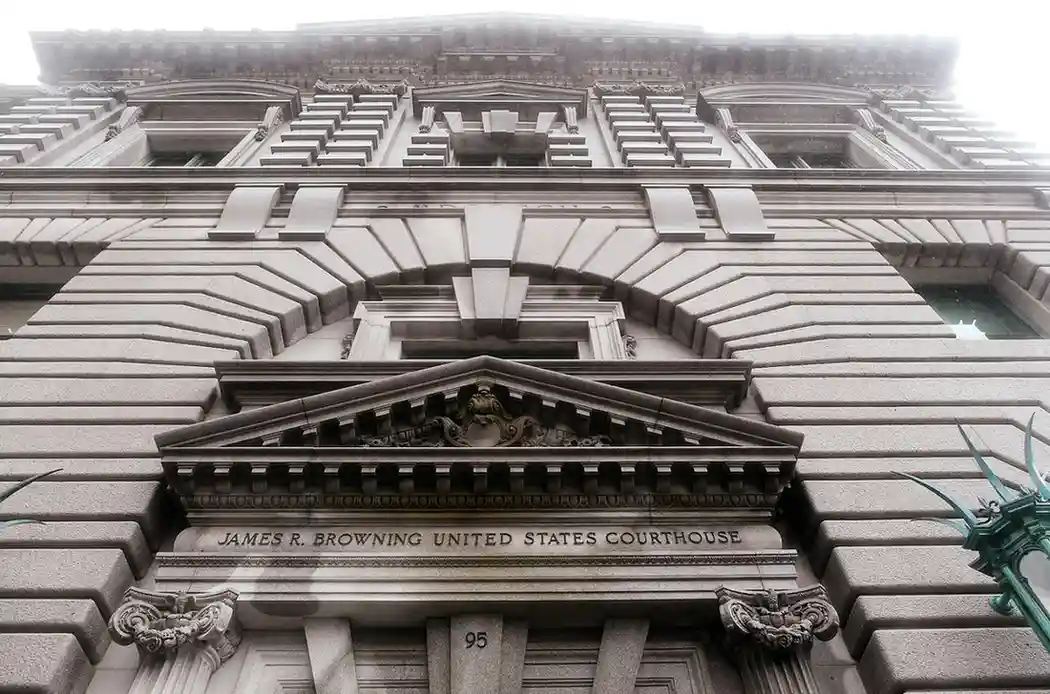
Case Timeline
Late 2025: California passes S.B. 805 following public concern over unidentified federal agents conducting immigration enforcement.
November 2025: The DOJ files suit challenging both the ID requirement and the companion mask ban as unconstitutional.
February 19, 2026: Lower federal court blocks the mask ban under the No Secret Police Act.
March 3, 2026: Oral arguments heard before the 9th Circuit panel in the ID requirement case.
April 22, 2026: 9th Circuit issues unanimous preliminary injunction blocking California's identification mandate.
✓ Case No. 26-926 — United States v. California
✓ Statute blocked: Cal. Penal Code § 13654 (S.B. 805, Section 10)
✓ Panel: Judges Bennett, Nguyen, and Collins — unanimous
✓ Constitutional basis: Supremacy Clause, Article VI
✓ Companion law (mask ban) also blocked Feb. 19, 2026
✓ Further California immigration bills currently advancing in state legislature
The ruling reinforces a pattern in which federal courts have consistently sided with the administration when California has attempted to impose operational requirements directly on federal enforcement personnel.
What Comes Next
With both the mask ban and the identification requirement now enjoined, California faces a narrowing set of tools to impose accountability standards on federal immigration operations within its borders through direct regulation of agent conduct.
State lawmakers are pursuing alternative legislative strategies — including bills that would restrict federal agents from joining California law enforcement and measures lowering the legal bar for civil rights claims against federal officers. Whether those approaches will survive constitutional challenge remains to be seen.
This Department of Justice stands in unwavering and total support of the brave men and women of ICE who put their lives on the line every day.— Acting U.S. Attorney General Todd Blanche
The 9th Circuit's ruling in Case No. 26-926 marks a clear constitutional boundary: states may protest federal immigration policy, pass sanctuary measures, and limit their own cooperation with federal authorities — but they may not directly dictate how federal agents dress, identify themselves, or conduct operations while performing their federal duties.
The case may yet return to court if California appeals or if circumstances change, but for now the Trump administration's immigration agents in California are not bound by the state's identification requirements.