
The Supreme Court on Monday turned away the Trump administration's appeal over cuts to University of California research grants, leaving in place a ruling that the terminations likely violated the First Amendment. The justices denied review in Trump v. Thakur without comment or a noted dissent, so the order does not settle the constitutional question.
The order, released Nov. 16 after the justices' private conference on Nov. 13, ends the government's attempt to undo part of a Ninth Circuit decision from May. That ruling upheld a preliminary injunction from U.S. District Judge Rita F. Lin for UC researchers who lost funding because of the administration's DEI-related executive orders. Reuters put the disputed cuts at about $59 million in National Science Foundation and National Endowment for the Humanities grants.
Because the Court only declined to take the case, the lawsuit goes back to Lin's courtroom in San Francisco. The injunction stays in force while the case moves toward a final ruling.
"interferes with executive-branch priorities in spending taxpayer funds
— Trump administration's Supreme Court petition, describing the Ninth Circuit ruling
Reuters reported that the grants at issue came from the National Science Foundation and the National Endowment for the Humanities. The wider litigation is far larger. CalMatters reported that agencies terminated more than $900 million in UC grants in 2025, and almost all of it was later restored by court order.
According to court papers cited by Reuters, the terminated projects included work on racial equity in science education and on expanding science opportunities for Indigenous youth.
The government argues it may end funding that no longer serves its priorities. The researchers answer that once a competitive grant is awarded, it cannot be canceled because officials dislike the viewpoint of the research.
What the Ninth Circuit kept and what it dropped
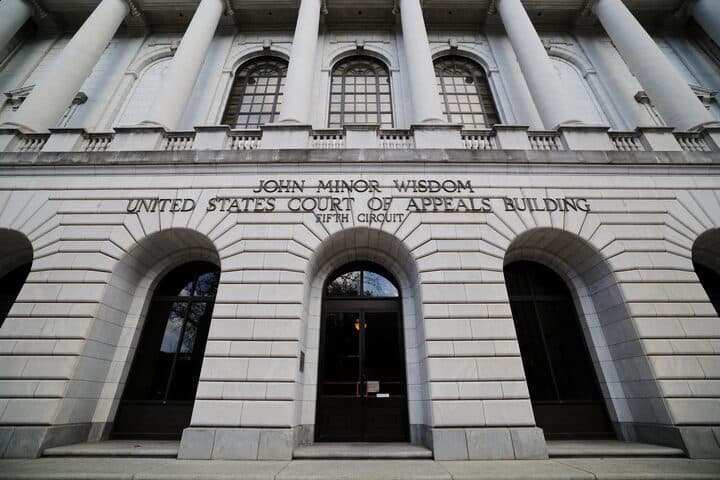
The appeals court split the case in two. It upheld Lin's injunction for researchers whose grants were cut over DEI-related concerns, agreeing they are likely to win a First Amendment claim. Once the government sets up a subsidy program, the panel said, it may not discriminate among speakers to suppress viewpoints it dislikes.
It reversed the injunction for a second group, researchers who received form termination notices with no grant-specific explanation. Relying on the Supreme Court's 2025 ruling in a separate NIH grants case, the panel concluded the district court likely lacked authority to hear that class's claim or order grants reinstated.
The administration asked the justices to review only the First Amendment half.
How the dispute reached the justices
The litigation has run for more than a year, with the Supreme Court touching it once before in a related funding case.
Key dates
The path from executive orders to the denial, according to SCOTUSblog and Reuters:
✓ January 2025: Trump signs executive orders targeting DEI and "gender ideology"
✓ June 23, 2025: Judge Lin issues the preliminary injunction and certifies two classes
✓ August 21, 2025: the Supreme Court's NIH grants ruling comes down, and the Ninth Circuit denies a stay
✓ May 26, 2026: the Ninth Circuit affirms the First Amendment injunction and reverses the other
✓ August 2026: the administration petitions the Supreme Court
✓ November 16, 2026: the justices deny review
What a denied petition does and does not decide
A denial of review is not a ruling on the merits and sets no nationwide precedent. The Ninth Circuit's opinion stays as the appellate court's preliminary view of the case, and it was issued before any final judgment.
The government argued the opinion conflicts with Supreme Court precedent. The researchers replied that no other appeals court disagrees and that the administration was cutting off funds that had already been approved. The Court gave no reasons and no justice noted a dissent, which leaves the question open for a future case.
What happens next
The lawsuit continues before Judge Lin. Lawyers for the researchers were due back before her Tuesday, Nov. 17, to argue that Department of Energy grant terminations were also unlawful, a dispute CalMatters described as technically unrelated to the Supreme Court's decision. No ruling from that hearing had been reported when this article was published.
For the researchers, the order ends the threat of Supreme Court review of the First Amendment ruling while the district court case proceeds. Their attorney, Claudia Polsky, said she does not expect the White House to try again.
For the administration, the case is not over. After a final judgment, the agencies could still appeal to the Ninth Circuit.
not technically bound by anything. But I think they will find it quite persuasive— Claudia Polsky, attorney for the UC researchers, on other courts hearing similar grant cases
The Supreme Court did not decide whether the First Amendment bars viewpoint-based grant cuts. It left the lower courts' preliminary answer in place for now.
Sources
- SCOTUSblog: Supreme Court turns down DEI-related disputes and Second Amendment challenge, November 16, 2026scotusblog.com(opens in a new tab)
- Reuters (via Devdiscourse): Supreme Court rejects Trump appeal defending diversity-related grant cutsdevdiscourse.com(opens in a new tab)
- CalMatters: U.S. Supreme Court rejects Trump's effort to impose DEI policies on UC researcherscalmatters.org(opens in a new tab)