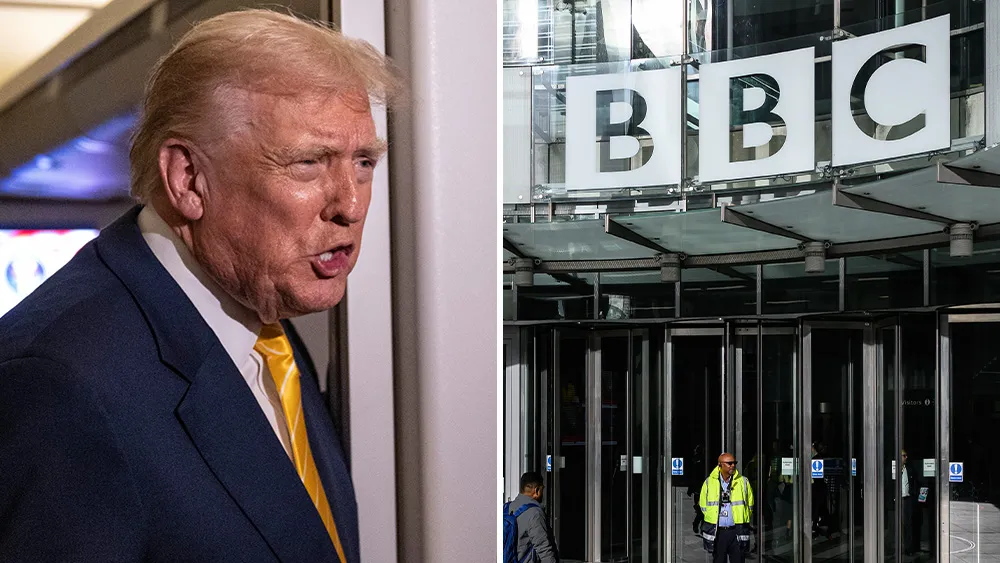
Afederal judge in South Florida has cleared the way for President Donald Trump's defamation lawsuit against the BBC to continue, refusing to end the case over an edited clip of his January 6, 2021, speech. U.S. District Judge Jeffrey T. Kuntz ruled Tuesday, Nov. 10, that the core defamation claim can proceed, but he threw out Trump's second claim under Florida's consumer-protection law. The order is not a finding that the BBC is liable.
Kuntz's 40-page order, docket entry 209, resolves the BBC's motion to dismiss Trump's amended complaint. It denies the motion on Count I, defamation per se, and grants it on Count II, which invoked the Florida Deceptive and Unfair Trade Practices Act. The BBC must answer the surviving count by Dec. 1. Whether Trump can prove his claims and damages, the judge wrote, is a question "left for another day."
Trump called the ruling a "Huge Victory" on Truth Social. A BBC spokesperson said the broadcaster was surprised but respects the court's authority, remains confident in its position and will keep responding through the legal process. Trump had sought at least $5 billion on each of the two counts, which is why the case is widely described as a $10 billion lawsuit.
Why a 12-second clip kept the defamation claim alive
The dispute centers on the BBC's Panorama documentary Trump: A Second Chance?, which aired Oct. 28, 2024, one week before the presidential election. A 12-second segment joined a line about walking to the Capitol with a separate "fight like hell" remark that Trump made nearly 55 minutes later. The order notes the edit left out his call, moments after that second remark, for supporters to march peacefully.
Kuntz found Trump plausibly alleged actual malice, the heightened standard public figures must meet. The judge wrote that the edit was "not trimming around the edges," noting the BBC had the full speech for nearly three years. He also weighed the BBC chairman's apology, which called the edit misleading, and observed that the BBC's retraction came more than a year after broadcast and only after legal threats.
The court rejected the argument that the segment is protected opinion, reasoning that a sentence Trump never spoke is a statement of fact. It also accepted, for now, that Trump pleaded actual reputational harm tied to the pre-election timing. The BBC won one point: Kuntz agreed that failing to ask Trump for comment does not alone show actual malice. He criticized the Supreme Court's New York Times v. Sullivan standard but said it remains binding.
How Kuntz separated this case from Trump's other media suits
The judge distinguished two earlier cases. In Trump v. CNN, a federal court found the challenged statements were opinion. In Trump v. Dow Jones, a judge dismissed claims that The Wall Street Journal failed to adequately investigate what it reported. Those outlets reported on events, Kuntz wrote, while here the BBC created the segment itself. The BBC apologized in November 2025 and its director-general and news chief resigned, but it maintains an editing error is not defamation.
Why a Florida court can hear a case over a British broadcast
The BBC argued Florida lacks jurisdiction because the documentary never aired in the United States. Kuntz agreed the BBC is not "at home" in Florida for general jurisdiction, since a subsidiary office and website access are not enough. He still found specific jurisdiction. Trump lives in Florida, and the complaint alleges the BBC emailed U.S. and Florida-based commentators a link and viewing instructions.
Kuntz said a foreign publisher cannot aim a program at a U.S. presidential candidate, time it for an American election and then claim it never targeted the country. Disputes over whether, and how often, the film was accessed in Florida remain open.
Florida trade-practices claim dismissed
Count II failed because the court held the documentary is not commercial speech. Citing Eleventh Circuit precedent, Kuntz wrote that advertising and subscriptions do not convert editorial content into commercial speech, even when an outlet has commercial purposes.
Latest updates: deadlines in the BBC case
The BBC's answer is due Dec. 1. Discovery is also active. Magistrate Judge Enjolique A. Lett ordered Trump's lawyers to hand over remaining undisputed documents by Nov. 23 after questioning whether they searched thoroughly. The BBC has since told the court that Trump's privilege log contains no communication with Trump or his advisers, Newsweek reported.
A separate Oct. 22 order requires Trump to sit for a deposition by Dec. 11, with possible sanctions including dismissal, unless the discovery period is extended. CBS News reported the BBC says Trump has offered second- or third-week-of-January availability. A trial is set for February 2027.
Case file at a glance
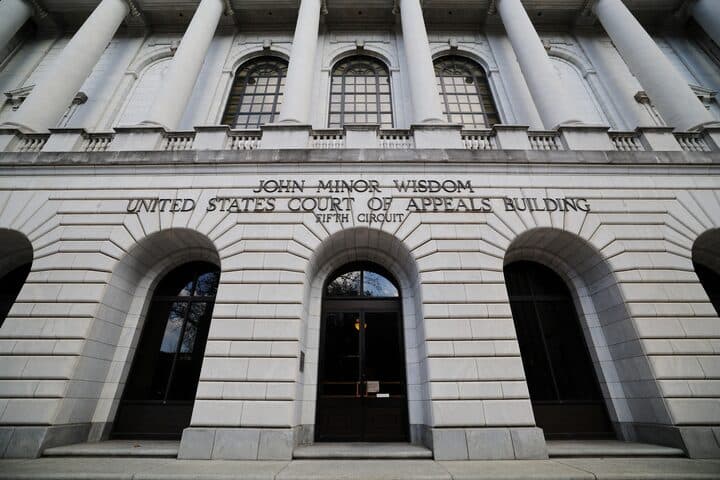
Trump v. British Broadcasting Corp., No. 1:25-cv-25894, U.S. District Court for the Southern District of Florida, filed Dec. 15, 2025. Judges: District Judge Jeffrey T. Kuntz and Magistrate Judge Enjolique A. Lett.
Order: ECF No. 209, entered Nov. 10, 2026. Result: Count I (defamation per se) proceeds; Count II (FDUTPA) dismissed. Filings can be searched on PACER and the CourtListener docket.
Sources
- U.S. District Court, S.D. Fla.: Order on motion to dismiss, ECF No. 209 (CourtListener)storage.courtlistener.com(opens in a new tab)
- CBS News: Federal judge denies motion to dismiss Trump's defamation case against the BBCcbsnews.com(opens in a new tab)
- HNGN: Trump's BBC suit advances (trial date, $5 billion per count)hngn.com(opens in a new tab)
- Newsweek: BBC says Trump's legal filing 'strains credulity'newsweek.com(opens in a new tab)
- Yahoo News: Judge warns Trump his BBC lawsuit may be tossed unless he files more papersyahoo.com(opens in a new tab)