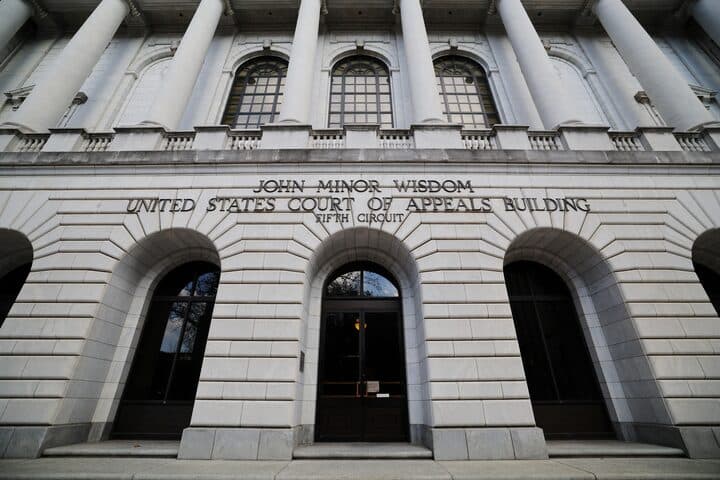

The full Fifth Circuit ruled 9–8 on Nov. 20 that the House of Representatives violated the Constitution’s Quorum Clause when it counted lawmakers who were present only by proxy to pass the 2023 spending law. The decision in State of Texas v. Blanche keeps in place an injunction barring federal enforcement of the Pregnant Workers Fairness Act against Texas, and nothing broader.
The ruling does not repeal the pregnancy accommodation law or void the $1.7 trillion spending package that carried it. Judge Cory T. Wilson, writing for the majority, said the decision applies only to Texas’s challenge, Bloomberg Law reported. The injunction bars the Justice Department and the Equal Employment Opportunity Commission from enforcing the law against Texas and its state agencies.
Texas Attorney General Ken Paxton filed the case in 2023. A divided three-judge panel sided with the federal government in August 2025, but the full court vacated that decision in January and heard arguments in May.
"“Proxy presence” does not count.
— Judge Cory T. Wilson, en banc majority opinion
The majority read the clause’s text, Founding-era sources and the absence of any proxy-quorum practice from 1789 to 2023 as requiring members to be present. It also rejected the government’s argument that courts cannot look behind a bill the House has certified, treating the enrolled-bill rule as a matter of evidence, not a shield from constitutional review.
Wilson wrote that a chamber’s procedural discretion has limits.
The court did not decide whether lawmakers joining by videoconference count as present.
The 226 Lawmakers Counted but Not in the Room
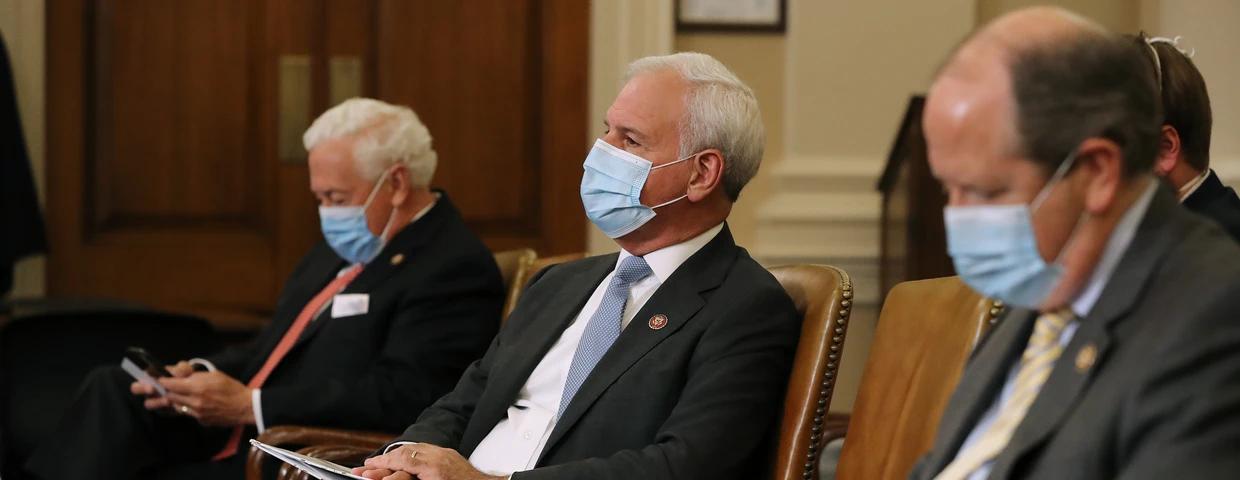
The House passed the Consolidated Appropriations Act of 2023 on Dec. 23, 2022, by a 225–201 vote, with one member voting present and four not voting. The opinion records 226 members as present and voting by proxy under the House’s pandemic rule, so fewer than a majority were physically in the chamber.
U.S. District Judge James Wesley Hendrix reached the same conclusion in February 2024. Reuters reported he limited relief to the pregnancy law, which requires employers to provide pregnant workers with reasonable accommodations.
Eight Dissenters, One Objection to the Remedy
Judge James E. Graves Jr., an Obama appointee, wrote the principal dissent, joined by six colleagues. Judge Catharina Haynes dissented separately in a short opinion. Graves argued the Constitution leaves each chamber to judge who is present and asked why the judgment covers only a narrow slice of the law if the whole act was invalidly passed.
What the Ruling Does and Does Not Do
The judgment, in plain terms:
✓ Affirms the permanent injunction against federal enforcement of the pregnancy law against Texas
✓ Does not repeal the statute or void the 2023 spending law nationwide
✓ Leaves the law in force for private employers, though they can now cite the decision in Texas, Louisiana and Mississippi
One employment law firm tells pregnant Texas state employees to rely on Title VII and state law instead.
How Far the Quorum Reasoning Could Travel
Because the decision sets circuit law unless the Supreme Court steps in, it could open other parts of the 2023 package to challenge. Election law scholar Rick Hasen pointed to the Electoral Count Reform Act, which rode in the same bill. Future challengers would still have to clear standing and remedy hurdles, Beinsure noted.
An amicus brief filed for Sen. Mitch McConnell warned that a physical-presence rule could also threaten Senate practices such as unanimous consent and voice votes. A Better Balance President Inimai Chettiar warned that courts in Texas, Louisiana and Mississippi could lean on the reasoning in related cases.
The 90-Day Clock Toward the Supreme Court
A petition for Supreme Court review is due within 90 days of the judgment, or Feb. 18, 2027, unless a justice extends the time. Bloomberg Law reports that an appeal is expected.
The office that brought the case is changing hands as well: Bloomberg Law reports a Democrat won the Texas attorney general race, and Republicans lose control of the office in January.
the Quorum Clause’s constraints on congressional power cannot be circumvented by congressional fiat— Judge Cory T. Wilson, majority opinion
For now, Texas stays shielded from federal enforcement of the pregnancy accommodation law while the constitutional question heads toward the Supreme Court. No filing had been reported as of Nov. 22.
Sources
- Bloomberg Law: Congress Proxy-Voting Found Unconstitutional by Fifth Circuit (Nov. 21, 2026)news.bloomberglaw.com(opens in a new tab)
- Law Dork: The Fifth Circuit rewrote the Constitution on Friday to help out Ken Paxton (analysis)lawdork.com(opens in a new tab)
- inkl: En Banc Fifth Circuit Declares House COVID Proxy Voting Rule Unconstitutionalinkl.com(opens in a new tab)
- Kohen Avocats: 5th Circuit proxy voting ruling and the Pregnant Workers Fairness Act in Texaskohenavocats.com(opens in a new tab)
- Beinsure: 5th Circuit proxy voting ruling finds $1.7 tn spending bill unconstitutionalbeinsure.com(opens in a new tab)
- Reuters (via Yahoo Finance): US judge in Texas rules congressional passage of 2022 spending bill unconstitutional (Feb. 27, 2024)uk.finance.yahoo.com(opens in a new tab)
- National Law Review: Fifth Circuit to Determine Enforcement of PWFA Against the State of Texas (Jan. 22, 2026)natlawreview.com(opens in a new tab)
- Ogletree Deakins (via JD Supra): Fifth Circuit Upholds Enactment of the Pregnant Workers Fairness Act (Aug. 2025 panel ruling)production.jdsupra.com(opens in a new tab)