
Asecond federal judge has blocked President Donald Trump's latest attempt to narrow birthright citizenship. On Wednesday, Nov. 25, U.S. District Judge Christopher R. Cooper in Washington granted a preliminary injunction against Executive Order 14418 and certified a class of affected children, barring federal agencies from applying the order to them.
The 67-page opinion in Nathan v. Trump follows an early-September ruling by a Maryland judge that froze the same order for a different group of children, and the Supreme Court's 6-3 decision in Trump v. Barbara, which struck down the president's first birthright citizenship order in June. Cooper, an Obama appointee, concluded that the White House cannot write new exceptions into the Constitution's citizenship guarantee.
The White House rejected the decision, saying the order fits the Supreme Court's reasoning. The Justice Department is widely expected to appeal, though no appeal was on file in the coverage reviewed as of Nov. 26.
"cannot carve out new exceptions to birthright citizenship
— Judge Christopher R. Cooper, on the president's authority
Three Families Behind the Class Action
The ACLU and partner groups filed the case Sept. 28 after the judge in the earlier Barbara litigation treated the challenge to the new order as a separate lawsuit. One plaintiff is a boy identified only as Nathan, born in Washington in August to parents who hold G-4 visas and work for international organizations. Two other families were expecting children when the suit was filed.
Cooper defined the class as children who are or will be unlawfully denied citizenship under the order. His injunction bars the State Department, the Department of Homeland Security and the Social Security Administration from applying it to them.
What Executive Order 14418 Tries to Do
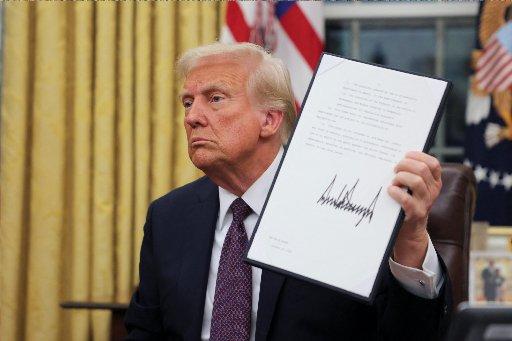
Trump signed the order Aug. 6, after the Supreme Court's June defeat. Rather than end birthright citizenship outright, it tells agencies to withhold citizenship documents from certain U.S.-born children when neither parent is a citizen. Cooper's ruling touches children of foreign government or international organization employees without diplomatic immunity, children born through commercial surrogacy, and children of parents the administration classifies as alien enemies.
How the Fight Reached This Point
Key dates in the dispute:
✓ Jan. 20, 2025: Trump signs his first birthright citizenship order
✓ June 2026: The Supreme Court strikes it down, 6-3, in Trump v. Barbara
✓ Aug. 6, 2026: Trump signs Executive Order 14418
✓ Sept. 2, 2026: Maryland Judge Deborah Boardman blocks it for a certified class
✓ Sept. 28, 2026: Three families sue in Washington, D.C.
✓ Nov. 25, 2026: Cooper grants class certification and a preliminary injunction
A preliminary injunction is temporary and is not a final ruling on the order's legality.
Two courts now stand in the way, but they protect different children. Fox News reports that Judge Boardman's Sept. 2 injunction covers the class certified in the Barbara litigation, which centers on children of parents who are in the country unlawfully or temporarily. Cooper's class reaches families that ruling left out.
Reuters reported in early September that the State Department had drafted passport guidance requiring parents to prove their own citizenship or immigration status.
What Happens Next
The Justice Department is expected to appeal to the D.C. Circuit and seek emergency relief, which could carry the dispute back to the Supreme Court. The injunction stays in place meanwhile.
Cooper built his ruling on Barbara and on United States v. Wong Kim Ark, the 1898 decision that recognized citizenship for a U.S.-born child of Chinese immigrants.
just another ruling from an activist judge— Lauren Bis, White House spokeswoman
The White House says the order is consistent with the Supreme Court's analysis, while Cooper and Boardman have both found otherwise. Watch for a notice of appeal and a request that the D.C. Circuit pause the injunction.
Sources
- ABC News: Judge blocks latest Trump effort to restrict birthright citizenshipabcnews.com(opens in a new tab)
- Fox News: Trump's birthright citizenship restrictions struck down again by DC federal judgefoxnews.com(opens in a new tab)
- Newsweek: Trump administration sued over birthright citizenship executive ordernewsweek.com(opens in a new tab)
- Particle News: Federal judge blocks Trump order restricting birthright citizenshipparticle.news(opens in a new tab)
- ACLU: Immigrants' rights advocates file federal lawsuit challenging new Trump birthright citizenship executive order, Sept. 28, 2026aclu.org(opens in a new tab)
- White House: Executive Order 14418, Continuing to Protect the Meaning and Value of American Citizenshipwhitehouse.gov(opens in a new tab)
- The Daily Record: Federal judge in Maryland blocks Trump's latest attempt to limit birthright citizenshipthedailyrecord.com(opens in a new tab)
- Reuters (via The Standard): US judge blocks Trump's newest order limiting birthright citizenshipthestandard.com.hk(opens in a new tab)
- CourtListener: Nathan v. Trump docketcourtlistener.com(opens in a new tab)