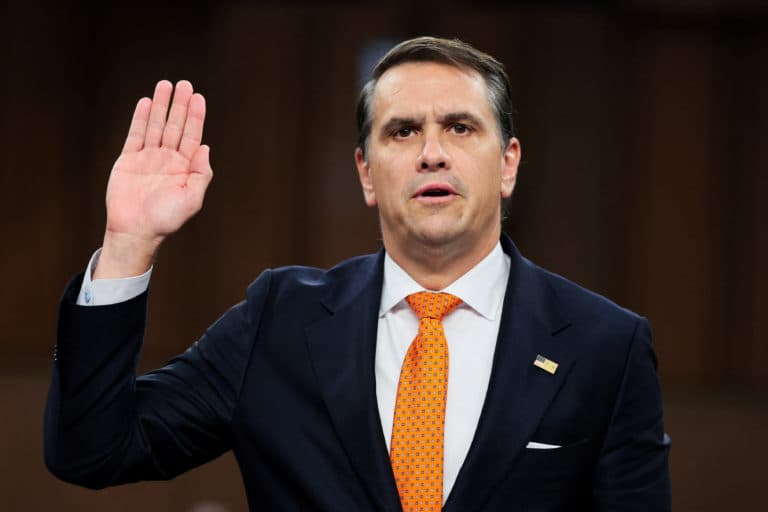
Acting Attorney General Todd Blanche walked into the Senate Judiciary Committee this week expecting a confirmation fight over politics. He got that. He also got something harder to spin: a room full of people asking, on the record, why his department botched the release of records tied to Jeffrey Epstein.
Blanche, President Trump's former personal defense lawyer and the current deputy attorney general, is up for the permanent top job at Justice. The hearing on July 15 was supposed to be his moment to make the case. Instead it turned into an accounting of eighteen months of controversy: a leaked and redacted Epstein file dump, a proposed $1.8 billion 'anti-weaponization' fund that even Republicans couldn't defend, and a tax settlement tied to the president himself.
Was this always going to be contentious? Almost certainly. Blanche is asking senators to confirm the man who once defended Trump in court to now run the agency that investigates the president's allies. That tension surfaced almost immediately, when Blanche referred to himself as Trump's lawyer before catching himself: 'I was Trump's lawyer, and now I'm the deputy attorney general.'
The timing didn't help. Blanche's hearing landed the same week as a separate, equally combative confirmation fight over Jay Clayton, Trump's pick to lead national intelligence, who was pressed repeatedly by senators to acknowledge that Trump lost the 2020 election. Together, the two hearings gave Senate Democrats a two-day platform to hammer the administration's approach to justice, intelligence, and accountability at once, while Judiciary Committee Republicans tried to keep the focus on crime statistics and departmental performance.
"That doesn't excuse the mistakes, of which I take responsibility.
— Todd Blanche, Acting Attorney General
The Epstein files were the hearing's center of gravity. Congress passed the Epstein Transparency Act last year to force the department to release material tied to the disgraced financier's case. Blanche told the committee his team reviewed 'millions and millions of potentially responsive files' under that mandate.
The review did not go cleanly. Personal information and images belonging to survivors turned up in material that should have been redacted. Blanche put the error rate at roughly one percent of documents, a figure that sounds small until you consider the volume involved and who was exposed by it.
Sen. Richard Blumenthal, a Connecticut Democrat, pushed Blanche to apologize directly to survivors for the mishandling. Blanche's response was measured rather than defiant: he said any mistake made 'should not have been made,' and added, 'I am sorry that in about 1% of the documents mistakes were made.'
Republicans Weren't United Behind Him Either
Committee chairman Chuck Grassley opened the hearing in Blanche's corner, crediting the department under his tenure with progress on crime and drug trafficking. 'This department is keeping Americans safe, and the numbers back that up,' Grassley said, framing the hearing as a chance for Blanche to take credit for that record.
But not every Republican was ready to fall in line. Sen. Thom Tillis of North Carolina said publicly that Blanche needed to sit down with Epstein survivors before he'd back the nomination. Blanche did meet with survivors the following afternoon, after a second day of hearings in which he did not testify but instead faced fallout from the first.
That split matters more than usual right now. Committee Republicans are already working with almost no room for error after the sudden death of Sen. Lindsey Graham, which trimmed their voting majority on the panel down to a single seat. One more Republican defection, on top of unanimous Democratic opposition, would be enough to sink the nomination in committee before it ever reaches the Senate floor.
The Fund Nobody Wanted to Defend
Blanche also faced questions about a proposed $1.8 billion 'anti-weaponization' fund, an idea widely read as a mechanism to compensate Trump allies who say they were targeted by prior investigations. Blanche called the fund 'dead' at the hearing, though Sen. Dick Durbin later described a private conversation in which Blanche seemed uncertain how to formally kill it off, telling Durbin only that he'd work with Congress rather than putting anything in writing.
The math around Trump's own finances came up too. Sen. Adam Schiff pressed Blanche on whether an IRS settlement he had signed off on shields the president from tax liability going forward, given that Trump's financial disclosure showed more than $1 billion in crypto-related earnings last year alone. Blanche said no protection applies to taxes not yet filed, drawing a distinction Schiff seemed unconvinced by.
None of this happened in a vacuum. Blanche has held the deputy attorney general post since early in Trump's second term and has been running the department in an acting capacity, meaning the questions senators raised this week are not hypothetical concerns about a nominee's judgment but a direct review of decisions he has already made in office.
What the Hearing Actually Resolved
Not much, procedurally. No vote was taken during the two days of testimony, and Blanche's path to confirmation isn't guaranteed. The death of Sen. Lindsey Graham left committee Republicans with almost no margin for defections, meaning a single wavering vote, like Tillis's, could complicate things.
✓ Blanche acknowledged redaction errors in Epstein file releases
✓ He called the $1.8 billion weaponization fund 'dead'
✓ He met with Epstein survivors after the first day of testimony
Sen. Sheldon Whitehouse used part of his time to press Blanche on FBI Director Kash Patel's conduct, asking pointedly how long Blanche intended to 'put up with that Kash Patel character,' a sign the hearing doubled as a referendum on the wider Justice Department leadership, not just the nominee in the chair.
A Confirmation Still in Limbo
By the second day, the hearing had shifted from Blanche's testimony to its aftermath. Epstein survivor Dani Bensky spoke to the committee about having her name and personal details exposed in the released files, information she said remains circulating online despite the department's assurances.
The committee has not scheduled a confirmation vote. Grassley's narrow margin, combined with Tillis's public conditions and ongoing Democratic objections, means Blanche's confirmation is likely to stretch into the coming weeks rather than close out quickly.
For a Justice Department already under scrutiny over its handling of politically sensitive material, the hearing did little to settle the underlying question: whether the agency's redaction failures were an honest mistake at scale, or a symptom of something more careless.
How long do you intend to put up with that Kash Patel character?— Sen. Sheldon Whitehouse
What happens next depends less on Blanche's answers this week than on whether Tillis and other undecided Republicans are satisfied by his meeting with survivors. Until the committee schedules a vote, the acting attorney general keeps running the department in a kind of holding pattern, confirmed to none of it, accountable for all of it.