A federal judge in Virginia has indefinitely blocked President Donald Trump's $1.8 billion anti-weaponization fund — and she's given the White House one week to prove, in writing and under penalty of perjury, that the program is truly dead.
Sarah Kimball | June 12, 2026
U.S. District Judge Leonie Brinkema of the Eastern District of Virginia wasn't buying it. The Justice Department's lawyers stood in court and told her the controversial fund was finished. Done. Not moving forward. But the judge looked at what President Trump had been saying publicly — support for the concept, sympathy for those who didn't get paid — and she ruled that words aren't enough.
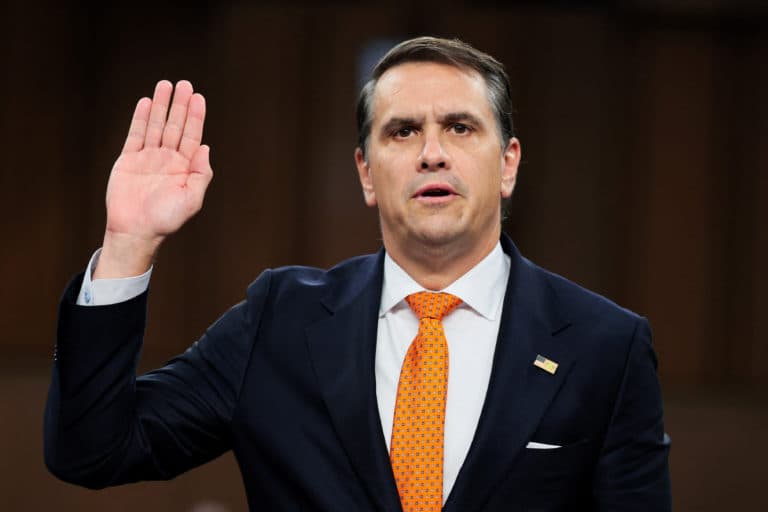
She issued a preliminary injunction, converting a temporary freeze into an indefinite block. The administration now has seven days to produce a sworn declaration, signed by Acting Attorney General Todd Blanche and Treasury Secretary Scott Bessent, confirming the fund has been permanently shut down.
The fund itself had a strange origin. It grew out of a settlement Trump reached with the Justice Department over his personal $10 billion lawsuit against the Internal Revenue Service, stemming from leaked tax records. The settlement directed up to $1.776 billion from the Treasury's Judgment Fund — that's taxpayer money — into a pool overseen by a five-member commission. The commission's job: pay people who claimed they were victims of political 'lawfare.' In practice, critics argued that meant Trump allies, including those convicted in connection with the January 6 Capitol riot.
The backlash was swift and bipartisan. Lawmakers slammed it as a political slush fund. Then, last week, Blanche told Congress the program wasn't moving forward. But he refused to put that in writing when Democratic lawmakers asked him to. And Trump, asked directly whether the fund was dead, told reporters: 'I don't know.' He said his allies 'deserve' the money.
Judge Brinkema did not miss that contradiction. In Friday's hearing, she pressed DOJ lawyer Andrew Block on why Blanche had not formally rescinded the original order establishing the fund. Block said he didn't know — the same answer he'd given a different federal judge two days earlier in a related case. Brinkema called it bluntly: 'There's a huge gap in the record if you don't have the answer to that question.'
The lawsuit was filed by Democracy Forward on behalf of a coalition of plaintiffs: Andrew Floyd, a former federal prosecutor fired after prosecuting January 6 defendants; Jonathan Caravello, a California professor; the City of New Haven, Connecticut; Common Cause, a government watchdog; and the National Abortion Federation. They argued the fund was structured to exclude anyone who suffered under the Trump administration's own political targeting — making the group of eligible recipients extraordinarily narrow and constitutionally suspect.
Brinkema agreed the setup was 'problematic.' She said it was deeply unusual for taxpayer funds to be directed toward 'an extremely small group' widely seen by Americans as having engaged in conduct many find unacceptable.
The preliminary injunction bars the administration from appointing commission members, transferring any money from the Judgment Fund, or processing a single claim.
Blanche's public comments to Congress remain legally insufficient, the judge concluded. She said she lacked the evidence needed to rule that the program was truly gone and wouldn't come back in a different form.
'If the fund is truly rescinded, where is the sworn declaration saying so?' said Amy Powell, a former DOJ senior trial counsel. 'The court appears unwilling to treat political statements and media reports as a substitute for a formal record.'
The judge left one exit ramp open. If Blanche and Bessent file that sworn declaration within seven days, she indicated she may dismiss the case entirely — provided the plaintiffs agree. The clock is running.
"There's a huge gap in the record if you don't have the answer to that question.
— U.S. District Judge Leonie Brinkema, Eastern District of Virginia
The fund traces back to a settlement between the Trump administration and the Justice Department over the president's personal $10 billion lawsuit against the IRS. Taxpayer money from the Treasury's Judgment Fund was earmarked for people claiming to be victims of government 'weaponization' — a term Trump and his allies applied broadly to criminal and civil investigations targeting them.
The five-member oversight commission was never fully constituted. The preliminary injunction now bars any steps to staff it, fund it, or use it — indefinitely.
The Contradiction at the Heart of the Case
The core problem for the Justice Department is simple: the president and his own lawyers are not saying the same thing. DOJ attorneys told the court the fund was dead. Trump publicly lamented that it was stalled and said his allies deserved compensation. Blanche told Congress it wasn't moving forward — but declined to commit that in sworn writing.
Judge Brinkema cited those contradictions as the central reason she refused to declare the lawsuit moot. A verbal political statement is not a legal act. The order that created the fund is still on the books. Until that changes — formally and under oath — the injunction holds.
Who Sued and Why
The plaintiffs represent a deliberate cross-section of people and institutions that would be explicitly excluded from the fund. A fired federal prosecutor. A university professor. A major American city. A nonpartisan watchdog. An abortion providers' association. Their argument: the fund was built to serve one political constituency while locking out everyone else who might have legitimate grievances against the current administration.
Key Facts at a Glance
The injunction covers the full scope of the fund's operations while the legal challenge proceeds in federal court.
✓ Preliminary injunction issued June 12, 2026, by Judge Leonie Brinkema, E.D. Virginia
✓ Fund total: $1.776 billion drawn from Treasury's Judgment Fund (taxpayer money)
✓ Origin: Settlement of Trump's personal $10B lawsuit against the IRS over leaked tax records
✓ Administration given seven days to file a sworn declaration permanently terminating the program
✓ Plaintiffs represented by Democracy Forward; case filed in Eastern District of Virginia
✓ Related IRS lawsuit: Trump et al. v. IRS, Case No. 1:26-cv-20609 (S.D. Fla.)
No commission members have been confirmed. No payments have been disbursed. The injunction keeps it that way until further court action.
What Happens Next
The administration faces a hard deadline. Blanche and Bessent must sign a sworn declaration — subject to perjury penalties — confirming the fund is permanently terminated. If they do, Brinkema indicated she would likely dismiss the lawsuit, assuming plaintiffs consent.
If they don't, the injunction stands indefinitely and the legal challenge continues through federal court.
Reuters has separately reported that Trump allies are exploring alternative paths to compensate supporters who claim government abuse — a signal that the concept behind the fund may not be fully abandoned, even if this particular vehicle is.
I don't have in this record the type of uncontested evidence that this will not be repeated.— U.S. District Judge Leonie Brinkema, during Friday's court hearing
The ruling puts the White House in an awkward position. Formally swearing the fund is dead means putting a name — and legal exposure — behind a commitment the president hasn't personally made. Not filing the declaration means the injunction holds and the lawsuit grinds forward, keeping the controversy alive.
Either way, the court has made clear it will not defer to political statements alone. The next move belongs to the Justice Department.