
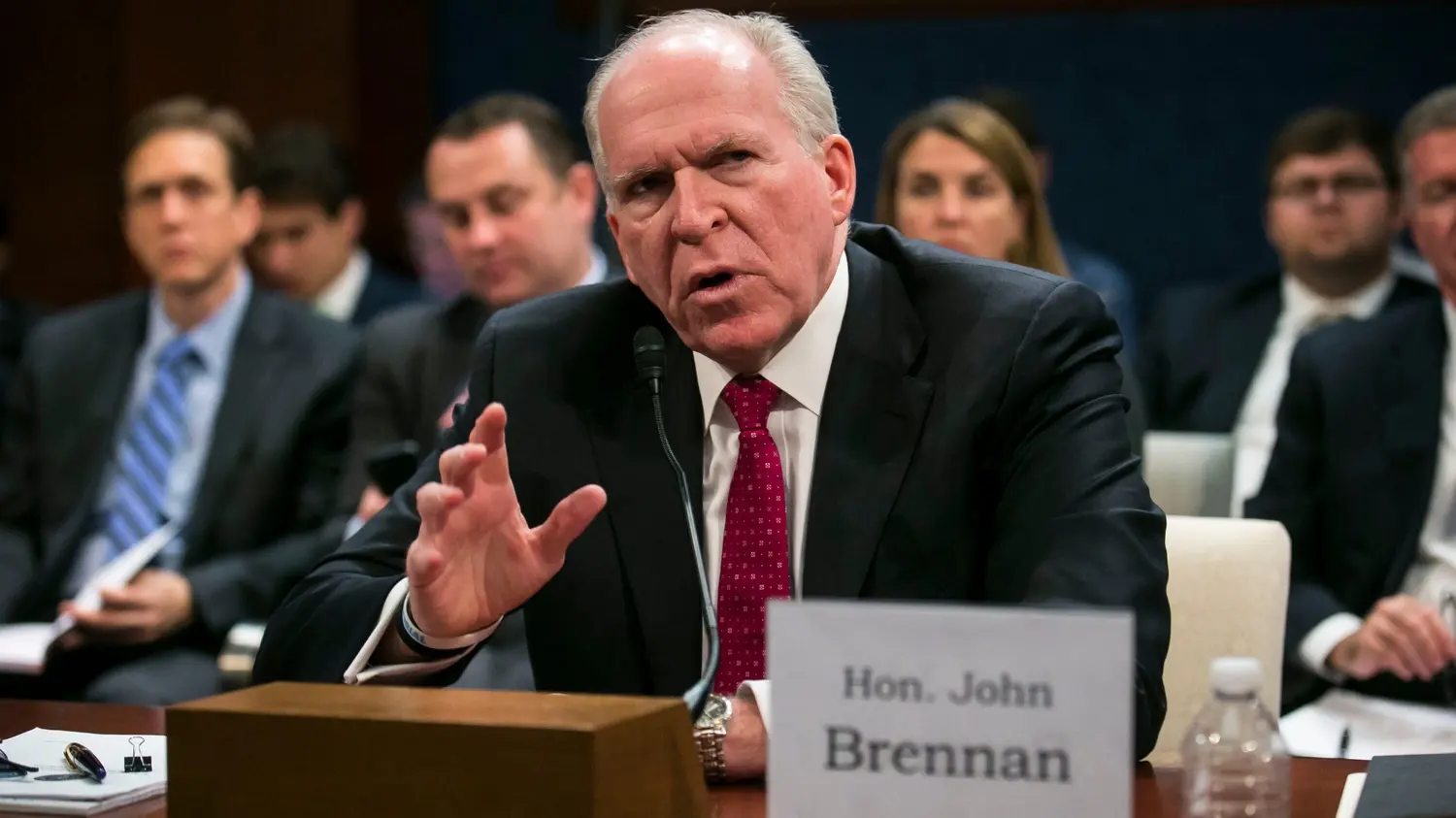
John Brennan didn't wait around. On Wednesday, the former CIA director sued the Justice Department, asking a federal court to order officials to hang onto records connected to two separate criminal investigations into him.
The math is simple, according to Brennan's lawyers: if he's indicted, he'll need those records to argue the whole thing was payback. His filing in Washington claims prosecutors' internal emails, texts and memos will be essential to proving any future case was vindictive — and that it started because Trump wanted it to.
One investigation, out of the U.S. Attorney's Office in Miami, is looking at whether Brennan lied to Congress about the 2016 intelligence assessment on Russian interference. A second, broader probe is examining whether Brennan and other former officials spent the last decade conspiring against Trump. Brennan denies wrongdoing on both counts.
"It is certainly rich that John Brennan is accusing anyone of a 'retribution campaign.'
— Justice Department spokesperson
Brennan's team isn't just worried about paper trails. The complaint points directly at the administration's habit of using disappearing-message apps like Signal, arguing that without a court order, key communications could vanish before they're ever produced in discovery.
That's the crux of the strategy: catch the evidence before it's gone, so it's there later if Brennan needs to argue selective or vindictive prosecution.
Brennan led the CIA under President Obama and has spent years as one of Trump's most vocal critics — a history his lawyers know cuts both ways in this fight.
Why this case matters beyond Brennan
Judges have gotten noticeably less patient with DOJ subpoenas that look politically motivated. Earlier this year, courts blocked subpoenas tied to probes involving former Fed Chair Jerome Powell and Minnesota Democratic officials.
Brennan's suit is betting that same judicial skepticism extends to preservation orders — a lower bar than blocking an investigation outright, but one that could still tie DOJ's hands.
What Brennan's lawsuit actually asks for
The suit doesn't ask a judge to shut down either investigation. It asks for something narrower and, arguably, harder to refuse: an order requiring DOJ and the White House to preserve emails, texts, status reports and memos tied to the two probes.
Key Case Facts
The filing names Trump, Attorney General-designate Todd Blanche, FBI Director Kash Patel and the Florida prosecutors overseeing the case as defendants.
✓ Filed July 1, 2026 in U.S. District Court for D.C.
✓ Assigned to Judge Jia M. Cobb
✓ Seeks preservation order, not dismissal of the probes
✓ Targets records from Signal and other ephemeral messaging apps
Brennan's lawyers say a close look at prosecutors' internal communications would show whether the case is built on real evidence or political grudge.
What Happens Next
Nothing about this case is settled. No indictment has been handed down, and the preservation request is just the opening move.
If Brennan is eventually charged, expect his defense to lean hard on whatever internal communications survive — assuming the court grants the order and DOJ actually complies.
A careful examination of the prosecutors' emails, texts and memos would let a court determine whether their decisions were based on legitimate concerns or a desire to selectively prosecute.— From Brennan's court filing
For now, the fight is about paperwork, not guilt or innocence. But in a case this politically charged, paperwork might end up deciding everything.