
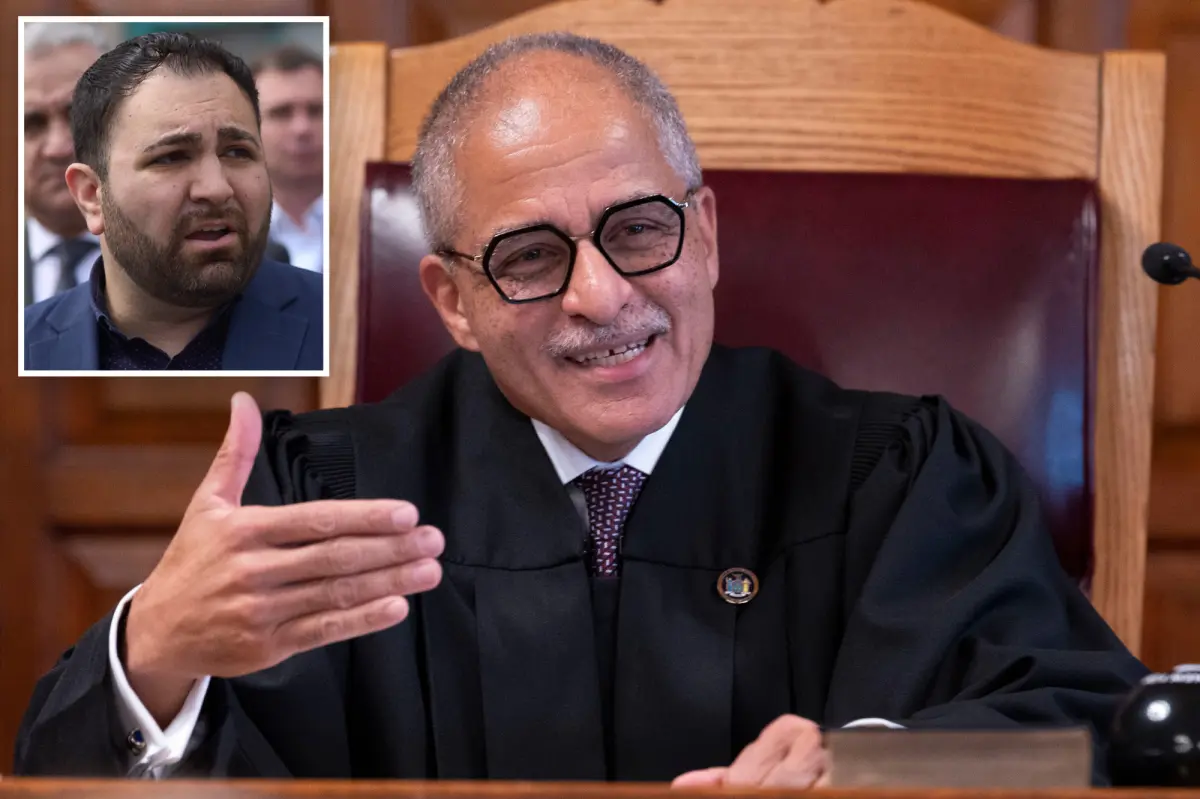
New York's judicial watchdog has closed its ethics investigation into Chief Judge Rowan Wilson without imposing any discipline — but only after he admitted, in writing, that he should never have urged voters to vote out judges who hand down long prison sentences.
The case traces back to a February forum at CUNY Law School, where Wilson criticized strict sentencing practices and told the audience that keeping rehabilitated people locked up was wasteful. He went further, suggesting that removing tough-sentencing judges at the ballot box was something the crowd could do for him.
That remark is what drew the formal complaint. Republican state Sen. Anthony Palumbo and Assemblyman Michael Tannousis, both ranking members of their chambers' judiciary committees, filed it with the Commission on Judicial Conduct in March, arguing Wilson had compromised his neutrality and stepped outside the bounds of his role.
"I wish I had been clearer.
— Chief Judge Rowan Wilson, in a letter to the Commission on Judicial Conduct
Wilson's comments came while he was also lobbying lawmakers to pass the Second Look Act, a bill that would let people serving sentences of ten years or more petition a judge to reconsider their punishment. The commission found nothing improper about that advocacy on its own.
What crossed the line, in Wilson's own account, was tying that policy push to an explicit call for voters to remove specific sitting judges — conduct the commission treats very differently from ordinary legislative lobbying by a chief judge.
Wilson told the commission his remarks were a reaction to hearing that another judge had called a defendant an 'animal' who should be locked up for life — language he said left him reacting out of disgust rather than measured judgment.
Why the outcome was expected
The commission has 11 seats, and the makeup was never favorable to the complaint's backers: six members are Democratic appointees, three were named by Wilson himself, and only two came from Republican-aligned appointing authorities.
That structure made formal discipline — a private caution, public admonishment, censure, or removal — a long shot from the start, and Republican lawmakers said as much even as they pushed the complaint forward.
Reaction was split along party lines
Wilson's attorney, Rolando Acosta, confirmed the dismissal. Palumbo declined to comment on the outcome, while Tannousis argued the commission had applied a more forgiving standard than it would have for a judge with different politics.
Key figures involved
Several officials weighed in publicly as the complaint moved through the process.
✓ Chief Judge Rowan Wilson — leader of the NY Court of Appeals since 2022
✓ State Sen. Anthony Palumbo — filed the complaint, ranking member of Senate Judiciary
✓ Assemblyman Michael Tannousis — co-filed the complaint, ranking member of Assembly Judiciary
Democratic Sen. Luis Sepúlveda, chair of the Senate Judiciary Committee, had urged that the process be allowed to run its course before anyone drew conclusions.
What happens next
The ethics complaint itself is closed, and the only lasting consequence is Wilson's written concession that his phrasing was a mistake.
The Second Look Act, the legislation Wilson was promoting when he made the original remarks, is still pending in Albany. It remains the substantive policy fight, separate from the controversy over how Wilson chose to argue for it.
It's unfortunate that those comments were made in the first place.— State Sen. Anthony Palumbo
Wilson has not spoken publicly about the resolution beyond his letter to the commission. His tenure has already included high-profile rulings, including the decision overturning Harvey Weinstein's original sex-crimes conviction in Manhattan.