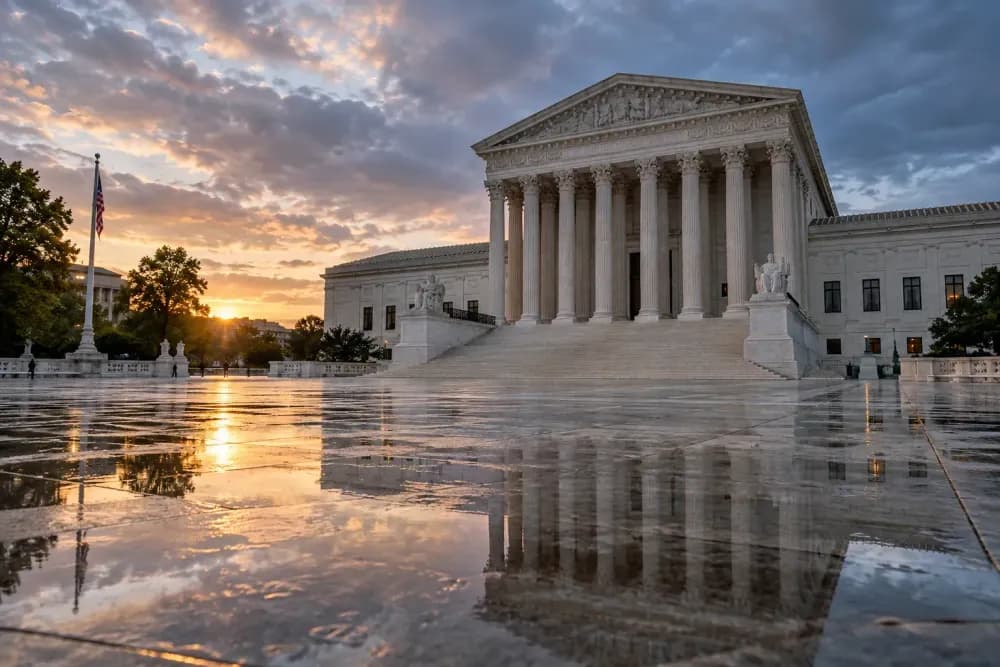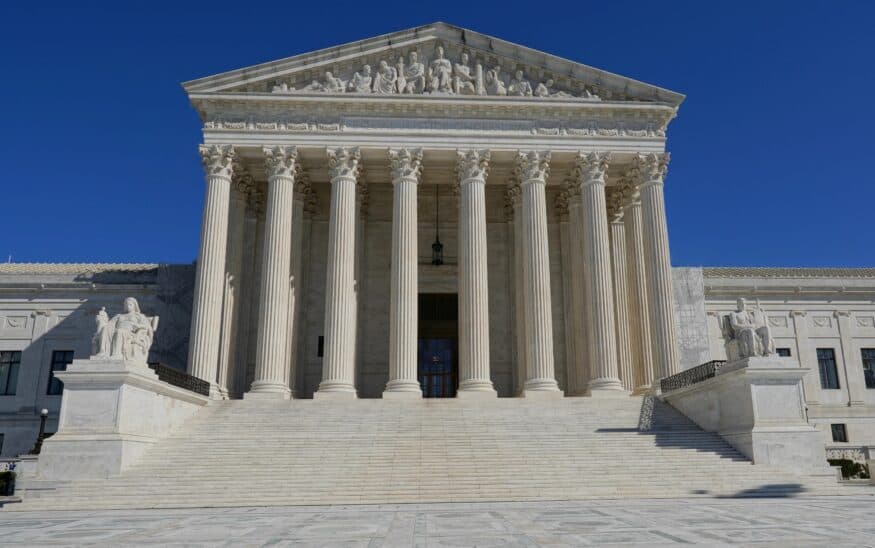
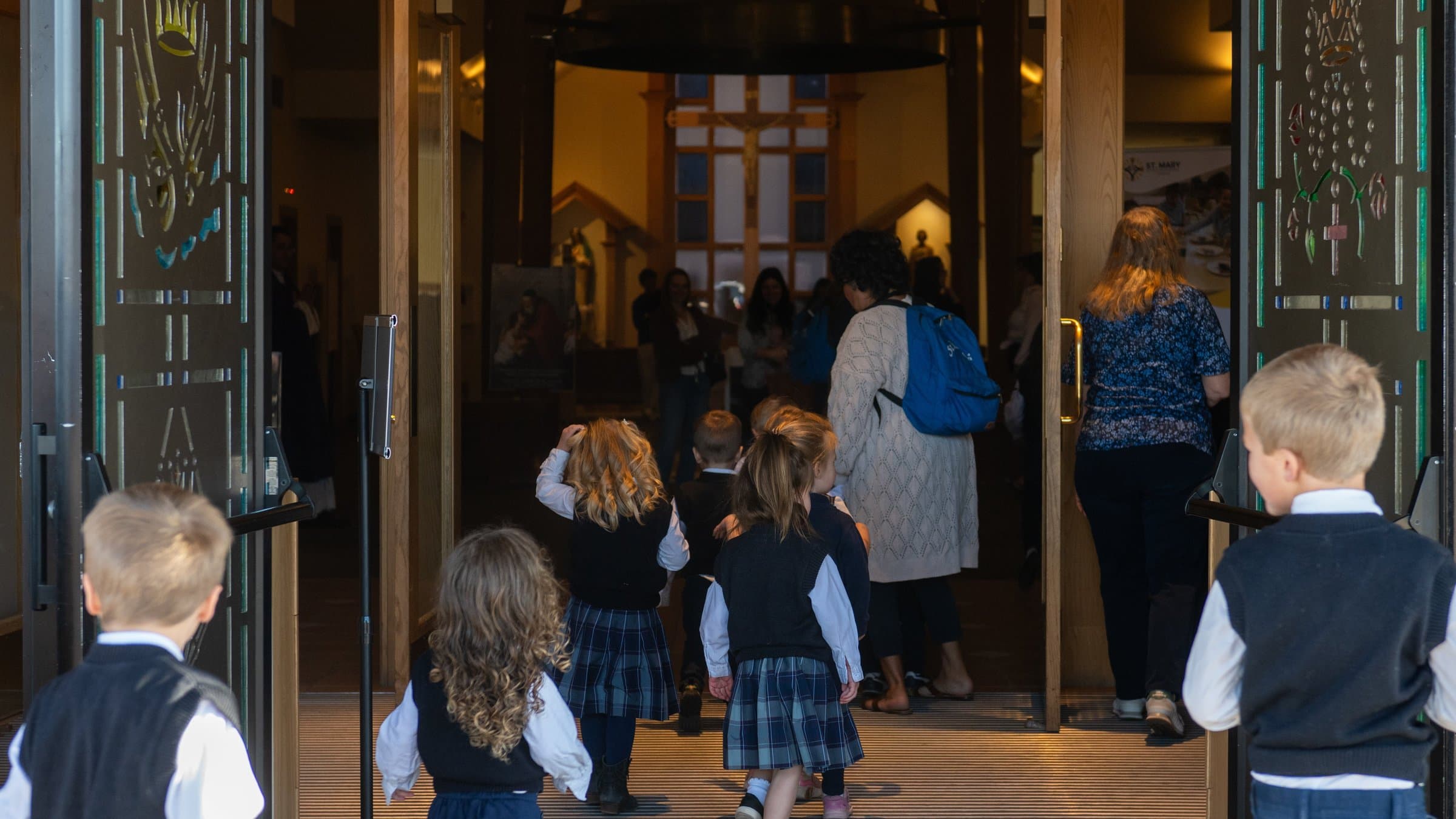
The Supreme Court on Tuesday appeared ready to rule that Colorado went too far when it kept Catholic preschools out of its state-funded universal preschool program over the schools’ refusal to accept its nondiscrimination rules, which cover sexual orientation and gender identity. After just over two hours of argument, a majority of justices seemed to favor holding the state’s policy to a tougher constitutional test than the lower courts applied.
The case, docketed as No. 25-581, asks whether the First Amendment requires Colorado to exempt religious preschools from a rule that every participating provider must offer equal enrollment opportunities regardless of religion, race, sexual orientation, gender identity, income or disability. The justices could apply the stricter test themselves or send the dispute back to the lower courts, and a ruling is expected before the term ends.
The challengers are the Archdiocese of Denver, two Catholic parishes and two parents of preschool-age children. A federal district court and the 10th U.S. Circuit Court of Appeals both sided with the state before the justices agreed in April 2026 to take the case. The Trump administration backs the Catholic side, and Principal Deputy Solicitor General Sarah Harris argued in support of the challengers.
"equal opportunity, not some opportunity
— Helen Norton, Colorado Deputy Solicitor General, describing the state’s interest
Colorado, represented by Deputy Solicitor General Helen Norton, told the court it welcomes religious preschools and lets them teach their beliefs freely. The state’s only demand, she said, is that schools taking public money follow the same enrollment rules as everyone else. Norton also stressed there is no evidence lawmakers wrote the rule to target religion.
Nicholas Reaves, the lawyer for the Catholic schools, countered that admitting them would add seats rather than take any away. He argued the state’s rule is not truly across-the-board because it allows preferences tied to income, disability and a discretionary catch-all category, which in his view undercuts the claim that it applies evenly to every school.
The program began in 2023 after Colorado voters backed the idea in 2020, and it offers families up to 15 free hours of preschool a week. Roughly 2,000 providers take part, including religious schools that signed the state’s agreement.
A 2022 Precedent Sits at the Center of the Fight
Much of the debate turned on Carson v. Makin, the 2022 decision that struck down a Maine tuition rule excluding schools that provide religious instruction. Chief Justice John Roberts questioned both lawyers on the point. He told Norton the practical effect of the Maine law looked much like Colorado’s, yet he also reminded Reaves that the Maine statute had singled out religious schools, which the Colorado rule does not.
Justices Neil Gorsuch, Samuel Alito and Amy Coney Barrett were drawn to the idea that a rule can burden religion even if it never mentions it. Barrett asked why Colorado may attach a condition it knows religious schools cannot accept, and Alito pointed to the state’s recent losses in religious liberty cases involving a baker, a web designer and a counselor.
Liberal Justices Warn Against a Wider Exception
Justices Elena Kagan and Ketanji Brown Jackson argued that the earlier cases rested on a ban on discrimination against religion, not a right to special treatment. Kagan said the Catholic schools were asking for a ruling that went “far beyond” those decisions, and Jackson noted that no other participating school seeks to exclude families.
Justice Sonia Sotomayor asked whether a victory for the schools could also let a religious preschool turn away Black children. Reaves said it could not, pointing to a 1983 case that upheld stripping tax benefits from racially discriminatory schools. By the end of the session, Sotomayor said any path the court chose would carry heavy costs for someone.
What Stood Out in the Courtroom
A majority appeared open to applying strict scrutiny, the toughest constitutional test, to Colorado’s rule.
Justice Brett Kavanaugh asked why the state had not pursued an outcome that respected both religious believers and LGBTQ families.
The court could decide the issue itself or return the case to the lower courts for a new look.
A written decision is expected by the end of the term.
✓ Case: St. Mary Catholic Parish v. Roy, No. 25-581
✓ Argued Nov. 3, 2026 after the 10th Circuit sided with Colorado
✓ Trump administration supports the Catholic preschools
✓ Ruling expected by the end of the term next summer
Kavanaugh questioned why the dispute arose at all, noting that more than 2,000 preschools take part and that families have plenty of choices that could suit them.
What a Win for the Schools Could Change Beyond Colorado
A victory for the Catholic preschools could shape how states attach conditions to public money well beyond Colorado. Supporters of the schools say it would stop governments from freezing out religious providers through neutral-sounding rules. LGBTQ advocates warn it could let publicly funded schools turn away children because of who their parents are. Lambda Legal’s Karen Loewy said any school that accepts taxpayer dollars must follow state law and keep its doors open to every family.
The challengers note that two federal appeals courts and two state supreme courts have taken a different view from the 10th Circuit on the question. Civil rights groups say families in areas with fewer preschool options could face the biggest consequences if schools are allowed to opt out of the rules.
An accommodation is neutrality.— Nicholas Reaves, attorney for the Catholic preschools
Readers should watch for the court’s written decision, due by the end of June, and for whether it settles the test lower courts must use when religious schools challenge neutral rules attached to public funding.
Sources
- SCOTUSblog: Court seems poised to side with Catholic preschools in religious discrimination disputescotusblog.com(opens in a new tab)
- CBS News: Supreme Court seems likely to side with Catholic preschools in fight over Colorado programcbsnews.com(opens in a new tab)
- Chalkbeat Colorado: Here’s what the Supreme Court said during oral arguments in Colorado’s Catholic preschool casechalkbeat.org(opens in a new tab)
- Lambda Legal: U.S. Supreme Court Hears Argument on Whether Taxpayer-Funded Preschools Can Turn Away LGBTQ+ Familieslambdalegal.org(opens in a new tab)
- The Daily Signal: Supreme Court Hears Contentious Arguments on Religious Freedom Fight Over Preschool Programdailysignal.com(opens in a new tab)
- Justia Verdict: Any Good News in the Oral Argument in St. Mary Catholic Parish v. Roy?verdict.justia.com(opens in a new tab)
- Cornell Legal Information Institute: St. Mary Catholic Parish v. Roy (No. 25-581)law.cornell.edu(opens in a new tab)