
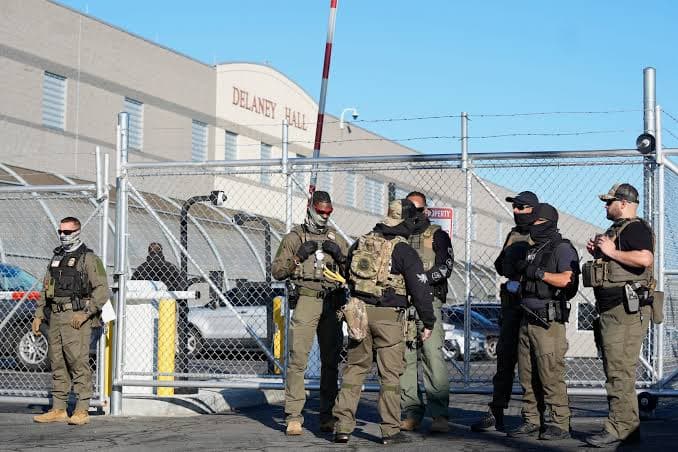
New Jersey's attorney general isn't waiting on federal regulators to police one of the state's most scrutinized institutions. Attorney General Jennifer Davenport announced Friday that her office has opened a civil rights investigation into Delaney Hall, the privately operated immigration detention center in Newark that has spent the better part of this year at the center of protests, lawsuits and mounting allegations of neglect.
The timing is hard to separate from recent events. The probe was announced days after Edwin Jovanny Lopez Cornejo, a 39-year-old Salvadoran national, died at a hospital following what U.S. Immigration and Customs Enforcement called a medical emergency. He is the third detainee connected to Delaney Hall to die within roughly eight months, and his death has reignited a fight between Trenton and the facility's private operator, GEO Group, that has been building since spring.
State officials aren't mincing words. The Division on Civil Rights, an arm of the Attorney General's office, has issued investigative subpoenas to GEO Group demanding records and testimony. Investigators want to know whether staff conduct, or failures to act, crossed the line into civil rights violations against people held at the 1,000-bed facility.
"a legal and a moral duty to stand up for the civil rights of people within our state
— Jennifer Davenport, New Jersey Attorney General
Lopez Cornejo was taken into ICE custody in Plainfield on June 18, according to officials. He was moved to Delaney Hall, where his family says he needed daily medication to manage high blood pressure, diabetes and epilepsy.
His mother, Maria Cornejo, has said he called her the day before he died and told her he had lost feeling in half his face and one arm. Relatives are demanding an outside investigation, arguing the facility failed to get him emergency treatment in time.
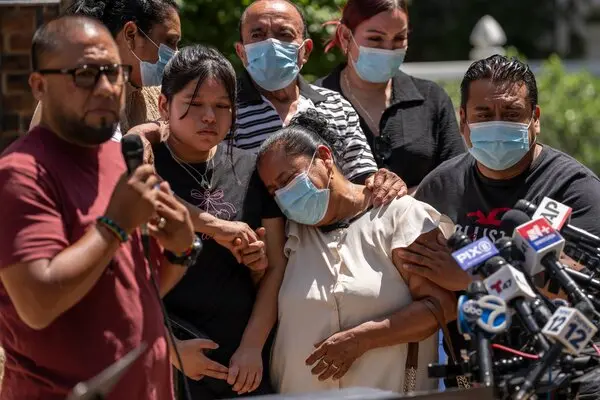
ICE has pushed back on the family's account, maintaining that Lopez Cornejo received appropriate medical attention from health professionals before his death. The agency and GEO Group did not respond to requests for comment on the new investigation. Under federal rules, ICE is required to notify Congress and the public whenever someone dies in its custody.
A Pattern State Officials Say They Can No Longer Ignore
Lopez Cornejo isn't the only name attached to this. Last December, 41-year-old detainee Wilson Brutus died in a hospital after being transported from Delaney Hall; the cause of his death was never made public.
Then there's a case Rep. Rob Menendez has raised that complicates the official death toll. In July, according to Menendez, a detainee suffered a seizure during intake and was released from ICE custody on the spot before being sent to the hospital, where he died. Because ICE had already released him, the agency doesn't count it as an in-custody death.
Menendez called that distinction hollow: "Once they do so, they're no longer responsible for even reporting the death."
The three deaths in less than a year have turned Delaney Hall into one of the most closely watched detention sites in the country, drawing scrutiny not just from Trenton but from New Jersey's entire congressional delegation.
Conditions Complaints That Predate the Deaths
The civil rights probe lands on top of months of complaints that had already made Delaney Hall a target for state scrutiny, long before Lopez Cornejo's death.
Members of New Jersey's congressional delegation who toured the facility this spring backed up many of the complaints. During one visit in May, Sen. Andy Kim spoke with a pregnant detainee who said she wasn't getting adequate medical oversight, according to lawmakers who were present.
What detainees and advocates have alleged
Former detainees and their families have described conditions inside the facility that state officials call disturbing.
✓ Spoiled food and limited access to hygiene items, including toilet paper and menstrual products
✓ Squalid, unsanitary bathrooms and faulty ventilation, with no air conditioning through the summer heat
✓ Restricted or blocked access for state health inspectors trying to examine medical and living areas
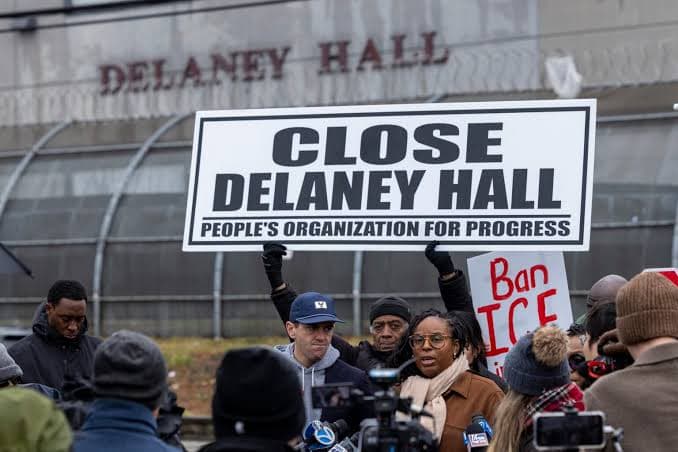
Those complaints fueled a hunger strike and protests in May, and separately prompted the Sherrill administration to sue GEO Group directly. That lawsuit, filed by the Department of Health, seeks a court order forcing the company to grant inspectors full access to medical units, sleeping areas and bathing facilities. GEO Group has not publicly responded to the claims, and the case remains unresolved. Newark has its own long-running suit against the company, alleging it reopened the facility without proper permits; a judge sent that case to mediation this spring.
A Flashpoint in the Wider Immigration Fight
Delaney Hall has become more than a detention facility. It's turned into a symbol in New Jersey's broader clash with federal immigration enforcement.
Protests outside the facility in May led to clashes between demonstrators and law enforcement, prompting Gov. Mikie Sherrill to send state police to take control of the surrounding area. U.S. Rep. LaMonica McIver and Newark Mayor Ras Baraka were both arrested outside Delaney Hall that month. Charges against Baraka were later dropped, but McIver still faces an assault charge tied to the confrontation.
We will not tolerate a facility that abdicates any transparency and accountability.— Gov. Mikie Sherrill
GEO Group operates Delaney Hall under a 15-year, $1 billion contract with the federal government, one of the largest such arrangements in the country. The company has told investors the facility remains a lucrative piece of its portfolio, reporting roughly $520 million in new or expanded business last year — a financial backdrop that critics say has pushed profit ahead of oversight. Nationally, more than 50 people have died in ICE custody since President Trump returned to office in January 2025 and launched an expanded deportation campaign, a toll that has made facilities like Delaney Hall the subject of intensifying fights between state and federal authorities over who gets to look inside.