
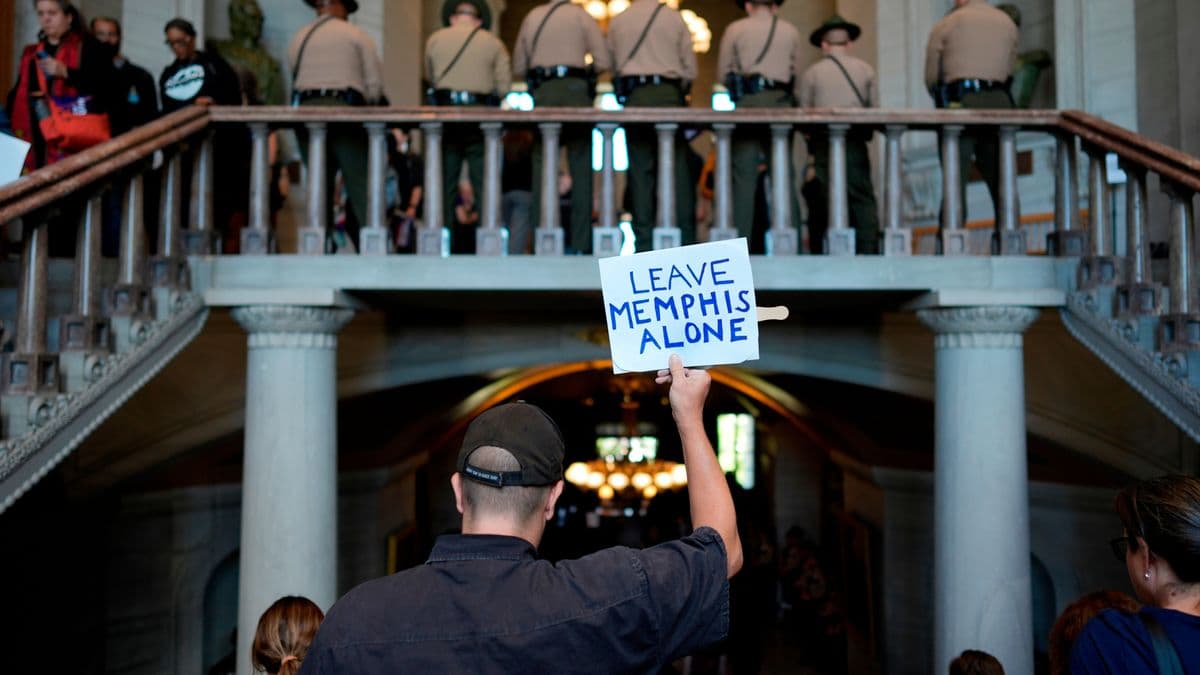
A federal court in Nashville declined this week to block Tennessee's newly drawn congressional map, even as evidence mounts that the redraw dismantled the state's only Black-majority district. The ruling means voters in Memphis will cast ballots in the state's August primary and the November general election under lines civil rights lawyers call discriminatory.
The case, Sherman v. Hargett, was filed in May by three Memphis voters alongside the Black Clergy Collaborative of Memphis, the Memphis A. Philip Randolph Institute and the Equity Alliance. Their lawsuit accuses the Tennessee General Assembly's Republican supermajority of intentionally fracturing a congressional district that had given Black Memphians a real shot at electing their preferred candidates for decades.
Under the new lines, Black voters in Shelby County are scattered across three majority-white districts stretching from Memphis deep into central Tennessee. Plaintiffs argue that dispersal was no accident — it was designed, they say, to blunt Black political power just as another election cycle approaches. The state has not conceded the point, and the fight over intent is now the crux of the case going forward.
"The decisions by this court continue to further the disenfranchisement of Black voters in Memphis.
— Amber Sherman, named plaintiff
Losing the injunction fight doesn't mean losing the case. The court didn't dismiss the claims — it simply declined to freeze the map while the lawsuit plays out, which means the redrawn district lines stay in effect for this year's elections regardless of how the underlying case is eventually decided.
That distinction matters to the ACLU's Voting Rights Project, which is representing the plaintiffs alongside the ACLU of Tennessee. Senior staff attorney Ari Savitzky framed the ruling as one more test of how far courts will go to protect minority voters right now.
"Black voters in Memphis are being forced to use a congressional map that unlawfully dilutes their political power," Savitzky said.
What Happens Next
Sherman v. Hargett isn't an isolated fight. It's one of at least three active challenges to Tennessee's mid-decade redistricting, alongside NAACP Tennessee State Conference v. Tennessee and Hale v. Lee, both still pending in state and federal court.
For now, the plaintiffs say they're not backing down. Their attorneys have signaled they'll keep pushing for permanent relief even though this year's elections will run under the contested map.
A Broader Pattern in Southern Redistricting
Skeptics might ask whether one denied injunction really signals anything larger. It's worth noting the timing: this ruling lands amid a wave of mid-decade map redraws across Republican-controlled legislatures, several of which are already tied up in litigation over race and representation.
Related Litigation to Watch
Several parallel cases are moving through Tennessee courts and could shape how far the state's new map ultimately stands.
✓ Sherman v. Hargett — federal claim of intentional racial discrimination, still pending
✓ NAACP Tenn. State Conf. v. Tennessee — state-law challenge to the redraw, pending
✓ Hale v. Lee — federal claim over burdens on freedom of association, pending
None of these cases have reached a final resolution.
Not Over Yet
The ACLU of Tennessee says this ruling changes the political map for one election cycle, not the outcome of the broader legal fight.
Legal director Lucas Cameron-Vaughn said Black voters in Memphis will now face a congressional election under a map his organization considers unlawful, but he framed the setback as procedural rather than final. The case proceeds toward a ruling on the merits, with no trial date yet scheduled.
Tennessee lawmakers deliberately divided Black neighborhoods across multiple districts, minimizing their voting strength.— Lucas Cameron-Vaughn, Legal Director, ACLU of Tennessee
Whether the map survives past November now rests with a federal judge in Nashville who has yet to rule on its constitutionality — only on whether to pause it in the meantime.