
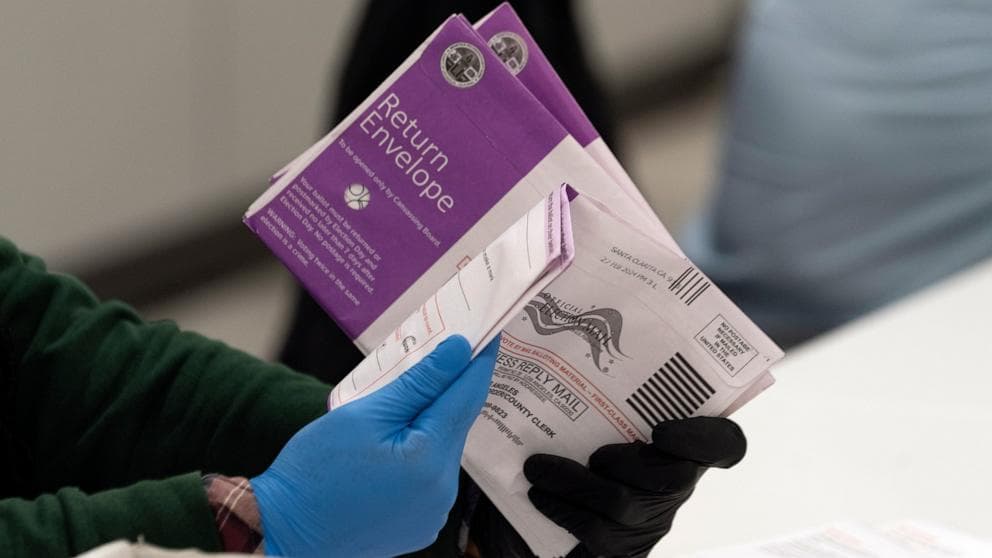
Democratic leaders and party committees went to federal court in Washington late Tuesday, asking a judge to stop the Trump administration from pressuring states to purge voters, set aside certain ballots and threaten local election workers with prosecution. The filing comes less than two weeks before Election Day on Nov. 3, with early voting already underway in many states.
The plaintiffs include the Democratic National Committee and its House and Senate campaign arms, the Nevada Democratic Party, Senate Democratic leader Chuck Schumer, House Democratic leader Hakeem Jeffries and a naturalized-citizen voter in California. They are suing President Donald Trump, Attorney General Todd Blanche, Homeland Security Secretary Markwayne Mullin and their departments, arguing the pressure campaign violates the Voting Rights Act's ban on voter intimidation and constitutional limits on federal control of state officials.
The administration rejects that picture. Justice Department spokeswoman Kiersten Pels said every step is grounded in law and being argued in open court, the White House accused Democrats of obstructing common-sense election security, and a Homeland Security spokesperson called the suit a political stunt.
"None of this is lawful.
— Democrats' complaint, filed in D.C. federal court
California is the flashpoint. In mid-October, the Justice Department gave Los Angeles County a list of more than 20,000 registrants that federal agencies call likely noncitizens and demanded their ballots be held back. State and county officials refused, citing federal and state law, and the department sued on Oct. 15.
On Monday, prosecutors sought an emergency restraining order and charged 28 green-card holders from the list, some of whom do not appear to have voted. Days earlier, a senior DOJ official warned California officials they could face prosecution for knowingly counting flagged ballots, and Trump wrote online that they would all go to jail for a long time.
On Wednesday the case was reassigned to Judge David Carter, who dismissed the department's earlier bid for California's unredacted voter rolls in January. A hearing on the restraining-order request is reportedly set for Oct. 27.
Doubts Over the Federal List
Local officials say the list does not hold up. In court papers filed Tuesday, two Los Angeles County registrar's office officials said a preliminary check of 200 names found nearly 40 percent indicated a U.S. birthplace, which they called strong evidence of citizenship, and 71.2 percent had no voting history.
The federal numbers have also shifted. Homeland Security put California's potential noncitizen count at 190,000 over the summer; the DOJ list is now near 20,000. In Nevada, a federal claim of nearly 16,000 was later narrowed to 185 people, and state officials say all of them are citizens. DOJ officials say the California list reflects the people they are most confident about, that it is likely to grow, and that segregating ballots is a temporary step while citizenship is verified.
What the Suit Wants Stopped
The Democrats are not asking the court to rule on any single voter's eligibility. They want an order barring tactics they say are meant to frighten election officials into compliance.
Conduct Targeted in the Complaint
The plaintiffs ask the judge to block:
✓ Pressure on states to remove voters using federal lists of suspected noncitizens
✓ Demands that states segregate or decline to count ballots from flagged voters
✓ Threats of criminal prosecution against state and local election officials
The complaint calls the federal lists sloppily built. Experts also note that federal law restricts systematic voter-roll removals within 90 days of an election, a point California raised. The administration has argued elsewhere that the limit should not cover noncitizens, who were never eligible to register.
A Short Runway to Election Day
Time is the pressure point. Ballots are already being returned, so a ruling on the California request could arrive while voting is underway. Separately, the Justice Department has sued 30 states and Washington, D.C., for complete voter rolls with sensitive personal data, and Reuters reports it has lost 26 of those cases without a win.
The department says its voting-crime cases show the threat is real, citing charges against 113 noncitizens in 20 states over seven weeks. Critics disagree. UCLA election law scholar Rick Hasen called the numbers a drop in the bucket against more than 20 million registered California voters, and past research links many noncitizen registrations to clerical or software errors.
California cannot facilitate the violation of federal law.— Kiersten Pels, Justice Department spokesperson
For now, the Oct. 27 hearing in Los Angeles is the first real test of how far Washington can go in directing how states handle ballots. About six in ten Americans say they are confident the election will be conducted fairly and accurately, according to an ABC News/Washington Post/Ipsos poll.