Federal prosecutors say an OpenAI engineer who was arrested last week had one-way tickets to Saudi Arabia booked for three days after the FBI took him into custody, a detail that now sits at the center of the fight over whether he should be released before trial.
Abdulrahman Alfozan, 35, is charged with trying to intercept oral communications by hiding a recording device in an executive conference room at OpenAI's San Francisco offices. He was arrested on October 9 and appeared in federal court on October 13. He remains in custody, and a judge will hear arguments on his detention on October 19.
According to a court filing reported by Bloomberg, Alfozan had tickets to fly to Saudi Arabia through Istanbul on October 12, along with his wife and another family member. Prosecutors cited that kind of travel in an October 8 request to keep the case sealed, arguing he had both the means and the motive to leave the country if he learned of the investigation. No plea has been reported.
OpenAI staff found the device on September 30, plugged into a USB port behind a television and wrapped in toilet paper. The complaint says it was installed on or about September 28. It had a microphone, could connect to a camera, and its stored data was encrypted when it was found.
OpenAI said it used its own AI models to understand the device and trace where it came from, which led the company to Alfozan. He had worked as an engineer there since July 2025. OpenAI fired him and referred the matter to the FBI, which says its investigation is continuing.
"secretly capture sensitive communications about the company's super intelligence technology
— FBI Director Kash Patel, describing the alleged motive
The complaint describes what investigators call a pattern of preparation. For about a month, ending September 16, Alfozan allegedly used an AI productivity agent to look up information about OpenAI's buildings, meeting rooms, executive locations and meeting schedules.
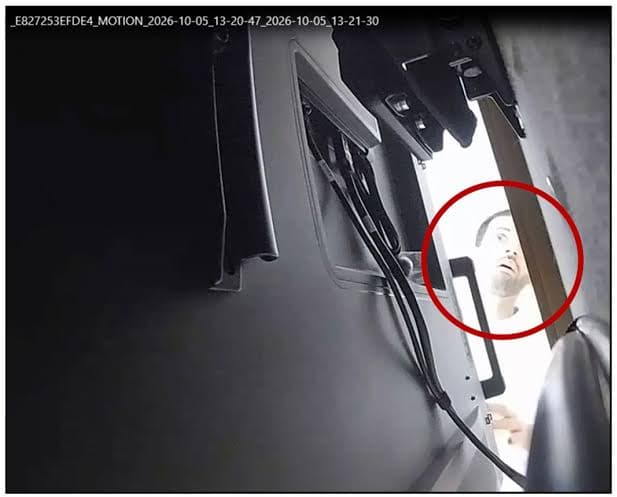
Surveillance footage also allegedly placed him near the conference room several times, even though he was not authorized to enter it or attend meetings there. After the device was found, OpenAI put a camera in the room. Prosecutors say that camera recorded him on October 5 going in and checking behind the television.
That same day, security staff opened a bag he had left unattended in another room. According to the complaint, they found his wallet, his ID and a second, similar recording device.
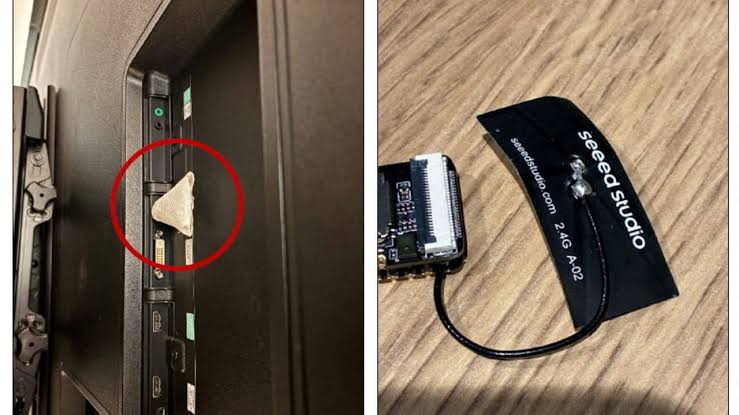
The room, prosecutors say, was regularly used to discuss confidential research, product plans, business opportunities and company strategy. OpenAI also said it had evidence that the employee meant to place more recording devices in sensitive areas of its offices.
No Data Theft Found, and No Foreign Government Link Alleged
OpenAI said it has no indication that Alfozan improperly accessed or took model weights, source code or customer data. Because the recorder's contents were encrypted when it was discovered, public reports do not say whether any recordings have since been read.
Authorities have not publicly accused any foreign government of being involved. Even so, the case has been framed as a counterintelligence matter. Patel said protecting American superintelligence work is among the FBI's highest counterintelligence priorities, and the Justice Department's statement stressed the national security stakes of AI research.
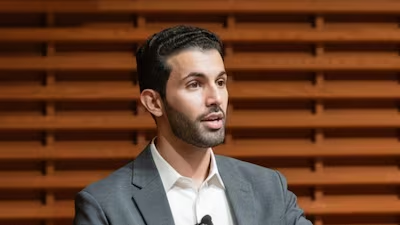
Alfozan is a Saudi national and has been a legal permanent resident of the United States since September 2020. A LinkedIn profile matching his name lists study at MIT and the University of California, Berkeley, past work at Meta and Microsoft, and a partner role at Raed Ventures. Reuters said it could not independently verify those details.
The Saudi embassy in Washington did not immediately respond to Reuters' request for comment. It is not yet clear who is representing Alfozan. When a defendant cannot be identified as having a lawyer, a federal court typically appoints one at or shortly after the first appearance.
What Happens Next
The October 19 detention hearing will decide whether Alfozan stays in custody while the case proceeds. Prosecutors are expected to point to the booked one-way flight as evidence he may flee. His defense has not yet made its arguments publicly.
The attempted-interception charge carries a maximum of five years in prison. The allegations are contained in a criminal complaint and have not been proven in court, and the investigation is still open.
Key Timeline of Events
The dates below come from the criminal complaint and the Justice Department's account of it.
✓ July 2025: Alfozan begins work as an engineer at OpenAI
✓ Mid-August to September 16, 2026: Allegedly uses an AI productivity agent to look up meeting-room and calendar details
✓ About September 28: Recorder installed behind a television in an executive conference room
✓ September 30: OpenAI staff find the device
✓ October 5: Camera allegedly records him checking behind the television; a second recorder is found in his unattended bag
✓ October 8: Prosecutors argue to seal the case, citing flight risk
✓ October 9: Alfozan is arrested
✓ October 12: Date of the one-way flight to Saudi Arabia booked for him and two relatives
✓ October 13: First federal court appearance; complaint unsealed
✓ October 19: Detention hearing scheduled
OpenAI's statement said the company terminated the employee and referred the case to the FBI.
A Low-Tech Plot Inside a High-Tech Company
The case has drawn attention partly because of how simple the alleged method was. A small recorder, a television USB port and a roll of toilet paper are a long way from the sophisticated intrusions that AI labs usually plan for.
It also shows the trade-off for AI companies as they race to protect sensitive research while competing hard for talent. An employee with legitimate access to buildings and internal tools may be harder to stop than an outside attacker.
OpenAI says it used its own models to identify the device and the person behind it, a notable use of AI in an internal security investigation. The complaint adds that an AI agent was allegedly part of the planning, since Alfozan reportedly used one to research meeting rooms and schedules.
Prosecutors have not said whether more people were involved or whether recordings were ever listened to. Those questions are likely to come up as the case moves through federal court.
The employee was terminated.— OpenAI, in a public statement
For now, the focus shifts to San Francisco federal court on October 19. The judge's decision on detention will show how seriously the court views the flight-risk argument, and the filings that come with it may reveal more about what investigators believe Alfozan wanted to record.