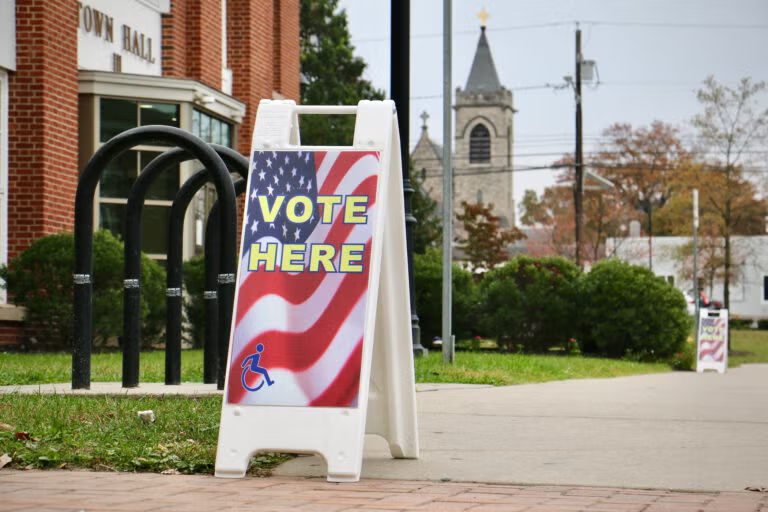
Voting was already underway at a Syracuse, New York polling site in June when ICE agents walked in mid-shift. They were looking for Paigelynne Gonyea, a poll worker they suspected of doxing an ICE agent in an Instagram post.
The post in question wasn't what agents seemed to think. Gonyea says the only relevant thing she'd shared was a repost crediting the Minnesota Star Tribune for naming Jonathan Ross — the agent who fatally shot Renee Good during a federal operation in Minneapolis last winter — alongside a call for his indictment.
Agents handed Gonyea a notice warning that threatening to assault, kidnap, or kill a federal official or their family is a crime, and asked her to take down her post or stop the alleged behavior. Signing it, she says, would have meant admitting guilt. She refused.
ICE did not respond to a request for comment on this story.
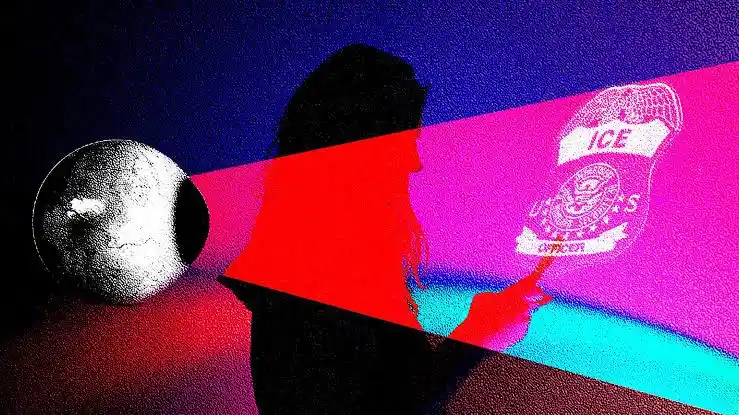
What unsettled Gonyea most wasn't just the visit — it was the letterhead. The notice came from ICE's Office of Professional Responsibility, a division that's supposed to police ICE's own conduct, not the speech of private citizens.
OPR's stated job is internal: inspecting detention facilities, investigating misconduct by employees and contractors, vetting new hires, and guarding badge access and network security. Court filings suggest its focus has shifted. An ICE official's April court declaration disclosed that OPR opened 131 cases between January 2025 and March 2026 tied to alleged doxing and threats against ICE staff.
How many of those cases led to charges is unclear. WIRED found only one instance where OPR's investigative work was credited in an actual prosecution — a California man who pleaded guilty to harassing an ICE attorney and her mother. Notably, prosecutors say that harassment campaign began in January 2024, before the current administration took office.
OPR has also been linked to a wave of administrative subpoenas sent to tech companies to unmask anonymous online critics. In one case, lawyers for a targeted poster argued the subpoena — which demanded the person's name, address, and phone number — violated their free speech rights. Rather than fight that argument in court, the government dropped it. A separate withdrawn subpoena reviewed by WIRED carried a tracking code beginning 'OPR-DC,' which a source familiar with the agency says likely points to OPR involvement.
ICE has claimed threats against its agents are rising sharply, though a 2025 Los Angeles Times review found little support for a frequently cited figure — a claimed 1,000 percent jump in attacks. Meanwhile, officials have pushed to stretch the definition of doxing beyond publishing someone's address to include filming or photographing agents on duty, something free-speech advocates say is protected activity.
Last year, DHS updated a privacy notice for ICE's intelligence records system to say it would gather social media posts, account details, and location data on people it deems to have made credible threats against personnel or facilities. In March, then-acting ICE Director Todd Lyons signed off on new investment in the agency's ability to counter what the memo called 'emerging threats,' including doxing and online harassment, according to the April declaration.
While that effort gets resources, other parts of OPR's job appear to be slipping. The Project on Government Oversight found ICE published just 102 detention facility inspection reports in 2025 — down from 160 in 2024 and 192 the year before that.
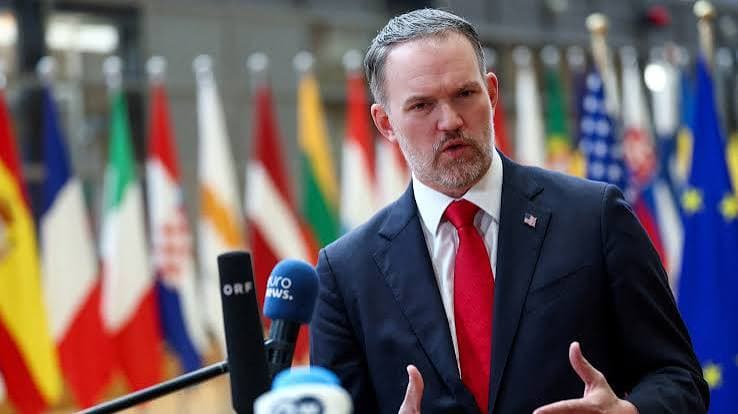
Lyons touted OPR's facility inspections, applicant vetting, and oversight of the 287(g) program in written testimony to the House Appropriations Committee in April. He left out any mention of the office's work chasing online commentators. ICE did not respond to questions about the omission.
Adam Steinbaugh, a senior attorney at the civil liberties group FIRE, doubts that's an accident. Telling Congress the funding underwrites speech policing isn't a popular pitch, he suggests — which is exactly why oversight matters, especially when public records requests move slowly enough to blunt scrutiny.
Gonyea says she intends to fight the case in court.
"This is literally about protecting all Americans' right to free speech.
— Paigelynne Gonyea, Syracuse poll worker
OPR's expanding footprint online has drawn scrutiny from civil liberties lawyers, who note that successfully prosecuting someone for speech alone is rare under the First Amendment.
"People do have a First Amendment right to criticize the government and to do that online and to do that anonymously," says Laura Moraff, a staff attorney at the ACLU's Speech, Privacy, and Technology Project.
Moraff's comment reflects a broader legal reality: criminal convictions for pure speech require narrow, specific circumstances that most doxing complaints don't meet.
A Widening Definition of 'Doxing'
ICE officials have pushed to broaden what counts as doxing well past its traditional meaning — publishing private details like a home address.
Free-speech experts argue that filming or photographing agents in public while they carry out their duties is lawful, not harassment, and that folding it into 'doxing' risks chilling legitimate government accountability.
What OPR Is Supposed to Do — And What It's Doing Instead
On paper, the Office of Professional Responsibility exists to keep ICE honest: checking detention conditions, investigating misconduct, screening new hires, and securing internal networks. In practice, court filings show its online-speech caseload has grown fast, even as some of its traditional oversight work has thinned out.
By the Numbers
Court records and public data paint a mixed picture of where OPR is putting its resources.
✓ 131 cases opened over alleged doxing and threats, Jan. 2025–March 2026
✓ Only 102 detention facility inspection reports published in 2025, down from 160 in 2024
✓ At least one confirmed prosecution tied to OPR's investigative work
ICE did not respond to questions about how many subpoenas OPR has issued or what specific investments it has made in countering online criticism since March.
Oversight, Interrupted
The gap between OPR's public testimony and its court-documented activity has become its own point of contention.
In April testimony before the House Appropriations Committee, acting ICE Director Todd Lyons highlighted OPR's facility inspections, hiring checks, and oversight of local police partnerships. He said nothing about its campaign against online critics — an omission ICE has declined to explain.
I can't imagine that he would willingly go before Congress and say, that's what you're funding.— Adam Steinbaugh, senior attorney, FIRE
For now, Gonyea says she's prepared to take her case further, framing it as a test of a broader principle rather than a personal dispute.