
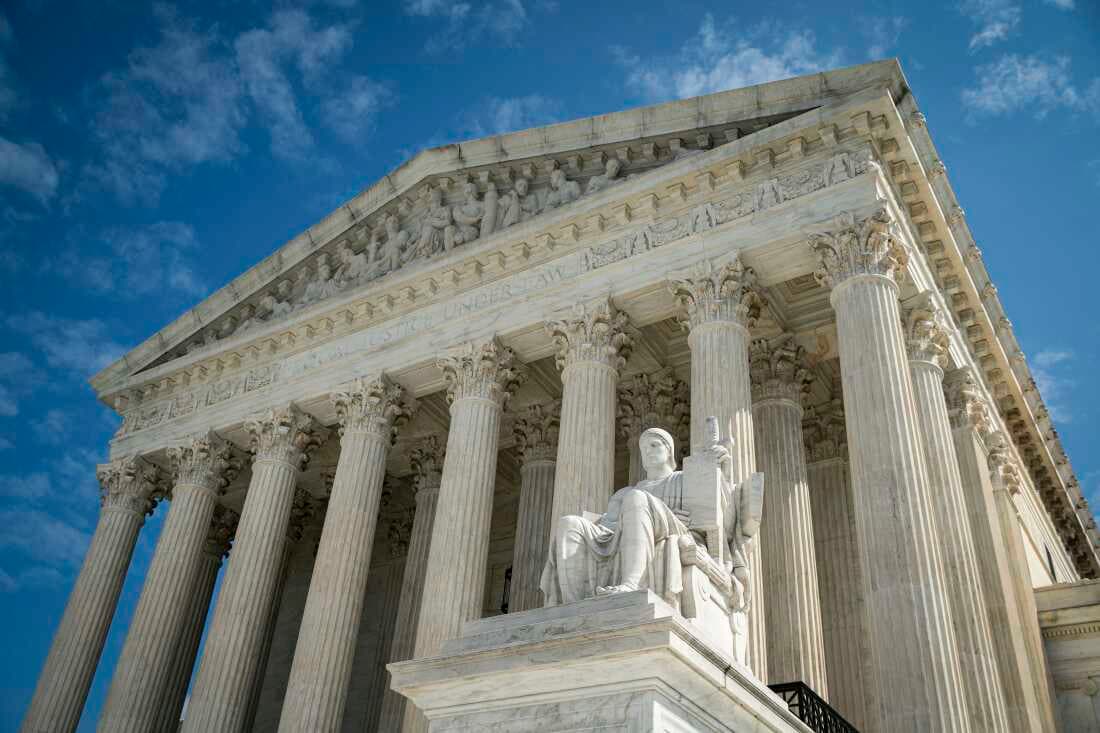
The US Supreme Court just drew a hard line around your phone. In a 6-3 ruling, justices said the sprawling warrants police use to sweep up cellphone location data near crime scenes trigger the Fourth Amendment — full stop.
Justice Elena Kagan wrote for the majority in Chatrie v United States, a case testing whether geofence warrants — digital dragnets covering a location and a time window — count as searches under the Constitution. They do, the Court ruled, even when the data comes from a private company like Google and even when the person is standing in public.
The case traces back to a 2019 bank robbery in Richmond, Virginia. Police used a geofence warrant to identify Okello Chatrie, who had opted into Google's location history feature. He was later sentenced to 12 years after pleading guilty. But his lawyers argued the search that caught him was far too broad — and the high court agreed with the underlying constitutional theory, if not yet the final verdict on his specific warrant.
"Today is a very good day for constitutional privacy.
— Paul Ohm, Georgetown University law professor
Geofence warrants let police ask tech companies for every device that passed through a virtual boundary during a set window. No named suspect required. Just presence.
That's the part civil liberties lawyers have hated for years. Cast the net wide enough and you catch bystanders — sometimes thousands of people who did nothing wrong.
The ruling doesn't kill geofence warrants outright. It sends Chatrie's case back to the 4th Circuit to decide whether police followed proper procedure — narrowing the request, showing probable cause — when they went after him specifically.
How the Justices Split
Kagan led a six-justice majority rejecting the government's argument that scooping up even a narrow slice of location data escapes constitutional scrutiny. The government leaned on the idea that Chatrie chose to share his location by opting into Google's tracking feature. The majority wasn't buying it.
Justices noted Google pushes users hard toward turning location history on, often warning the phone 'won't work correctly' otherwise, without spelling out how much data gets collected or who might eventually see it. Calling that an informed, voluntary choice, the opinion suggests, stretches the truth.
Why This Case Became a Privacy Flashpoint
This marks the first time the Court has revisited Fourth Amendment boundaries since its 2018 Carpenter decision, which required warrants for historical cell-site tracking. Chatrie extends that logic to a newer, blunter tool — one capable of sweeping in a church, a clinic, or a protest alongside the actual suspect.
What the Ruling Actually Decided
The justices didn't strike down the specific warrant used against Chatrie. They settled the bigger question — whether this kind of search needs constitutional protection at all — then pushed the fact-specific analysis downstream to the appeals court.
✓ Cellphone location data carries a reasonable expectation of privacy
✓ Geofence warrants qualify as Fourth Amendment searches
✓ Government's 'voluntary sharing' argument rejected
✓ Case remanded to the 4th Circuit for further review
Google has already begun reworking how it stores location history — changes that could make old-style reverse-location warrants far harder to execute going forward.
What Comes Next
The 4th Circuit now has to decide whether the specific geofence warrant that caught Chatrie was narrow enough, and backed by enough probable cause, to survive the new standard. That fight isn't over.
Privacy advocates are already calling this a rare check on a surveillance tool that's spread through police departments with little challenge until now.
The point of carrying smartphones is to use what is on them.— Majority opinion
Roughly a third of Google account holders had opted into location history when this case began — Chatrie's own lawyers put that figure north of 500 million users worldwide. Even Google conceded in court filings that these searches routinely catch innocent bystanders, sometimes by the thousands.
This article is based on reporting from The Guardian.