A federal judge in Washington is scheduled to hear arguments Friday on whether the Defense Department has the legal authority to require credentialed journalists to report only information the government has already cleared — a policy that five of the country's major broadcast networks refused to accept, and that press freedom advocates say has no precedent in the history of the Pentagon's relationship with the press.
The rules, written into a 21-page agreement the Defense Department asked media organizations to sign in mid-2025, go well beyond standard national security guidelines. They prohibit journalists from gathering or publishing any information that has not been officially authorized by the government — including content that has already been declassified, notes taken during off-the-record conversations, and material obtained entirely outside Pentagon property. Organizations that refused to sign faced the suspension of their regular building access.
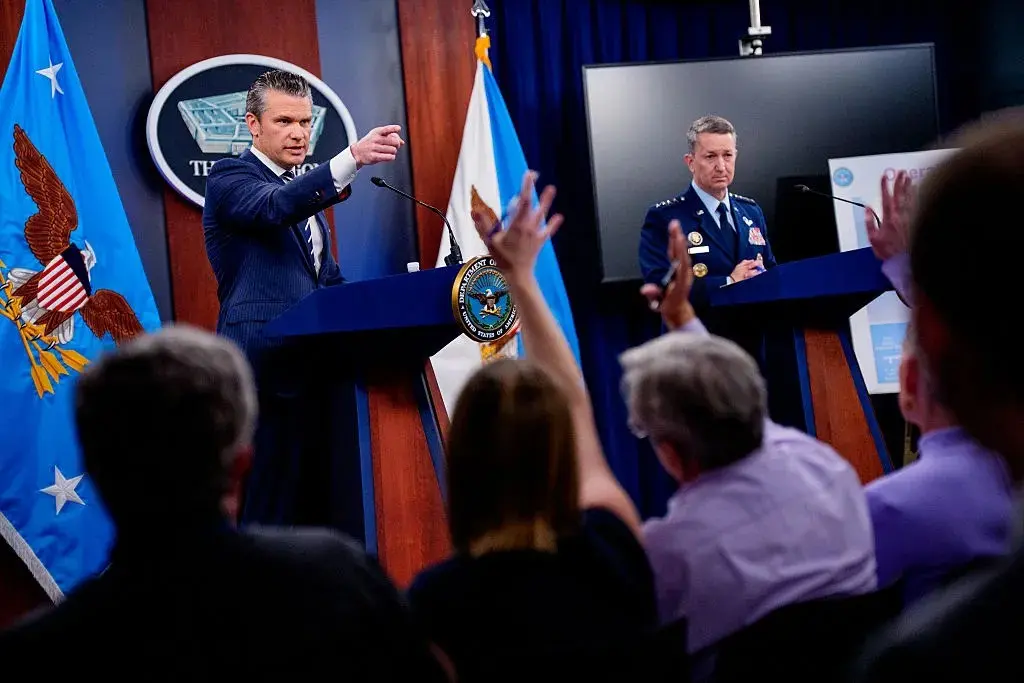
NBC News, along with the four other major broadcast networks, declined to sign the agreement and subsequently had their Pentagon credentials pulled. This week, those outlets were temporarily allowed back inside to attend press briefings held by Defense Secretary Pete Hegseth and Chairman of the Joint Chiefs of Staff Dan Caine as coverage of the ongoing Iran war intensified — but their full credentialing status remains unresolved while the legal fight plays out.
Among those who filed a sworn declaration in the case is Pete Williams, who served as Assistant Secretary of Defense for Public Affairs from 1989 to 1993 and spent nearly three decades afterward as an NBC News justice correspondent. Williams said the Pentagon's new approach represents a significant departure from how the Defense Department has historically managed its relationship with reporters — and that the departure is not a minor procedural one.
Williams wrote in his declaration that during his time at the Defense Department, credentialing decisions were never made based on whether a reporter or news organization was expected to produce favorable coverage. He acknowledged that journalists published stories officials would have preferred to delay or suppress, but said Department leadership understood that cutting off press access could not and should not be used as a tool for controlling critical reporting. He used a direct analogy to describe what in-person access means to quality journalism: covering the Pentagon without being present inside the building, he wrote, is like writing a restaurant review without eating the food.
What's at Stake Beyond Pentagon Building Access
Press access disputes with the Defense Department have historically been resolved through negotiation and policy adjustment rather than federal litigation. The fact that this fight has reached a federal court at the argument stage reflects the degree to which both sides view the underlying legal question as unresolved: does the government's authority to set conditions on voluntary access extend to requiring reporters to accept limits on the information they can legally gather and publish?
The answer the court gives on Friday will shape not just Pentagon press credentials but potentially the framework for how other executive branch agencies think about managing press access in the future. If the court finds the policy defensible as a condition on a discretionary privilege, other departments would have a precedent to point to. If the court finds it goes too far, the ruling could establish limits on government authority over credentialed journalists that have not previously been articulated in case law.
Timeline: From Pentagon Agreement to Federal Court
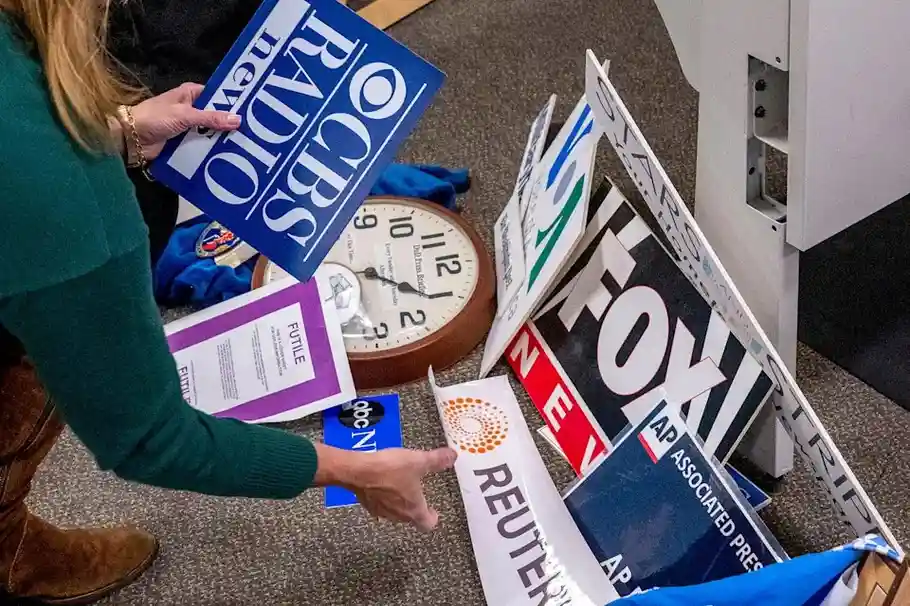
The sequence of events that produced Friday's hearing moved quickly by federal litigation standards. The credential rules were announced and the agreement distributed to media organizations in mid-2025. The major broadcasters refused to sign in October 2025, and Pentagon press corps members were required to clear out their workspace and return their credentials. The New York Times filed its federal lawsuit shortly after, setting up the argument schedule that brings the case before a federal judge this week.
✓ Mid-2025 — Pentagon distributes 21-page press credential agreement to news organizations
✓ October 2025 — NBC News and four other major broadcasters refuse to sign; credentials revoked
✓ Late 2025 — The New York Times files federal lawsuit challenging the policy's constitutionality
✓ March 2026 — Five major broadcasters temporarily re-admitted for Iran war briefings
✓ March 6, 2026 — Federal judge in Washington scheduled to hear arguments on the policy's legality
✓ Full merits ruling expected in the weeks or months following Friday's argument session
The temporary re-admission of the major broadcast networks for Iran war coverage briefings this week has added an additional layer of complexity to the legal proceeding. If the broadcasters are allowed back in for some purposes but not others, the court may need to address whether partial access under restrictive conditions satisfies or undermines the constitutional concerns at the center of the Times' challenge.
What to Watch as the Pentagon Press Case Moves Forward
Friday's hearing is a significant procedural moment but not the end of the legal road. Depending on the judge's ruling and reasoning, the case could produce an immediate order, continue to a full trial on the merits, or generate an appeal that sends the constitutional question to a higher court. The timeline for a final resolution remains unclear, and press organizations affected by the current rules are operating in uncertain legal territory in the meantime.
The outcome will be watched closely by news organizations that cover other federal agencies with similar access arrangements. The Pentagon is not the only executive branch institution that controls journalist credentials, and the legal theory the government is using — that access is a privilege the government can condition — is potentially applicable to any agency that manages its own press credentialing system.
For working journalists who cover the military, the immediate stakes are practical. Reporting on the Defense Department without physical access to the building, to the people who work in it, and to the informal conversations that happen in hallways and briefing rooms produces a fundamentally different kind of journalism than what the Pentagon press corps has historically been able to do — a point Pete Williams made bluntly in his declaration.
Trying to cover the Pentagon without regularly being present in the building is like trying to write a restaurant review without going to the restaurant and trying the food.— Pete Williams, former Pentagon spokesperson and NBC News correspondent
The fundamental legal question — whether the government can require journalists to accept restrictions on what they gather and report as a condition of receiving a press credential — has not been squarely decided by federal courts before. Friday's arguments may produce a ruling that clarifies that question, or they may produce a narrower decision that leaves the bigger constitutional issue for a future case. Either way, the outcome will carry consequences for how the press covers American national security for years ahead.
For the public, the stakes are less abstract. Independent coverage of the Pentagon is one of the principal ways Americans receive information about how their military operates, how defense resources are spent, and what decisions are made in their name. Rules that condition that coverage on prior government approval change the nature of what journalism from inside the Defense Department can and cannot tell them.