
For nearly a year, federal prosecutors went to court and defended the arrest of immigrants at their own legal hearings by pointing to a specific piece of internal agency guidance. On March 24, 2026, the Justice Department informed the court that the guidance never applied to those hearings — and had never applied to them at all.
The concession came in a letter filed with U.S. District Judge P. Kevin Castel of the Southern District of New York by Jay Clayton, the U.S. attorney for that district. The letter acknowledged that the May 27, 2025 ICE memorandum — which the government had invoked in four court briefs and during a September 2025 oral argument — was written to govern enforcement at federal, state, and local courts. It was never intended to cover immigration courts, which are administered by the Justice Department itself, not by ICE.
The case in which the admission was made, African Communities Together v. Lyons (Case No. 25-cv-06366-PKC), was brought by two New York City-based immigrant advocacy organizations — African Communities Together and The Door — challenging the practice of arresting immigrants during their own court appearances. The plaintiffs are represented by the New York Civil Liberties Union and the American Civil Liberties Union.
"The government is now admitting that this document — which the court relied on to deny our clients relief — does not and never has authorized these courthouse arrests.
— Amy Belsher, Director of Immigrant Rights Litigation, New York Civil Liberties Union, March 2026
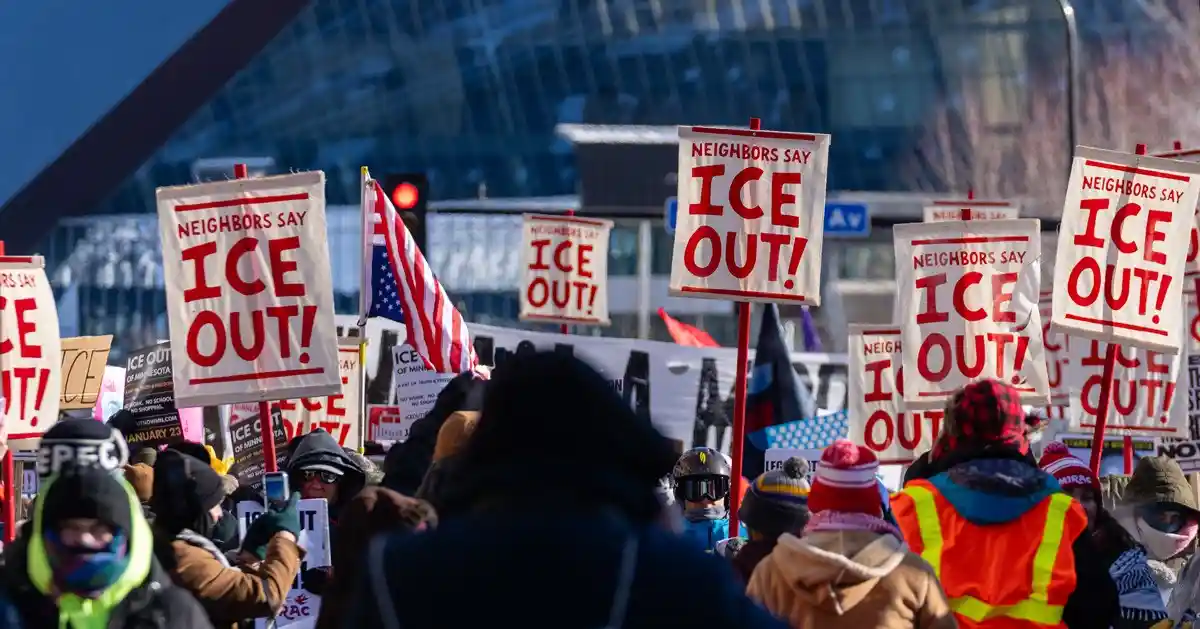
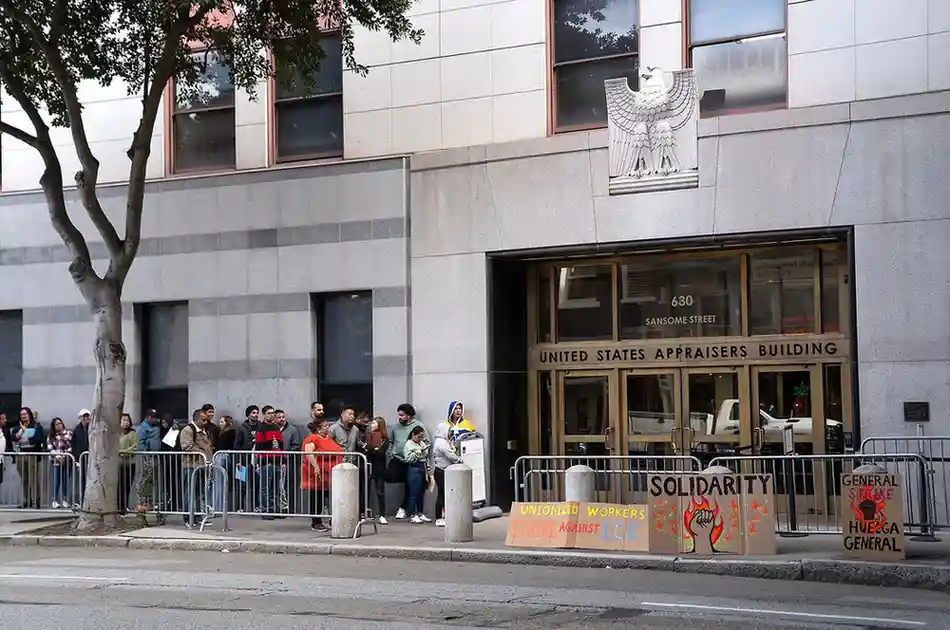
The courthouse arrest practice began when the Trump administration returned to power in January 2025. Federal immigration agents began regularly detaining migrants in the corridors adjacent to immigration courtrooms — in some cases within minutes of those individuals appearing before an immigration judge. Attorneys representing migrants described the hallways outside immigration court facilities as sites of confrontation, with federal agents moving in to make arrests as clients exited hearings.
The practice drew immediate legal challenges. Civil rights organizations argued that arresting immigrants at their own required hearings undermined the functioning of the immigration court system and discouraged people with valid legal claims from attending proceedings at all. Immigration courts, unlike federal district courts, are administrative bodies operating within the Justice Department — a distinction that proved legally significant in the ICE memo dispute.
The May 2025 ICE guidance at the center of the case was titled 'Civil Immigration Enforcement Actions in or Near Courthouses.' On its face, the document described circumstances under which ICE agents could make arrests in proximity to court facilities. Government attorneys cited it throughout the litigation as the policy basis authorizing courthouse enforcement at immigration hearing locations.
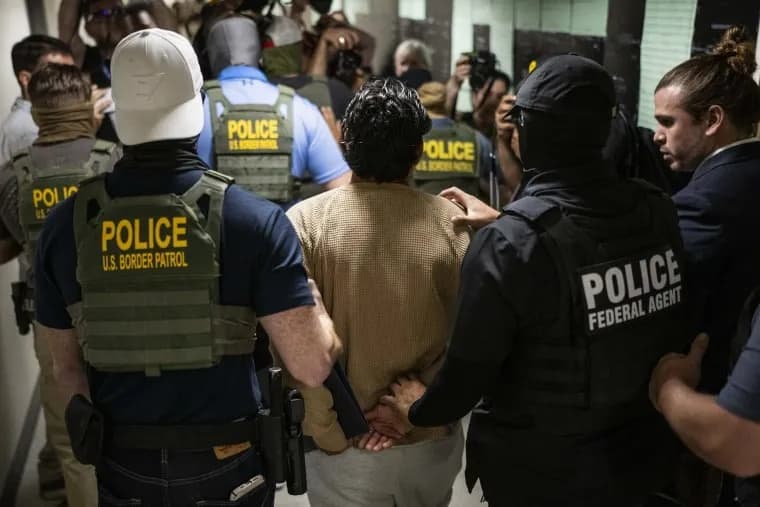
On March 19, 2026 — five days before the letter to Judge Castel was filed — ICE sent an internal memorandum to its own Enforcement and Removal Operations staff clarifying that the May 2025 guidance explicitly does not apply to Executive Office for Immigration Review courts, regardless of where those courts are physically located. That internal clarification was attached to the DOJ's court letter as an exhibit, according to court records reviewed by IBTimes.
How the Error Reached the Courtroom: Agency Counsel, Approved Briefs, and a Year of Litigation
Clayton's letter to Judge Castel described the sequence that produced the error. DOJ attorneys told the court they had been specifically informed by ICE counsel that the May 2025 guidance applied to arrests at immigration courthouse locations. Before filing each of the four affected briefs, government lawyers said they reviewed the matter with and obtained sign-off from assigned ICE counsel. That approval process continued throughout the litigation — yet the underlying application of the guidance was wrong at every stage.
Clayton characterized the problem as an 'agency attorney error' originating within ICE's legal division. The characterization placed the source of the mistake inside ICE rather than within the U.S. Attorney's office itself, though the letter acknowledged that DOJ attorneys had relied on the incorrect representation in court without independent verification.
As a direct result, the government notified Judge Castel that it was withdrawing the affected portions of ECF Nos. 39, 66, 70, and 74 — four separate filings in the case. Statements made by government counsel during the September 2, 2025 oral argument were also identified as requiring correction. The DOJ said it had sent a follow-up letter to ICE enforcement personnel clarifying the correct scope of the guidance going forward.
Scope of the Impact: Detentions Hundreds of Miles Away, and a Court Order to Preserve Records
The NYCLU and the ACLU, in a joint letter submitted to Judge Castel following the DOJ's admission, argued that the consequences of the error extended well beyond the procedural history of the litigation. According to the advocacy groups, the government's courthouse arrest operations — conducted under the authority of the misapplied guidance — resulted in the detention of both documented and undocumented immigrants in facilities located hundreds of miles from the courts where those individuals had appeared.
The groups said that in some cases, immigrants arrested at immigration court appearances were transferred to detention facilities in other states before their attorneys could locate them or file emergency legal motions. The pattern, they argued, complicated access to counsel and disrupted ongoing immigration proceedings that the detained individuals had a legal right to continue.
Judge Castel responded to the admission by ordering the Justice Department to preserve all records connected to the underlying case and to the May 2025 ICE memo — including all internal communications between DOJ lawyers and ICE counsel throughout the period of litigation. The preservation order encompasses materials from both agencies and covers the full timeline of the courthouse arrest policy, from the practice's inception through the date of the DOJ's concession.
Despite the acknowledgment that its legal justification was based on an incorrectly applied document, the Department of Homeland Security stated that enforcement operations at immigration courts would not stop. A DHS spokesperson told NPR that the agency intends to continue arresting individuals at immigration court locations, relying on other legal authorities not addressed in the DOJ's letter to Judge Castel.
Key Documented Facts From Court Records and Official Filings
The following facts are drawn from court filings in African Communities Together v. Lyons (25-cv-06366-PKC), the DOJ's March 24, 2026 letter to Judge Castel, and reporting by NPR, IBTimes, and other news organizations as of March 26, 2026.
✓ Case: African Communities Together v. Lyons, No. 25-cv-06366-PKC (S.D.N.Y.); Judge: P. Kevin Castel
✓ Plaintiffs: African Communities Together and The Door; represented by NYCLU and ACLU
✓ DOJ letter filed March 24, 2026, by U.S. Attorney Jay Clayton, Southern District of New York
✓ ICE memo at issue: 'Civil Immigration Enforcement Actions in or Near Courthouses,' dated May 27, 2025
✓ DOJ conceded the memo 'does not and has never applied' to immigration courts
✓ Immigration courts are administered by the Justice Department — not ICE — making ICE's memo inapplicable
✓ Error attributed to 'agency attorney error' within ICE's legal division
✓ DOJ attorneys obtained ICE approval before each affected filing — yet the underlying guidance was misapplied throughout
✓ Government withdrew affected portions of ECF Nos. 39, 66, 70, and 74 from the case record
✓ Statements from September 2, 2025 oral argument identified as requiring correction
✓ March 19, 2026: ICE sent internal memo to enforcement staff clarifying guidance does not apply to immigration courts
✓ Judge Castel ordered DOJ to preserve all records related to the case and the May 2025 memo
✓ DHS stated enforcement at immigration courts will continue under other legal authorities
The DOJ did not publicly characterize the admission as a policy change. Jay Clayton's office declined additional comment beyond the contents of the letter filed with the court. ICE did not respond separately to media requests for comment on the internal March 19 memo or the history of its guidance to DOJ counsel.
What the Case Now Means for Courthouse Enforcement — and for the Immigrants Already Detained
The DOJ's concession leaves several significant questions unanswered. The most immediate concerns the immigrants who were arrested at immigration court appearances during the period covered by the error — from the policy's implementation through March 2026 — and who remain in detention. The practical effect of the erroneous legal foundation on their individual cases has not been addressed in the court filings, and the NYCLU has asked the court to consider the full scope of ongoing harm.
A second question involves the government's stated intention to continue courthouse arrests under different legal authority. DHS confirmed to NPR that it views the arrest practice itself as lawful and that the DOJ's admission relates only to the inapplicability of one specific memo, not to the broader enforcement posture. That position sets up a continued legal dispute over what authority, if any, actually permits immigration arrests at court facilities — the question at the heart of the original litigation.
For immigration attorneys who represent clients with pending hearings, the admission raises a more immediate concern: whether appearing at immigration court now carries an enforcement risk that affects clients' willingness to attend. Advocacy groups have argued since the courthouse arrest practice began that mandatory legal appearances were being converted into enforcement opportunities, and that the deterrent effect on immigrants with pending claims was substantial.
Legal observers note that the government's concession that it relied on incorrect guidance for nearly a year of active federal litigation — after obtaining ICE approval at each step — raises procedural questions about the obligations of government counsel to independently verify the legal basis for their representations to the court. Courts have consistently held that attorneys bear personal responsibility for the accuracy of statements made in filings, regardless of whether those statements originate with co-counsel or with another agency.
The implications of this development are far-reaching. For months, the government used this guidance to arrest our clients — both documented and undocumented — often transferring them to detention facilities hundreds of miles away.— Joint letter of the New York Civil Liberties Union and American Civil Liberties Union to Judge P. Kevin Castel, March 2026
Judge Castel has not yet issued a ruling on the merits of the case following the DOJ's admission. The preservation order is in effect. The litigation remains open, and the question of whether the courthouse arrest practice is lawful under any applicable legal authority — not just the now-withdrawn ICE guidance — remains before the court. The government's next filing will indicate whether it intends to offer a revised legal basis for the practice or alter its enforcement approach at immigration court locations.