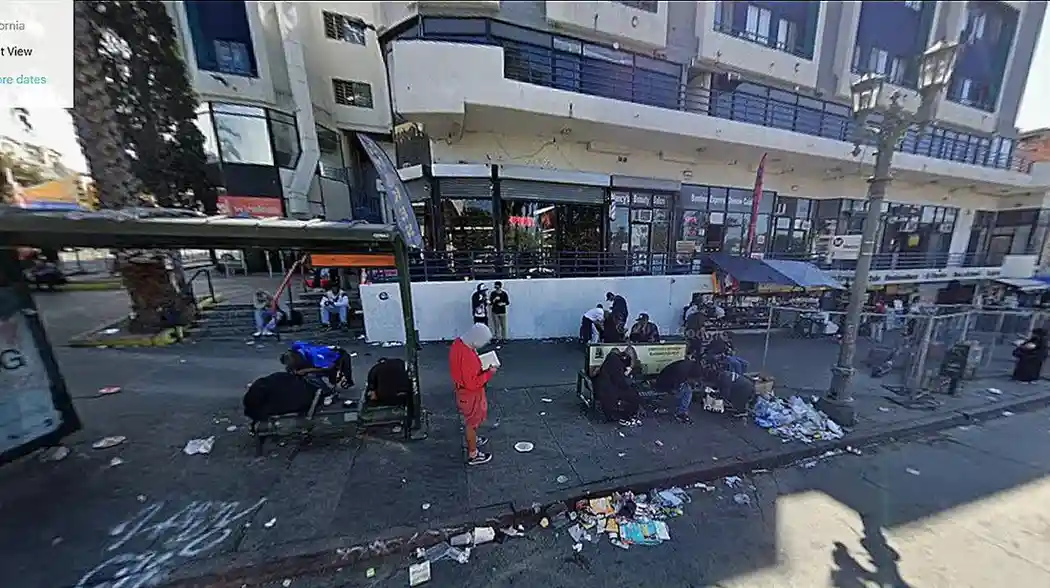
For years, anyone who walked through MacArthur Park in Los Angeles could see it — the tents, the transactions, the open movement of drugs through what should have been a public green space. Federal prosecutors say they now know exactly who ran it, and on March 5, 2026, they came to collect.
The U.S. Attorney's Office for the Central District of California announced the arrest of twelve members and associates of 18th Street, the city's largest and most entrenched street gang, as part of a multi-agency law enforcement operation that dismantled what authorities described as a sophisticated, tent-concealed open-air drug market in one of Los Angeles's most visited public parks.
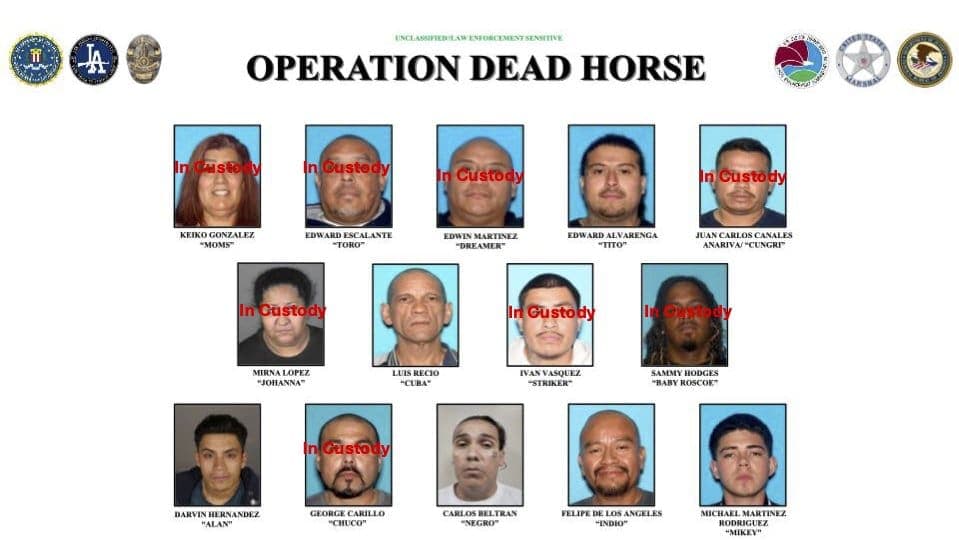
The operation — which prosecutors have connected to federal case number 2:26-cr-00114, USA v. Gonzalez, et al. — produced seven separate federal grand jury indictments covering fifteen individuals in total. The main indictment charges seven defendants with racketeering conspiracy under RICO. Two of those defendants face a murder charge. Two others face mandatory minimum sentences with exposure up to life in federal prison.
Prosecutors say the gang did not merely operate in MacArthur Park — it owned it. Members allegedly used tents to camouflage drug transactions within the park's homeless encampments, deliberately blending their trafficking activities into a vulnerable population to avoid detection by police. The same network, federal authorities allege, extended into the Skid Row corridor downtown, making 18th Street the dominant force across two of the city's most troubled public areas.
Six fugitives connected to the investigation remain outstanding as of the announcement date. One is believed to have fled to Mexico, another to Guatemala, consistent with the gang's documented transnational structure.
"For far too long, 18th Street and other criminals have been allowed to turn one of the city's most beautiful public spaces into a crime-infested pit. That ends today.
— First Assistant United States Attorney Bill Essayli
At the center of the main indictment is Keiko Marie Gonzalez, 59, who went by the street names 'Moms,' 'La Señora,' and 'La Reina.' Prosecutors allege she served as the street boss and second in command of 18th Street's Los Angeles operations, communicating directly with an incarcerated Mexican Mafia member identified in court documents only as Co-Conspirator 1 — a state prison inmate who, prosecutors allege, held ultimate control over the gang's activities from behind bars.
From at least July 2020 through March 2026, Gonzalez allegedly managed day-to-day gang operations under that direction: disciplining members, overseeing criminal activity, collecting rent and extortionate taxes from drug dealers operating in the gang's territory, and — prosecutors allege — ordering the killing of individuals who crossed the organization.
Gonzalez faces a maximum sentence of life in federal prison if convicted on the racketeering count. She is also charged alongside three other defendants — Edward Escalante, Edward Alvarenga, and Felipe De Los Angeles — with conspiracy to interfere with commerce through extortion under the federal Hobbs Act.
The other defendants named in the main racketeering indictment are George Carillo, 60, known as 'Chuco'; Carlos Beltran, 48, known as 'Negro'; and Edwin Martinez, 32, known as 'Dreamer.' Escalante, 49, also faces three separate counts of attempted Hobbs Act extortion and one count of distributing nearly two pounds of methamphetamine.
A Murder Ordered Over Unpaid Gang Taxes
The most serious individual charges in the indictment center on a killing that prosecutors allege Gonzalez personally ordered in the summer of 2022. According to the indictment, a victim identified only as M.Z. — a drug trafficker operating within 18th Street's territory — had failed to pay the extortionate taxes the gang imposed on dealers working its turf.
On July 27, 2022, M.Z. was shot and killed. George Carillo and Carlos Beltran are each charged with one count of murder in aid of racketeering for their alleged roles in that killing. If convicted on that charge, both men would face a mandatory sentence of life in federal prison — no discretion, no parole.
The murder charge crystallizes what federal prosecutors argue is the defining feature of 18th Street's operation in MacArthur Park: that violence was not incidental to the drug trade there, but structural to it. The gang enforced its monopoly on drug revenue through killing, and the killing of M.Z. was not an outlier — it was, prosecutors allege, a management decision.
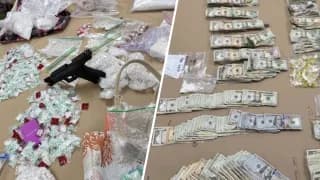
Beyond the murder, the investigation produced more than 175 pounds of combined methamphetamine and fentanyl seized over its duration. On the day of the arrests alone, law enforcement recovered 10 pounds of fentanyl, five pounds of methamphetamine, six firearms, and approximately $80,000 in cash.
A Transnational Gang With 100,000 Members and a MacArthur Park Franchise
Federal prosecutors laid out the scale of 18th Street in the indictment with stark clarity. What began historically as a Mexican-American street gang in Los Angeles has expanded into a transnational criminal organization with more than 100,000 members across the United States, operating in Mexico, Central America, and South America. The gang controls numerous neighborhoods in and around Los Angeles, and maintains a hierarchical structure anchored to the Mexican Mafia prison gang.
The MacArthur Park territory was not a fringe outpost. According to the indictment, 18th Street controlled a substantial portion of drug trafficking in MacArthur Park and its surrounding blocks, as well as a significant share of narcotics activity in the Skid Row district downtown. The operation was managed with territorial discipline — anyone dealing drugs in the area paid taxes to the gang or faced consequences.
The use of homeless encampment tents as cover for transactions was a deliberate tactical choice, prosecutors allege. Gang members concealed their dealing within the visible landscape of the park's unhoused population, reducing their exposure to uniformed officers who could not readily distinguish a drug transaction from ordinary tent activity at a distance.
The FBI, Drug Enforcement Administration, Homeland Security Investigations, IRS Criminal Investigation, and the Los Angeles Police Department were all involved in the investigation. The Los Angeles County Sheriff's Department and the U.S. Marshals Service provided support.
Key Timeline of Events
The investigation spanned several years and drew on coordination across federal and local law enforcement agencies throughout the region.
✓ July 2020: Federal surveillance of 18th Street's MacArthur Park operation begins
✓ July 27, 2022: Victim M.Z. shot and killed on alleged orders from gang street boss Gonzalez
✓ 2022–2025: Ongoing investigation — seizures of narcotics, financial tracking, and surveillance of gang leadership
✓ March 2021: FinCEN's BSA gap rule used as investigative reference for organized criminal finance
✓ March 5, 2026: Twelve arrests made; seven federal indictments unsealed; $80,000 cash, 10 lbs fentanyl, 5 lbs meth, six firearms seized on arrest day
✓ March 5, 2026: Five defendants arraigned in U.S. District Court, downtown Los Angeles
✓ March 5, 2026: Six fugitives declared outstanding — one believed in Mexico, one in Guatemala
✓ Total investigation seizures: 175+ pounds of methamphetamine and fentanyl combined
The cases are being prosecuted by Assistant U.S. Attorneys Jena A. MacCabe of the Major Crimes Section and Daniel H. Weiner of the Transnational Organized Crime Section.
Federal Officials: MacArthur Park Belongs to the Community Again
The law enforcement agencies involved issued coordinated statements in the hours following the arrests, each emphasizing both the operational success of the crackdown and the message it was intended to send to 18th Street's remaining membership and leadership.
Acting FBI Assistant Director in Charge Robert Molvar said the investigation was directed squarely at 18th Street members and their Mexican Mafia leadership, and that the bureau would continue working with law enforcement partners to pursue those responsible for flooding communities with narcotics. He specifically cited the network's role in poisoning residents and profiting off addiction as the bureau's central motivation for the sustained investigation.
DEA Special Agent in Charge Anthony Chrysanthis said the operation was the result of deep collaborative work across multiple agencies and that its goal was straightforward: take back MacArthur Park. He said 18th Street had been operating there with impunity and that the coordinated crackdown represented a decisive turn.
IRS Criminal Investigation Special Agent in Charge Tyler Hatcher focused on the financial architecture of the enterprise, noting that uncovering the money structure behind the gang's operations was essential to dismantling it permanently. He said violent gangs that cannot hide their proceeds cannot sustain the networks that fuel further harm.
The distribution of illegal narcotics in our communities is unacceptable, as is the associated violent crime that many times affects innocent residents.— Robert Molvar, Acting Assistant Director in Charge, FBI Los Angeles Field Office
For residents of MacArthur Park — one of the most densely populated neighborhoods in Los Angeles, home to tens of thousands of immigrants and working families — the question of whether the arrests represent a lasting change or a temporary disruption remains open. Federal prosecutors say the indictments are designed to reach leadership, not just street-level dealers, and that the racketeering charges bind the criminal enterprise as a whole.
An indictment is a formal accusation, not a finding of guilt. Every defendant named in the 18th Street indictments is presumed innocent unless and until a jury returns a verdict. But the scope of the charges — seven indictments, fifteen defendants, murder, racketeering, and a years-long pattern of narcotics trafficking across two of Los Angeles's most visible public spaces — signals that federal prosecutors intend to pursue this case as one of the most significant gang prosecutions the Central District of California has undertaken in years.
The six fugitives still outstanding remind the city that the operation is not finished. Until they are located and arrested, the investigation that began in the tents of MacArthur Park remains an open file.