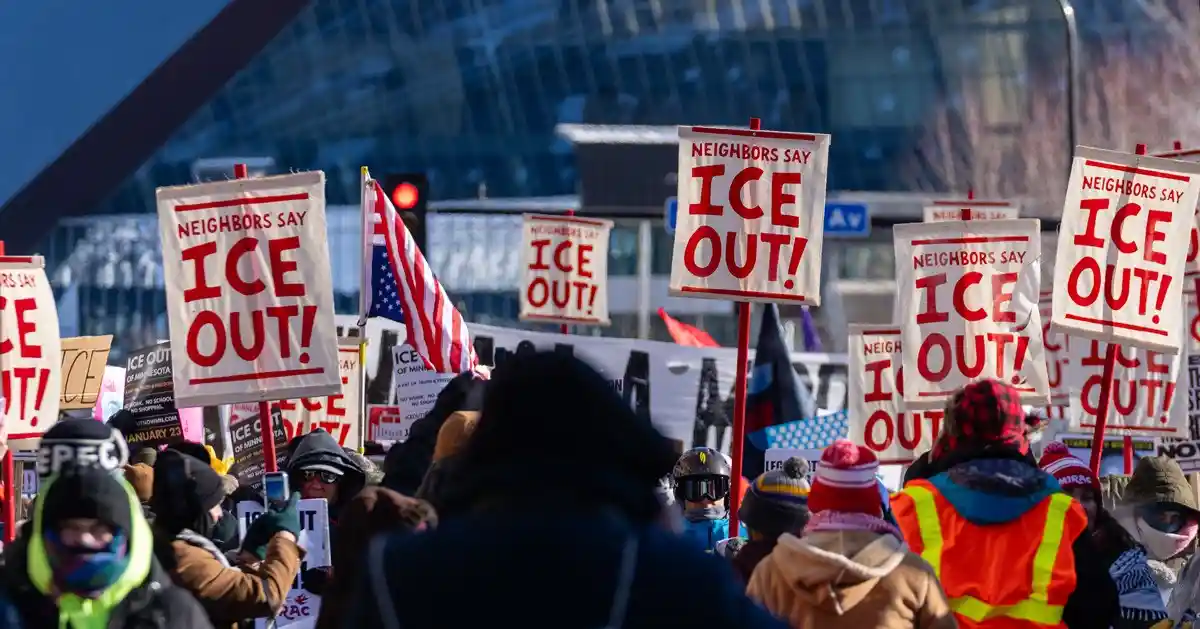
A former U.S. Army sergeant who walked combat patrols through some of Afghanistan's most dangerous terrain is now fighting a different kind of battle — a federal conspiracy prosecution that his defense says criminalizes conduct that never came close to meeting that legal threshold. Bajun Mavalwalla II, 36, of Spokane, Washington, has pleaded not guilty to charges arising from a June 2025 protest against an ICE detention, and he says he will take that position to trial.
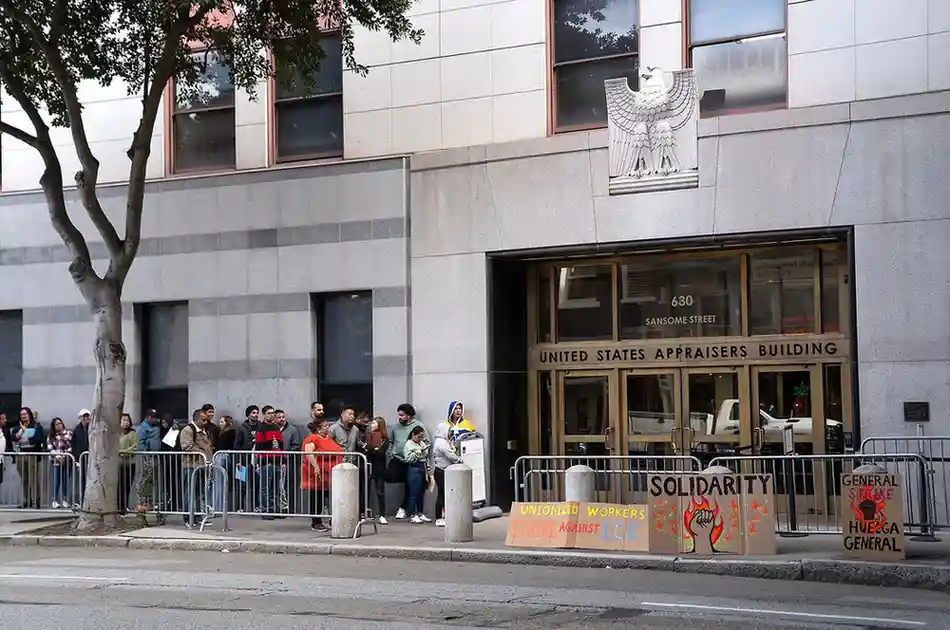
Mavalwalla faces a single count of conspiracy to impede or injure a federal officer. The charge carries a maximum penalty of six years in federal prison, three years of supervised release, and a fine of $250,000. He is one of nine people indicted in connection with the June 11, 2025, demonstration at a Spokane Department of Homeland Security facility, where protesters attempted to block federal agents from transporting two Venezuelan immigrants who had been arrested during a mandatory immigration hearing.
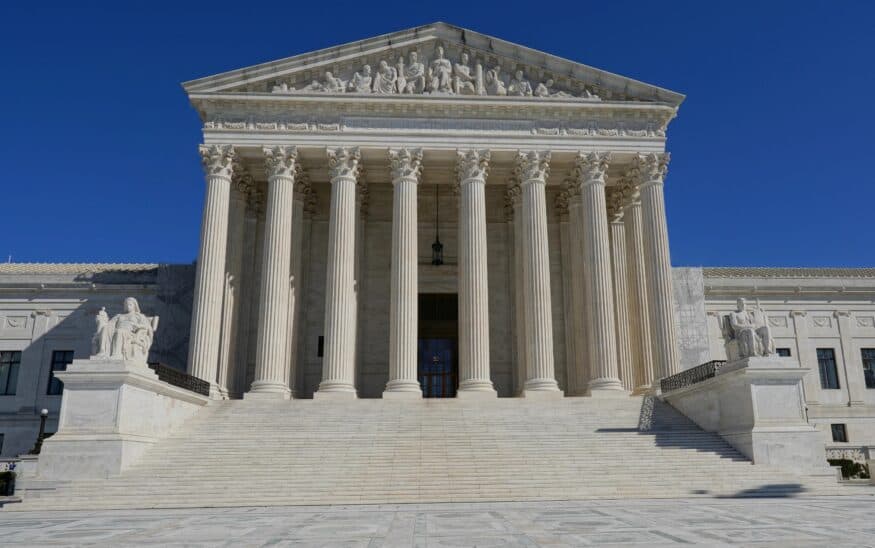
Six of Mavalwalla's eight co-defendants have reached plea agreements with federal prosecutors, each entering a guilty plea to the conspiracy count in exchange for 18 months of probation and no prison time. Mavalwalla, along with two other co-defendants, has declined to enter any plea. His trial before U.S. District Judge Rebecca Pennell, a Biden appointee and former public defender, is scheduled to begin May 18, 2026, in federal court in Spokane.
"I didn't feel in this case that a conspiracy charge that would carry a six-year term of incarceration was true to who I was or wanted to be as a federal prosecutor.
— Richard Barker, former Acting U.S. Attorney, Eastern District of Washington, speaking to The Guardian, March 2026
Mavalwalla served as a U.S. Army signal intelligence sergeant and was deployed to the Horn of Panjwai district of Kandahar Province — among the most dangerous areas of Afghanistan during the conflict — where he survived a roadside bomb blast during a special operations mission. He later used his military contacts and security clearance connections to help evacuate more than 30 Afghan nationals following the U.S. withdrawal in 2021, raising over $150,000 for their travel, medical care, and resettlement. He earned a degree in sustainable communities at Sonoma State University under the GI Bill after leaving active duty.
On June 11, 2025, Mavalwalla said he came across a social media post from Ben Stuckart, the former Spokane City Council president, describing the detention of Cesar Alexander Alvarez Perez, a Venezuelan asylum seeker who had appeared at a routine ICE check-in and been detained. Stuckart's post said he intended to sit in front of the transport bus and invited others to join. Mavalwalla said he attended independently, did not know Stuckart, and had not communicated with the other individuals who would later be indicted alongside him.
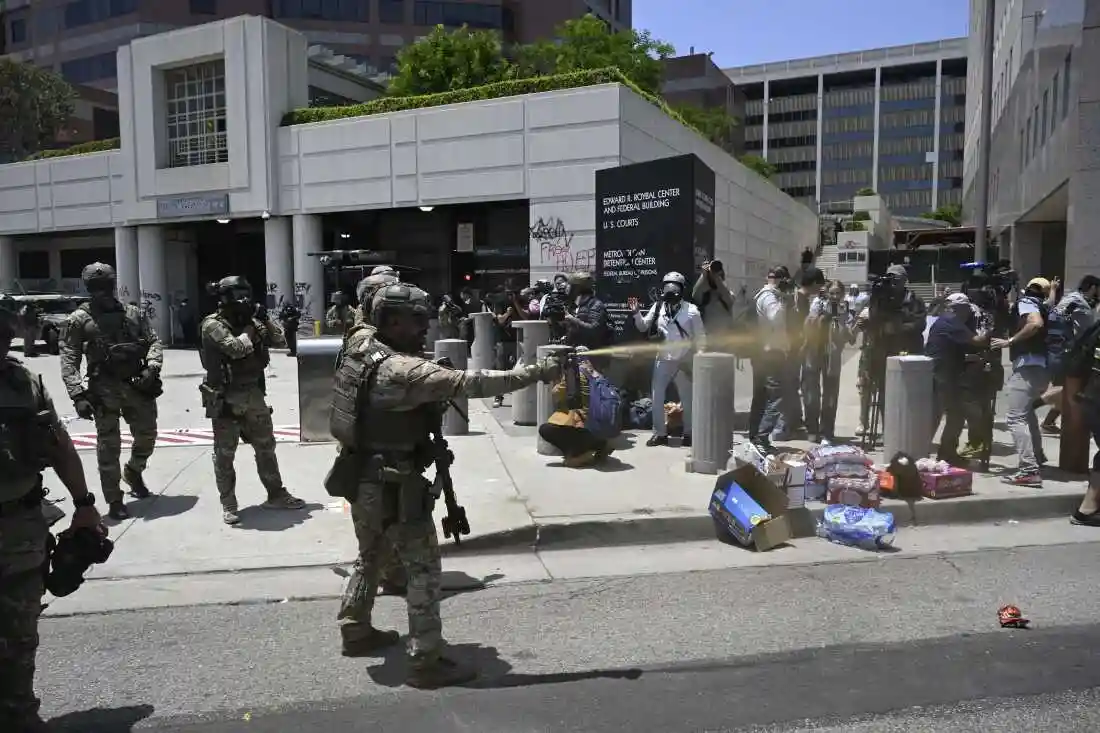
The protest drew hundreds of people and became confrontational. A government van's windshield was smashed and its tires slashed. More than two dozen individuals were arrested at the scene. Mavalwalla was not among them. A short video posted to Instagram captured him briefly jostling with a masked federal agent before linking arms with other demonstrators in front of a gate at the facility.
The FBI arrested Mavalwalla on July 15, 2025 — more than a month after the protest — at his home, on the morning he and his girlfriend, Katelyn Gaston, a former Army medic who deployed to Afghanistan, were preparing to move into a new house. Video filmed by his father shows Mavalwalla smiling in apparent disbelief as federal agents placed him in handcuffs. The day after the June 11 protest, the Justice Department had issued a memorandum to all 93 U.S. attorneys nationwide directing them to prioritize prosecution of anti-ICE demonstrators, according to The Guardian.
The Prosecutor Who Resigned — and the One Who Replaced Him
Richard Barker, who was serving as acting U.S. attorney for the Eastern District of Washington at the time of the indictment, had worked for the Justice Department for 11 years, focusing primarily on prosecuting drug smugglers and human traffickers. After the June 11 protest, he authorized an investigation. He was aware, he said, that other U.S. attorneys had been removed for declining to comply with directives from the Trump Justice Department.
When Barker learned that members of his office were preparing to seek a federal conspiracy indictment against Mavalwalla and eight co-defendants — a charge carrying a six-year maximum sentence — he made a different choice. He resigned. The indictment was signed by his replacement. 'Nobody was hurt,' Barker told The Guardian. 'None of the agents were hurt and none of the protesters were hurt either.'
Barker was replaced by Pete Serrano, a Trump administration appointee who had no prior prosecutorial experience. Before taking the U.S. attorney post, Serrano had filed an amicus brief in another proceeding arguing that the Fourteenth Amendment does not guarantee birthright citizenship. He had also publicly described January 6 Capitol rioters as 'political prisoners,' according to reporting by The Guardian. Serrano's office is prosecuting the case against Mavalwalla.
A Broader Pattern: Conspiracy Charges in Chicago, Minnesota, and a Governor Under Investigation
The federal conspiracy prosecution of Mavalwalla did not remain isolated for long. Since his arrest in July 2025, federal prosecutors have applied the same conspiracy statute to demonstrators in Chicago, according to reporting by The Guardian. The Justice Department has also opened a conspiracy investigation into Minnesota Governor Tim Walz and Minneapolis Mayor Jacob Frey in connection with their responses to immigration enforcement actions in that state. Walz condemned the probe on social media, calling it an 'authoritarian tactic.'
Journalists Don Lemon and Georgia Fort were separately charged with conspiracy to violate religious freedom in connection with their coverage of a protest inside a Minnesota church. Both have pleaded not guilty and are awaiting trial. Legal experts cited by The Guardian described Mavalwalla's case as a significant early test of how far the Trump administration would extend federal conspiracy charges to conduct that had traditionally been addressed, if at all, through lesser charges or not charged at all.
Kenneth Koop, a retired Army colonel who trained Afghan military and police personnel during Mavalwalla's deployment, told The Guardian that the prosecution was difficult to reconcile with his knowledge of Mavalwalla's service record and character. 'Here's a guy who held a top-secret clearance and was privy to some of the most sensitive information we have, who served in a combat zone,' Koop said. 'To see him treated like this really sticks in my craw.'
Key Documented Facts From Court Records and Published Reporting
The following facts are drawn from federal court records, reporting by The Guardian, The Spokane Spokesman-Review, Democracy Now, and Common Dreams, as of March 20, 2026.
✓ June 11, 2025: Anti-ICE protest at Spokane DHS facility; government van damaged; 20+ arrested at scene
✓ Detained immigrants: Cesar Alexander Alvarez Perez and Joswar Slater Rodriguez Torres — both Venezuelan nationals, attending mandatory immigration hearing
✓ Mavalwalla not arrested at scene; FBI arrested him at home on July 15, 2025 — 34 days after the protest
✓ Charge: one count of conspiracy to impede or injure a federal officer, 18 U.S.C. § 372
✓ Maximum penalty: six years in prison, three years supervised release, $250,000 fine
✓ Nine defendants indicted total; six accepted probation deals (18 months, no prison); Mavalwalla and two others refused
✓ Acting U.S. Attorney Richard Barker resigned rather than sign the indictment
✓ Replacement prosecutor Pete Serrano: Trump appointee, no prior prosecutorial experience
✓ DOJ memo sent to all 93 U.S. attorneys the day after the protest directing prioritization of anti-ICE prosecutions
✓ Judge James Robart ordered one detained immigrant released — ruled detention unconstitutional under the Fifth Amendment
✓ Second immigrant deported after declining to challenge detention
✓ Trial date: May 18, 2026, before Judge Rebecca Pennell, U.S. District Court, Spokane
✓ Mavalwalla's father announced congressional campaign in January 2026 challenging Spokane Republican incumbent Michael Baumgartner
The Department of Justice, in a statement to The Guardian, said it 'respects the First Amendment and the right of Americans to peacefully protest, but will never tolerate the obstruction of lawful immigration operations or putting federal agents in harm's way.' The DOJ did not comment on Barker's resignation or on the specific evidence supporting the conspiracy count against Mavalwalla.
What Mavalwalla's Defense Rests On — and What the Trial Will Test
Mavalwalla's defense centers on the legal elements of the conspiracy charge itself. Federal conspiracy under 18 U.S.C. § 372 requires proof that two or more persons agreed to impede, intimidate, or injure a federal officer in the discharge of their duties — an agreement that presupposes some form of coordinated intent. Mavalwalla has maintained consistently that he saw the protest on social media, attended on his own, and had no prior communication with the other individuals who were subsequently indicted alongside him. He said he first met Stuckart, the former city councilman whose post sparked the demonstration, in a jail cell on the day of his arrest.
Six co-defendants who accepted probation deals did so after pleading guilty to the conspiracy count — an acknowledgment, under oath, that the agreement existed. Whether the government can prove that the same agreement encompassed Mavalwalla specifically, based on the video evidence and whatever additional evidence prosecutors intend to introduce, is the question Judge Pennell's jury will have to resolve.
Mavalwalla's father, Bajun Ray Mavalwalla — a retired Army intelligence officer who earned three Bronze Stars in Iraq and Afghanistan and who filmed his son's arrest on July 15 — announced in January 2026 that he was running for Congress to challenge Spokane's Republican incumbent, Michael Baumgartner. Baumgartner acknowledged Mavalwalla's military service in a public statement but declined to take a position on the prosecution, saying he did not know all the specific facts of the case.
Legal observers have noted that the gap between the conduct shown in the available video — a brief jostle and a linked-arm blockade — and the severity of a six-year federal conspiracy charge is at the center of both the legal defense and the broader public debate about the case. Former prosecutor Barker, who is now running for Congress as a Democrat in Pennsylvania, has been among the most direct public voices on that gap, arguing the charge was disproportionate to what the evidence showed.
Conspiracy requires people communicating, planning it out and saying: 'Yeah, we're going to do this, and this is why we're going to do it, and this is how we're going to do it.' None of that happened, at least not as far as I know.— Bajun Mavalwalla II, in his first interview since the FBI arrest, speaking to The Guardian, March 2026
Trial is scheduled to begin May 18, 2026, in federal court in Spokane. No charges have been added or dropped since the original indictment. Mavalwalla remains released on his own recognizance. The case is being watched by civil liberties organizations, veterans' advocacy groups, and legal scholars as an early test of the scope of federal conspiracy charges in the context of immigration enforcement protests — a question that will not be resolved until a jury returns a verdict.