
Wabash National Corp. has agreed to pay $50,000 and change how it handles pregnancy accommodation requests to settle a lawsuit by the U.S. Equal Employment Opportunity Commission. The agency says the deal resolves its first federal lawsuit under the Pregnant Workers Fairness Act, announced Nov. 13, 2026 as a two-year consent decree.
The EEOC alleged that a pregnant employee at Wabash National’s Cadiz, Kentucky, facility asked to move to a job that did not require her to lie on her stomach. The company denied the transfer, put her on unpaid leave and then required her to return to her original assembly position with no changes, the agency said. She resigned in November 2023, when she was nearly eight months pregnant.
The case is EEOC v. Wabash National Corp., No. 5:24-cv-00148, in the U.S. District Court for the Western District of Kentucky, Paducah Division. The agency sued in September 2024 under the PWFA, Title VII of the Civil Rights Act and the Americans with Disabilities Act. The announcement included no company statement, and a settlement resolves allegations rather than proving them.
The transfer request at the center of the case
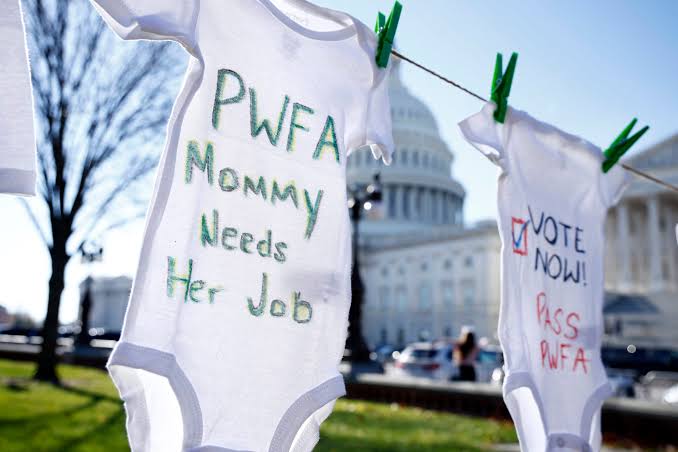
Congress passed the PWFA in late 2022, and it took effect in June 2023. It requires covered employers to make reasonable accommodations for known limitations related to pregnancy and childbirth unless doing so would cause undue hardship. The EEOC says this worker’s request was narrow: a temporary move to work that would let her keep working through her pregnancy. Kenneth Bird, the agency’s regional attorney in Indianapolis, said that kind of reassignment is reasonable “absent undue hardship.”
The EEOC also alleged that Wabash demanded medical documentation and did not offer changes it could have made, similar to those it provides non-pregnant workers with comparable limits. The agency said the denial left the employee fearing for her pregnancy’s health. Her resignation in November 2023 came about five months after the law took effect, making this an early test of it.
Why the agency calls this a milestone
The EEOC announced the suit on Sept. 10, 2024, as its first to enforce the PWFA. In the Nov. 13 announcement, Chair Andrea R. Lucas called the resolution “an important milestone” for pregnant workers nationwide. She said the law was enacted so pregnant women can seek reasonable accommodations without fear of losing their jobs or jeopardizing their health. The case took about two years and two months to resolve, from filing in September 2024 to the November 2026 announcement.
It is not the first PWFA money the agency has secured. The day after the Wabash filing, the EEOC announced a $47,480 conciliation agreement with ABC Pest Control, Inc., of Tampa, Florida, over a worker fired after asking for an accommodation to attend monthly medical appointments. That matter was resolved without a lawsuit, which is what sets Wabash apart.
What Wabash must change across its facilities
During the two-year decree, Wabash must pay $50,000, update its policies, notify employees about PWFA protections and provide specialized training to supervisors, managers and human resources personnel. Those obligations apply at all of the company’s facilities nationwide, not just Cadiz. The announcement does not say how the $50,000 will be distributed.
Wabash must also submit compliance reports to the EEOC describing how it responds to accommodation requests from employees with pregnancy-related limitations at the Cadiz facility where the employee worked. Wabash is a nationwide producer of semi-trailers and commercial trucking equipment, so the policy and training changes reach well beyond one plant.
What the case signals for pregnant workers and employers
Richard Burgamy, acting director of the EEOC’s Indianapolis District, said liability under the PWFA is a National Enforcement Plan priority and urged covered employers to review their policies. Deputy General Counsel Christopher Lage said pregnant women are entitled to the accommodations they need to keep working safely, and that the agency will keep litigating when employers fail to meet their responsibilities, and Lucas said the EEOC is “firmly committed to enforcing the PWFA.”
For workers, the case is a reminder that a pregnancy-related accommodation request is a legal right, not a favor, and that a written request creates a record. For employers, a denial should follow a real conversation about alternatives, such as temporary reassignment, rather than a default to leave or the original duties. Workers who believe they were denied an accommodation can contact the EEOC.
Unpaid leave in place of an accommodation can cost a pregnant worker income at a vulnerable time. That is why the EEOC treats a timely, workable answer to the request as central to the law’s purpose, not an administrative detail.
The compliance reports will give the EEOC a way to check whether practices at Cadiz change. The announcement does not describe further court action.
Sources
- U.S. Equal Employment Opportunity Commission: Wabash National settlement announcement, Nov. 13, 2026eeoc.gov(opens in a new tab)
- U.S. Equal Employment Opportunity Commission: EEOC Sues Wabash National for Pregnancy Discriminationeeoc.gov(opens in a new tab)
- U.S. Equal Employment Opportunity Commission: ABC Pest Control, Inc. Conciliates Pregnant Workers Fairness Act Chargeeeoc.gov(opens in a new tab)