Samuel Little: The Serial Killer Behind 93 Confessions
Samuel Little confessed to 93 killings, the FBI said. Read the full case: three Los Angeles murder convictions, DNA, ViCAP and the Texas Ranger interviews.

·12 min read
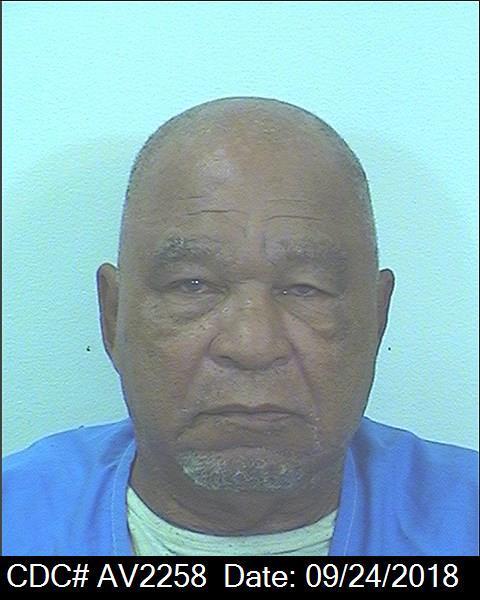
Samuel Little told investigators he killed 93 people, and the FBI called him the most prolific serial killer in U.S. history. A Los Angeles jury convicted him of three murders. The distance between those two numbers is the heart of this case, and it is easy to get wrong. [1][8][9]
The short version: Little confessed to killings between 1970 and 2005 across 19 states. The FBI had matched 50 of those confessions to cases by October 2019, and Texas DPS reported more than 60 matched by December 2021. The murders proven in court through the Los Angeles trial number three. [1][3][5]
This reconstruction follows his life and crimes from the first juvenile arrests to the DNA match in Los Angeles, the Texas Ranger interviews that produced the confessions, and his death in custody. It draws on law-enforcement releases, correctional records and court reporting. It does not claim new interviews or undisclosed evidence, and it leaves out graphic detail.
Who was Samuel Little? Early life and first arrests
Samuel Little was born on June 7, 1940. Investigative reporting and Texas law-enforcement materials place his birth in Reynolds, Georgia, but even that comes with a caveat. The Washington Post reported that Georgia officials declined to release his birth certificate, so parts of his early story could not be independently confirmed. He also used the name Samuel McDowell. [1][2][3][6]
He spent part of his childhood with relatives in northeast Ohio. Little later told journalist Jillian Lauren that his teenage mother abandoned him as an infant, an account that belongs to him rather than to the record. In later interviews he described violent fantasies from a young age, including an urge to choke someone at about seven or eight. Those are retrospective self-reports. They are not a clinical assessment, and they do not explain what he later did. [3][6]
His contact with the justice system started early. According to records reviewed by The Washington Post, he said he was caught stealing a bicycle at 13 and sent to the Boys’ Industrial School in Ohio. Around 15 he was arrested in Omaha for burglary, and the next year he faced another burglary charge involving a furniture store in Lorain, Ohio. He spent time in juvenile custody, and the FBI later described his run-ins with law enforcement as dating to 1956. None of this shows when his first murder happened. The earliest killings in the record are reconstructed largely from later confessions and investigative matches. [2][6]
A drifter’s record: arrests, acquittals and a life on the move
As an adult, Little drifted across the country, living transiently, taking occasional jobs and supporting himself through theft and other offenses. The FBI described a record that included shoplifting, fraud, drug offenses, solicitation, breaking and entering and assaults. Records reviewed by The Washington Post showed arrests in many places for assault, theft, driving under the influence and shoplifting. Sometimes he spent months or years in custody. In some cases he won acquittals. [2][6]
He also drew and painted. A 1976 newspaper profile, recounted by The Washington Post, described him painting a large mural while held in Dade County, Florida. That skill mattered decades later. During his police interviews he drew portraits of many of the women he said he had killed, and investigators used the sketches alongside his spoken descriptions to look for matches with unidentified victims. [1][6]
Movement was the constant in his life. Moving between cities and states made it harder for any one agency to see a pattern, and the FBI later said the confessions covered 19 states and the years 1970 to 2005. [1][6]
How did Samuel Little go undetected for so long?
Little told investigators he killed 93 people between 1970 and 2005, nearly all of them women. Investigators and reporters described many of the victims as people on society’s margins: women who were homeless, had substance-use problems or engaged in sex work, many of them women of color. The FBI said many deaths were first classified as overdoses, accidents or deaths of undetermined cause, and some victims’ bodies were never found. [1][3][6][7]
His accounts generally described strangulation. Texas DPS reported in 2021 that he said two victims had been drowned, while investigators noted that some deaths looked more like suffocation than the classic physical signs of strangulation. The agency also cautioned that his estimates of time and distance could be badly off, in some cases by more than ten years or 40 miles. [3]
Several things kept the deaths apart. Causes of death recorded as overdoses or accidents limited homicide investigations. Victims were often transient or socially isolated, so police could struggle to identify them or find witnesses. Little crossed jurisdictions, and records were not consistently connected at the time. The FBI’s ViCAP program later became central to linking cases. The Washington Post also reported that prosecutors sometimes worried whether juries would believe witnesses who were sex workers or had addiction histories. [1][2][3][6][7]
Mary Brosley: the first known victim linked to Little’s account
Investigative reporting by The Washington Post identified Mary Brosley, a 33-year-old mother of two from Massachusetts, as the first known victim believed to match Little’s account. He said he met her near Miami around the end of 1970. Her body was found in a shallow grave in early 1971, but she was not identified at the time and the death was not immediately treated as a homicide. [6]
In 1982, a medical examiner changed the classification to homicide. Decades later, an investigator compared the remains with missing-person information, including distinctive injuries and a hip implant, and dental records helped identify Brosley. In 2018, Little identified her photograph during an interview. [6]
Her case shows how long a gap can open between a death, the identification of the victim and any link to a suspect. It is also reporting, not a court finding. The Washington Post’s account rests on interviews and records, and it should be kept separate from a conviction of Little for Brosley’s murder. [6]
Missouri, Mississippi and Florida: charges that did not hold
Long before the Los Angeles trial, Little had faced serious accusations, and each outcome has to be described as it actually happened. In September 1976, a 22-year-old woman escaped an assault in suburban St. Louis and identified him. Police found him in the car she described and charged him with rape and sodomy. Little denied rape but acknowledged beating her. Prosecutors later reduced the case to an assault charge, he pleaded guilty to assault with intent to ravish, and with credit for about three months of time served he was out by Christmas 1976. The account draws on police and court records and interviews reviewed by The Washington Post. [7]
In 1982, the body of 22-year-old Melinda “Mindy” LaPree was found in a cemetery near Pascagoula, Mississippi. Investigators developed information linking Little and his traveling companion, Orelia “Jean” Dorsey, to the area. The Washington Post described the pair moving along the Gulf Coast, shoplifting and staying in budget motels, and witnesses placed Little in contact with women in the region. Investigators suspected him in more than one killing. [7]
Florida prosecuted Little for the 1982 killing of Patricia Ann Mount, 26. Witnesses had placed him with her before her body was found, but the case rested on limited physical evidence and a witness investigators could not locate for trial. A jury acquitted him in January 1984. That verdict means the state did not prove the charge beyond a reasonable doubt, and it cannot be rewritten as a conviction. Little later confessed to the killing, but a confession is a different kind of evidence from an acquittal. [7]
San Diego and the warnings that went nowhere
In October 1984, San Diego officers found Little at a scene involving a badly injured woman in a car, and he faced charges over attacks on two women. In April 1985, a jury returned a mixed verdict. It convicted him of false imprisonment, acquitted him of certain kidnapping and sexual-assault charges, and deadlocked on others. Prosecutors later accepted a plea to two assault counts rather than try the case again. [7]
He received a four-year prison term and was paroled in early 1987 after about 19 months. California corrections records confirm that he entered state prison on August 14, 1985, for assault with a deadly weapon and false imprisonment, and was released to parole on February 1, 1987. The first of the three Los Angeles murders came later that year. [5][7]
The Washington Post also described local investigators trying to alert federal authorities. A San Diego prosecutor contacted the FBI in July 1985, and a Florida investigator said he raised concerns in the mid-1980s. The FBI, as quoted by the newspaper, said its ViCAP program first became aware of Little in April 2013. Those accounts conflict, and the sources alone cannot settle exactly what was done with each reported contact. [7]
How a DNA match in Los Angeles led to three murder convictions
The murders that produced Little’s best-known convictions happened in South Los Angeles in 1987 and 1989. The victims were Carol Alford, 41, killed in July 1987; Audrey Nelson, 35, killed in August 1989; and Guadalupe Apodaca, 46, killed in September 1989. Their bodies were found at separate locations in the Central Avenue and Alameda Street corridor, and they had been strangled. [4][8][9]
The breakthrough came from forensic evidence. LAPD cold-case detectives and the California Department of Justice developed DNA profiles from evidence in the Nelson and Apodaca cases, and a database comparison led to Little. The LAPD’s January 7, 2013 announcement said he had been arrested in Louisville, Kentucky, on September 5, 2012, on a Los Angeles narcotics warrant, waived extradition and was returned to Los Angeles in October. The department noted that he also used the name Samuel McDowell. [4]
As detectives tested more evidence, they connected Little to the third killing, and in January 2013 prosecutors charged him with three counts of murder. In September 2014, a jury convicted him of first-degree murder in all three cases. Trial reporting described DNA evidence connecting him to the crime scenes, and women who had survived earlier assaults testified about his violence. [4][8][9]
Little was sentenced on September 25, 2014, to three consecutive life terms without the possibility of parole. The California Department of Corrections and Rehabilitation later confirmed he was serving those terms for the deaths of the three women. That was the court-established outcome of the Los Angeles case, and it was not a trial of all 93 killings. Associated Press reporting says Little later pleaded guilty to killings in Texas and Ohio, but those pleas are outside the scope of this reconstruction. [5][8][10]
Samuel Little’s confessions: how the FBI and a Texas Ranger tested them
After the Los Angeles conviction, the FBI’s Violent Criminal Apprehension Program, known as ViCAP, began working with state and local agencies to compare Little’s history, DNA links and possible matches to unsolved cases around the country. The FBI said its analysts had been linking cases to him in the years before its October 2019 announcement. [1][2]
The turning point came in May 2018, when Texas Ranger James Holland and other investigators interviewed Little. Texas DPS said the interviews continued from June 2018 until shortly before his death in December 2020, and the FBI’s 2019 account described more than 700 hours of videotaped interviews beginning in May 2018. Little supplied descriptions of victims, places, vehicles, clothing and circumstances, and he drew portraits of many of the women. Investigators held those details up against old missing-person reports, autopsies and unsolved homicide files. [1][3][6]
In October 2019, the FBI said Little had confessed to 93 murders and that its crime analysts considered the confessions credible. By then law enforcement had matched 50 confessions to cases, with others awaiting final confirmation. In December 2021, Texas DPS reported that more than 60 confessions had been definitively matched through DNA evidence, extensively corroborated interviews or both. The two figures do not contradict each other. They are snapshots from different moments in a long, multi-agency review. [1][3]
Investigators did not take every date or place at face value. Texas DPS warned that Little could misjudge dates and distances, sometimes by more than ten years or 40 miles, so his recollections had to be tested against travel records, incarceration periods, missing-person data, forensic evidence and local homicide files. The agency also published additional case profiles and asked the public to help identify victims. [3]
How many of Samuel Little’s confessions have been proven?
The answer depends on which category you mean, and the public record is best read in layers. In court, a Los Angeles jury convicted Little of three first-degree murders, those of Carol Alford, Audrey Nelson and Guadalupe Apodaca, and he received three consecutive life terms without parole. [5][8][9]
Separately, Little told investigators that he killed 93 people between 1970 and 2005, and the FBI publicly reported that figure in 2019. A confession remains a statement by the suspect, even when investigators consider it credible. [1][3]
The matched cases sit in between. The FBI reported 50 matches in October 2019, and Texas DPS reported more than 60 definitive matches by December 2021. Beyond that, some confessions had not been connected to a specific homicide in the cited updates, some victims remained unidentified, and his dates and distances could be wrong. A newer comprehensive official count was not established in the material consulted. These categories should not be collapsed into a single number of proven murders. [1][3]
How did Samuel Little die?
Samuel Little died on December 30, 2020, at age 80. The California Department of Corrections and Rehabilitation said he was pronounced dead at 4:53 a.m. at an outside hospital while in California custody. The department’s notice said the Los Angeles County Medical Examiner’s Office would determine the official cause of death, and the notice itself did not state one. [5]
His death did not close the investigation. In December 2021, Texas DPS said law enforcement had matched more than 60 of his 93 confessions to victims and was still asking for help with additional cases. Some victims had been identified only as Jane Does, and some confessions did not yet have a definitively matched homicide. [3]
What the Samuel Little case shows about overlooked victims
The most consequential legacy of this case is not only the scale of what Little admitted. It is the decades-long failure to connect the deaths of women who were often poor, transient, socially isolated or otherwise overlooked. [1][2][3][6][7]
The work of the FBI and the Texas Rangers showed how cold-case review, DNA databases, information sharing across jurisdictions and renewed attention to unidentified remains can reopen cases that once looked unrelated. The FBI described the case as a major example of cooperation among the FBI, the Texas Rangers, the Department of Justice and dozens of state and local agencies. The investigation continued after Little’s death because some victims remained unidentified and some confessions remained unmatched. [1][2][3]
For the families who waited years for answers, the totals matter less than the names. Victims are discussed here only as far as needed to explain the investigations and the court record, and graphic descriptions have been left out on purpose.
The evidence and what it established
| Evidence | Investigative significance |
|---|---|
| DNA profiles from the Los Angeles cases | A database comparison led to Little, and DNA evidence anchored the three first-degree murder convictions. [4][8][9] |
| More than 700 hours of recorded interviews | Produced the descriptions of victims, places, vehicles and clothing that investigators tested against old files. The confessions remain statements by the suspect. [1][3] |
| Portraits Little drew of the women he described | Used with his spoken descriptions to look for matches with unidentified victims. [1][6] |
| ViCAP case analysis | Compared his history, DNA links and confessions with unsolved cases across many states and helped link deaths that had been treated separately. [1][2] |
| Correctional and court records | California corrections records confirm his 1985–1987 prison term, and court records underpin reporting on the Missouri, Mississippi, Florida and San Diego cases. [5][7] |
| Corroboration of dates and distances | Texas DPS cautioned that his estimates could be off by more than ten years or 40 miles, so firm matches rely on DNA or extensively corroborated interviews. [3] |
Editorial note: Historic Investigations is part of CourtNews Investigations. This article reconstructs a historical criminal case from the linked public records and reporting. It keeps three things apart: facts established in court or correctional records, statements Little made to investigators, and investigative reporting on unsolved or disputed cases. Match counts are stated as of dated law-enforcement updates (FBI, October 2019; Texas DPS, December 2021), and a newer comprehensive official count was not established. Little’s birth details could not be independently confirmed. Graphic descriptions are omitted. His later guilty pleas in other states are noted but not detailed. No dialogue or private thoughts have been invented.
Sources & records
10 sources- 1FBI — Samuel Little, most prolific serial killer in U.S. history (October 6, 2019)Official FBI statement on 93 confessions, 50 matched cases, and the arrest and sentence summary.fbi.gov (opens in a new tab)
- 2FBI — ViCAP Links Murders to Prolific Serial Killer (November 27, 2018)FBI account of the early cross-agency case linkage, criminal history and investigative coordination.fbi.gov (opens in a new tab)
- 3Texas DPS — New Details Released in Unsolved Samuel Little Murders (December 1, 2021)Reports more than 60 matched confessions and cautions about date and distance inaccuracies; links the joint Texas Rangers, FBI and DOJ case profiles.dps.texas.gov (opens in a new tab)
- 4LAPD — Man Linked to Three Cold Case Murders, NR13009cj (January 7, 2013)Official announcement of the arrest, extradition, DNA linkage, alias and the three Los Angeles victims.lapdonline.org (opens in a new tab)
- 5CDCR — Convicted Killer Samuel Little Dies (December 30, 2020)Official death notice, three life-without-parole sentences, and prior California prison terms.cdcr.ca.gov (opens in a new tab)
- 6The Washington Post — How America’s deadliest serial killer went undetected for more than 40 years, Part One (November 30, 2020)Investigative reporting on early life, Mary Brosley, victim identification and the long pattern of unsolved deaths.washingtonpost.com (opens in a new tab)
- 7The Washington Post — Samuel Little was charged with attacking women again and again, Part Two (December 2, 2020)Reporting based on court records and interviews about the Missouri, Mississippi, Florida and San Diego cases.washingtonpost.com (opens in a new tab)
- 8Associated Press via CBS News — Career criminal gets life for 3 1980s US killings (September 2014)Report on the sentence of three consecutive life terms without parole and on survivors who testified at trial.cbsnews.com (opens in a new tab)
- 9Reuters via Yahoo News — Drifter convicted of three cold-case Los Angeles murders (September 2014)Trial coverage of the three first-degree murder convictions, the victims and the DNA matches.news.yahoo.com (opens in a new tab)
- 10Associated Press via VTNews — FBI: Inmate is most prolific serial killer in U.S. history (October 7, 2019)Wire report on the FBI announcement, including Little’s later guilty pleas in Texas and Ohio.vnews.com (opens in a new tab)
Investigation news Author
Michael Grant is an investigative journalist focusing on corruption, government accountability, corporate misconduct, and data-driven reporting.