
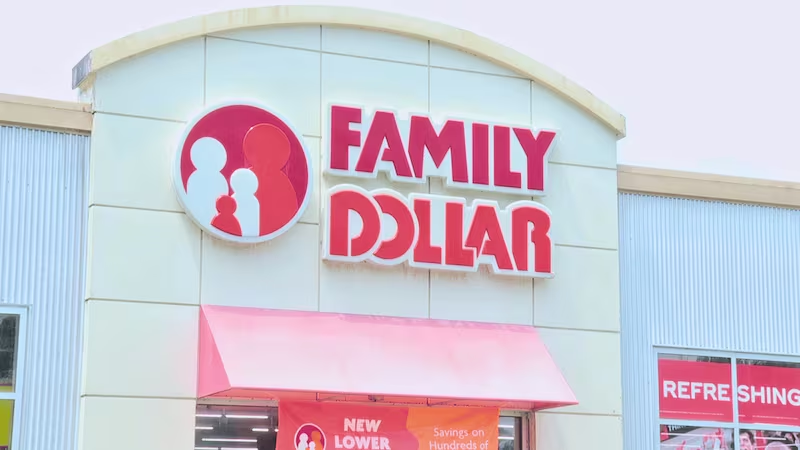
Family Dollar has agreed to pay $63 million to resolve federal and state claims that it charged shoppers more at checkout than the prices posted on its shelves, tags, circulars, website and mobile app. The Federal Trade Commission and 17 states filed the lawsuit and the proposed settlement together on Thursday in federal court in Virginia, and nothing becomes binding until a judge signs the order.
The money is split three ways under the proposed stipulated order. Family Dollar must set up a $40 million consumer redress fund for people who bought from its stores between Jan. 1, 2023, and Oct. 1, 2026, run a $20 million discount program, and pay $3,000,011.36 to the states, for a total of $63,000,011.36. The company neither admits nor denies the allegations, and the order bars it from misstating the price of any product.
The case is FTC et al. v. Family Dollar Stores, LLC, No. 2:26-cv-1267, in the Eastern District of Virginia, under FTC matter X270003. The commission voted 2-0 to file it. Family Dollar spokesperson Janella Escobar said Friday the retailer will cooperate with regulators and keep working on pricing accuracy.
"Today’s order will ensure Family Dollar stops deceiving consumers about its prices.
— Christopher Mufarrige, Director, FTC Bureau of Consumer Protection
According to the complaint, Family Dollar operates 7,076 stores in 48 states and Washington, D.C., many in low-income neighborhoods and so-called food deserts. Most items cost $5 or less and the average basket is about $16, so a few cents at the register matter. Milk, eggs, diapers and cereal were among the products affected, the FTC says.
Regulators point to inspection records as proof the problem was widespread. Cuyahoga County, Ohio, reported that Family Dollar stores failed 93 of 111 pricing inspections between January 2023 and March 2026, and Utah inspectors failed 165 of 350. FTC investigators who made undercover purchases in Euclid, Ohio, and Pittsburgh were overcharged on 15 of 50 items and 8 of 50 items, respectively.
Family Dollar’s own review found its stores failing 40% of state pricing inspections in January 2026, 57% in February and 59% in March, the complaint says.
How Registers and Shelves Drifted Apart
The FTC says the root cause was built into the pricing system. Corporate headquarters pushed new prices to registers automatically on a fixed schedule, even when store workers had not yet posted the matching shelf labels. Internal documents flagged those dates as high risk. On Saturday, Jan. 10, 2026, 1,040 stores had not printed that week’s labels.
The complaint adds that app prices and digital coupons were a second pain point. Shoppers described coupons that would not load or apply at the register, and an internal email cited in the filing said the company had no digital price-matching policy.
Earlier Warnings and a Rival Chain Facing the Same Charge
This was not Family Dollar’s first brush with regulators. It settled pricing complaints with Ohio for $400,000 in February 2024, Wisconsin for $113,960 in January 2025 and Arizona for $300,000 in May 2025. The complaint says April 2026 audits found 64 Ohio stores still missing the register sign required by the Ohio agreement, and that regulators have fined the company more than $3 million since 2022.
The FTC and 20 states sued Dollar General on Oct. 26 over similar allegations, and that case is ongoing.
What the Proposed Order Requires
If approved, the order would reshape how the chain prices goods.
✓ A 15% discount event lasting two straight days, completed within 90 days, to deliver $20 million in savings
✓ A pricing accuracy program within 90 days, with monthly market visits and two unannounced audits of every store each year
✓ Registers barred from raising prices until staff confirm the new shelf tags are posted
✓ A lowest-price policy, with register signs telling shoppers they can get an adjustment or refund
✓ Five years of independent assessments and annual certifications from a senior company officer
Florida would receive the largest state share, $506,985.16.
What Happens Next
Until the judge signs the order, the claims website and discount dates stay closed, and no one can file a claim yet. As of Sunday, no ruling had been reported.
Within 14 days of entry, Family Dollar must post notices on store doors and at registers and fund the redress program. Shoppers will then have 180 days to submit a form attesting they bought items during the covered period, and the program must finish within 12 months. Per-person payment amounts have not been set.
We remain focused on strengthening pricing accuracy across our stores— Janella Escobar, Family Dollar spokesperson
The settlement resolves allegations, not findings of liability, and binds the company only after court approval. Watch for the judge’s decision, the claims site launch, and the Dollar General case, which will test how far regulators push retailers over shelf-to-register price gaps.
Sources
- Federal Trade Commission: FTC and 17 States Secure $63 Million Settlement with Family Dollar Stores in Price Transparency Win for Consumersftc.gov(opens in a new tab)
- Federal Trade Commission: Family Dollar Stores LLC, FTC v. (Family Dollar Shelf Pricing)ftc.gov(opens in a new tab)
- U.S. District Court, E.D. Va.: Complaint, FTC v. Family Dollar Stores, LLC, No. 2:26-cv-01267ftc.gov(opens in a new tab)
- U.S. District Court, E.D. Va.: Proposed Stipulated Order for Permanent Injunction, Monetary Judgment, and Other Reliefftc.gov(opens in a new tab)
- Associated Press (via KRCG): Family Dollar to pay $63M to settle allegations that it routinely overcharged customerskrcgtv.com(opens in a new tab)
- CBS News: Family Dollar to pay $63 million to settle claims it overcharged customerscbsnews.com(opens in a new tab)
- Retail Dive: Family Dollar will pay $63M to settle unfair-pricing claims from state, federal regulatorsretaildive.com(opens in a new tab)
- PPC Land: Family Dollar faces $63m order over register prices above shelf tagsppc.land(opens in a new tab)