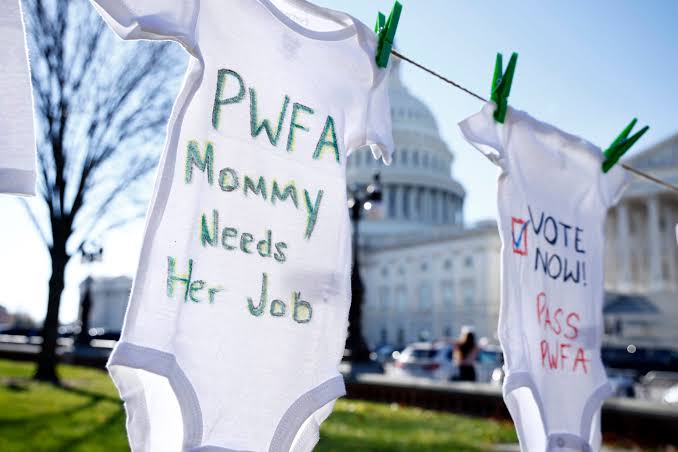


An assisted living facility in Blue Island, Illinois, has agreed to pay $160,000 to settle a federal lawsuit alleging it fired a certified nursing assistant rather than accommodate a pregnancy-related lifting restriction, the U.S. Equal Employment Opportunity Commission announced Nov. 17. Under a consent decree, Prairie Green at Fay’s Point must also rewrite its pregnancy accommodation policies and train employees every year.
The EEOC sued under the Pregnant Workers Fairness Act (PWFA), alleging the facility told the employee that lifting was an essential function and that her only option was unpaid leave for the rest of her pregnancy. The agency says vacant jobs she could have filled temporarily were available. When she declined the leave, it says, she was fired. The case is EEOC v. Blue Island SLF, LLC, No. 1:25-cv-11111, in the Northern District of Illinois, where the EEOC filed it in September 2025.
The settlement resolves allegations, not a court finding. Prairie Green did not immediately respond to requests for comment on Nov. 17, local outlets reported, and the EEOC’s announcement describes no admission of wrongdoing.
"Employers cannot simply force pregnant workers onto unpaid leave when reasonable accommodations are available.
— Andrea R. Lucas, EEOC Chair
Local reporting on the complaint describes a workplace that first made it work. Arinnie Young, hired in December 2020, told the director of nursing in April 2023 that she was pregnant and had a 20-pound lifting restriction. From April to July, the EEOC says, the director informally accommodated her by letting her swap residents who needed lifting with another nursing assistant. She drew no complaints and no discipline.
The informal arrangement ended, the EEOC alleges, when her formal accommodation request was denied. In September 2023 the facility posted a concierge opening that management never mentioned to her, the agency says, though it argues her restriction could have been accommodated in that role.
Timing matters. The PWFA took effect June 27, 2023, partway through the period the complaint describes. The EEOC sued in September 2025 after conciliation failed to produce a pre-litigation settlement.
The Legal Line: Unpaid Leave Is Not a Default Accommodation
The EEOC’s theory rests on three points in the PWFA. Employers must provide reasonable accommodations for known pregnancy-related limits unless that would cause undue hardship. A temporary inability to perform an essential function can still be accommodated, including by excusing that function. And employers may not require leave when another accommodation would let a worker keep working.
Those are the agency’s readings of the statute, and the facility’s defenses were never tested in court. They do explain why the EEOC treated the unpaid-leave ultimatum as the core violation, and why calling lifting essential did not end the analysis.
What the Consent Decree Demands of Prairie Green
Beyond $160,000 in lost wages for the affected employee, the decree requires other relief that the announcement does not itemize. The facility must review and revise its pregnancy accommodation policies, write guidelines for reasonable accommodations in jobs with lifting requirements, and train employees annually on employer duties and worker rights under the PWFA.
Missing from the public summary: how long the decree lasts, whether the EEOC will monitor compliance, and whether the court has entered it. Those terms would appear in the case docket, which this report could not independently review.
Four Obligations Prairie Green Accepted
The EEOC publicly disclosed these terms:
✓ $160,000 in lost wages to the former nursing assistant
✓ Review and revision of pregnancy accommodation policies
✓ Written accommodation guidelines for lifting-intensive roles
✓ Annual PWFA training for employees
The agency did not disclose the decree’s length or any reporting requirements.
A Companion Case and a Wider Enforcement Pattern
The EEOC filed a second PWFA suit the same day against R&L Carriers’ Matteson, Illinois, location, alleging a truck driver was forced onto leave during pregnancy (No. 1:25-cv-11121). The materials reviewed announce no resolution in that case.
The agency’s newsroom lists other recent pregnancy-related resolutions, including with Delta Air Lines and Wabash National. For healthcare and assisted living employers, where lifting is routine, the Prairie Green case shows how an essential-function argument gets tested against temporary options such as reassignment.
Under the PWFA, employers must engage in an interactive process— Victor Chen, EEOC spokesperson, September 2025
Keep three things separate: the EEOC’s allegations, the decree’s terms and the absence of a judicial finding. Watch for the court’s entry of the decree, any statement from Prairie Green or its parent company, and the outcome of the R&L Carriers case.
Sources
- U.S. Equal Employment Opportunity Commission: Prairie Green at Fay’s Point to Pay $160,000 for Pregnancy Discrimination (Nov. 17, 2026)eeoc.gov(opens in a new tab)
- U.S. Equal Employment Opportunity Commission: EEOC Sues Two Businesses Operating in the Chicago Area Under the Pregnant Workers Fairness Act (Sept. 16, 2025)eeoc.gov(opens in a new tab)
- La Vie Zine: Blue Island assisted living agrees to $160,000 settlementlaviezine.com(opens in a new tab)
- Beverly Review: Chicago EEOC office suing Blue Island assisted-living facility over pregnant employeebeverlyreview.net(opens in a new tab)
- Seyfarth: EEOC-Initiated Litigation, 2026 Editioncontent.seyfarth.com(opens in a new tab)
- U.S. Equal Employment Opportunity Commission: Pregnancy Discriminationeeoc.gov(opens in a new tab)