
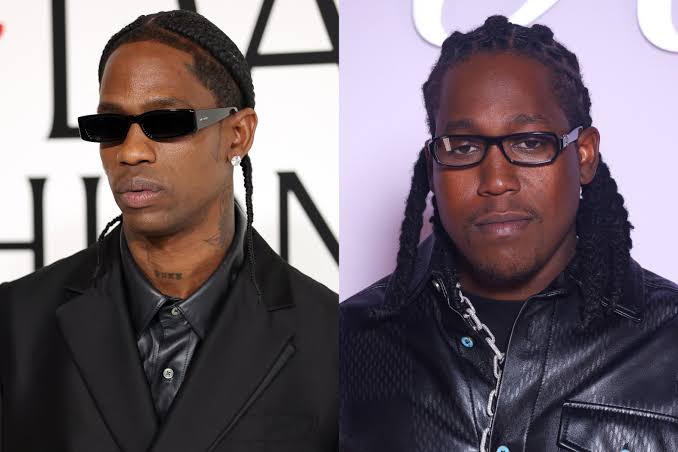
A federal lawsuit filed in New York accuses rapper Travis Scott, singer Don Toliver and Sony Music of using a producer's recording in the 2019 song “What To Do?” without a license or payment. The producer, Niv Kalisky, who works as Early Yellow, filed the case Nov. 17, 2026.
The complaint, filed in the U.S. District Court for the Southern District of New York, also names rapper Sheck Wes, producer Mike Dean, Epic Records and Cactus Jack Records. It is listed as Kalisky v. Webster, No. 1:26-cv-10094, because Webster is Scott's legal name.
Neither Scott, Toliver nor Sony Music has publicly responded, and no court has decided who is right. The allegations come from Kalisky's complaint and have not been tested in court. The case is at its earliest stage.
Producer Says He Shared His Beat but Never Signed a License
According to the complaint, Kalisky created an instrumental recording called “Moazin99bpm” and shared it with representatives of two producers who worked on “What To Do?” He says one of those producers later sent him a version of the track using his beat. But he says no licensing deal was ever signed, and the song was released in December 2019 as part of Scott's JACKBOYS compilation. The seven-track project debuted at No. 1 with 154,000 equivalent units in its first week.
Songwriting Credit Is Not the Same as Recording Royalties
Kalisky is credited as a songwriter and producer on the song, and Billboard reported that he has received publishing income, which is money tied to the composition. His lawsuit argues that is not enough. He says he has been paid nothing for the sound recording itself, known in the industry as the master, even though the song has racked up hundreds of millions of streams. Kalisky's own website lists the song among his projects, describing his role as co-composer, co-producer and co-lyricist.
The complaint puts the song's reach at more than 270 million Spotify streams and 60 million YouTube plays. Those figures come from Kalisky's filing, not from an independent accounting.
Kalisky Accuses Sony of Keeping the Song Online
Kalisky says his lawyers asked Cactus Jack and Sony's Epic Records for payment over the years without success. He also says he sent copyright takedown notices to streaming services, which are formal requests to remove a song. According to the complaint, Sony answered with counter-notices that kept the track online. Kalisky calls those challenges improper and accuses Sony of running an illegal money-making scheme.
What Kalisky Is Asking the Court to Order
Kalisky wants a judge to declare that the defendants willfully infringed his copyright and that he owns 50% of the rights to the sound recording. He is also seeking a share of the song's profits and at least $1 million in damages. His attorneys, Justin M. Jacobson and Daniel Cruz Hernandez, said producers are becoming more aware of their rights and that their client chose to stand up for what he believes he deserves.
Why Written Licenses Matter When Beats Are Shared
A sample is a piece of an existing recording reused in a new track. Using one generally requires permission from the owners of the composition and of the master recording, and that permission is usually put in writing. In music, beats are often passed around informally before a song is finished, which is why unsigned or unclear agreements can later become courtroom fights.
What Kalisky Must Prove to Win
In federal copyright cases, a plaintiff generally has to show two things: that he owns a valid copyright in the work, and that someone copied it without permission. Ownership is likely to matter here, because Kalisky claims half of the sound recording and points to his credits on the song as proof his role was recognized. How the defendants explain those credits could shape the case.
What Happens Next in Kalisky v. Webster
In federal court, defendants generally have 21 days after being formally served to answer a complaint, though extensions are common. The first signs to watch are responses from Scott, Toliver and Sony Music, any request to dismiss the case, and any challenge to Kalisky's ownership claim. As of Nov. 19, no ruling or hearing has been reported.
Sources
- Billboard: Travis Scott and Don Toliver Sued Over Sample on Hit JACKBOYS Track 'What To Do?'billboard.com(opens in a new tab)
- Rolling Stone: Travis Scott and Don Toliver Sued for Copyright Infringement Over 2019 Hit 'What to Do?'rollingstone.com(opens in a new tab)
- AllHipHop: Travis Scott Producer 'Chose To Stand Up' In Royalty Lawsuit, Attorneys Sayallhiphop.com(opens in a new tab)
- Paste Magazine: Travis Scott and Don Toliver Sued for Copyright Infringement Over What To Dopastemagazine.com(opens in a new tab)
- Justia Dockets: Kalisky v. Webster et al., No. 1:26-cv-10094 (S.D.N.Y.)dockets.justia.com(opens in a new tab)