
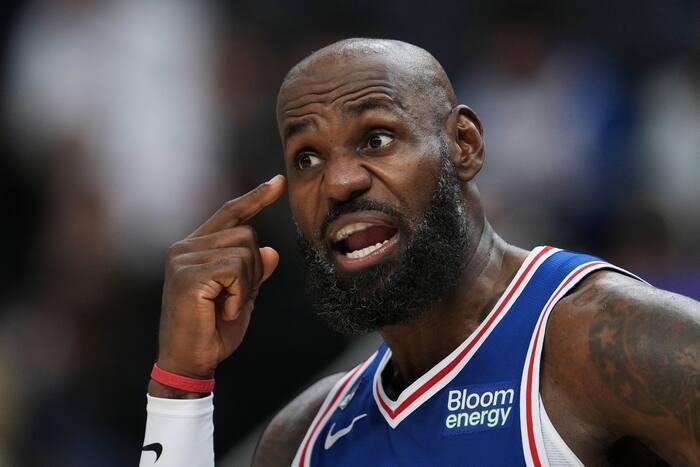
LeBron James has sued the company behind an AI sports-betting app called Bron, claiming its advertising used a computer-generated version of him, complete with his nickname, tattoos, voice and No. 23 jersey, to suggest an endorsement he never gave. James and his company, LBJ Trademarks LLC, filed the complaint Nov. 17 in federal court in Manhattan against PlayVision Inc. and its co-founders, Anish Gupta and Marc Zoghby.
The suit asks for an order barring the defendants from using James’s name and likeness, along with damages and any profits tied to the campaign. It also demands a jury trial. These are allegations from the complaint, and no court has ruled on them.
PlayVision had not publicly answered the complaint as of Nov. 18. Messages seeking comment from The Associated Press and Business Insider went unreturned, and Gupta has said a new name for the app would be announced Wednesday.
"…selected the name ‘Bron’ precisely to evoke Mr. James.
— Complaint in James v. PlayVision, as quoted by Business Insider
According to the complaint, the campaign began in early November with a video featuring an AI-generated figure that looks and sounds like James. In a locker room, the character wears a No. 23 jersey bearing the nickname Bron and scrolls through betting information on other NBA players before a closing line urges viewers to scroll to bet. The complaint says the clip drew about a million views within a day.
James’s lawyers say the video was especially damaging because it shows a version of him studying wagers on NBA players, which they argue implies an active player bets on games. They also point to his exclusive endorsement deal with the prediction market Polymarket, and the complaint says James typically earns tens of millions of dollars from endorsements.
Luka Dončić’s representative has said the NBA star also sent a cease-and-desist letter after his image appeared in the same promotion, according to Front Office Sports.
Why the Name Bron Sits at the Center of the Case
The plaintiffs argue that Bron has identified James for more than two decades and works as a mark tied to his commercial identity. They say PlayVision chose it deliberately to borrow his reputation, and that consumers could assume he approved, sponsored or partnered with the app.
PlayVision describes Bron as a research and analytics tool, with features such as odds comparisons and bet tracking behind a subscription, and says it does not take wagers directly. The company, founded in 2025 with Y Combinator backing, began as an AI tool for analyzing game and practice footage. The app is free to download, and a pro version costs $249.99 a year or $29.99 a month, according to Front Office Sports.
From Cease-and-Desist Letter to Federal Court in 12 Days
James’s lawyers at Grubman Shire Meiselas & Sacks sent a cease-and-desist letter on Nov. 5, according to the complaint. It demanded that PlayVision stop using his likeness in any form, take the ad down and tell every app user in writing that James had no involvement.
The company pulled the ad from its social accounts, but the complaint says it had already been reposted, and that PlayVision then teased a new name without adopting one. James’s team cites that as evidence the defendants were trying to profit from the controversy. The lawsuit followed 12 days after the letter.
Seven Counts Against PlayVision
The complaint lists these claims, according to a summary of the filing:
✓ False endorsement and false association under the federal Lanham Act
✓ Unauthorized commercial use of name, image and likeness under New York Civil Rights Law
✓ Trademark infringement involving the Bron and LeBron identifiers
✓ Deceptive business practices under New York law
✓ False advertising under federal law
✓ False advertising under New York law
✓ Unfair competition under New York common law
The plaintiffs also seek attorneys’ fees and an accounting of profits.
What the Case Could Mean for AI Celebrity Ads
Legal experts quoted by Front Office Sports say a recognizable avatar, nickname and jersey number can raise right-of-publicity problems even if a celebrity’s name is never spoken. The case will test how those principles apply when AI, rather than a human lookalike, recreates a famous face and voice.
The dispute reaches beyond one app. Traditional endorsements require permission, and AI makes it cheap to imitate a voice or appearance. How courts treat synthetic celebrity ads, and whether advertisers should have to disclose them, is still being worked out.
intentionally created the false impression that Mr. James endorsed— Complaint in James v. PlayVision, as quoted by Fox News
Keep the status clear: everything above is an allegation. No court has ruled, no liability has been found, and PlayVision’s legal response had not been reported. Watch for the company’s answer to the complaint, any new app name and a judge’s early rulings.
Sources
- ESPN (Associated Press): 76ers’ LeBron James sues makers of AI sports-betting app ‘Bron’espn.com(opens in a new tab)
- Business Insider via Yahoo Sports: LeBron James sues AI sports-betting analytics app over alleged bogus endorsementsports.yahoo.com(opens in a new tab)
- Fox News via Yahoo Sports: New lawsuit alleges AI app ‘Bron’ used LeBron James’ tattoos, voice and jersey to promote sports-betting toolsports.yahoo.com(opens in a new tab)
- International Business Times: LeBron James Sues ‘Bron’ App After AI Ad Uses His Likeness, Voice and Nickname Without Permissionibtimes.co.uk(opens in a new tab)
- Front Office Sports: LeBron James demands AI betting app stop using his likeness (Nov. 5, 2026)frontofficesports.com(opens in a new tab)
- Gambling.com: LeBron James sends cease-and-desist to Bron AI betting appgambling.com(opens in a new tab)
- CourtListener: Complaint, James v. PlayVision, S.D.N.Y. (filed Nov. 17, 2026)storage.courtlistener.com(opens in a new tab)