
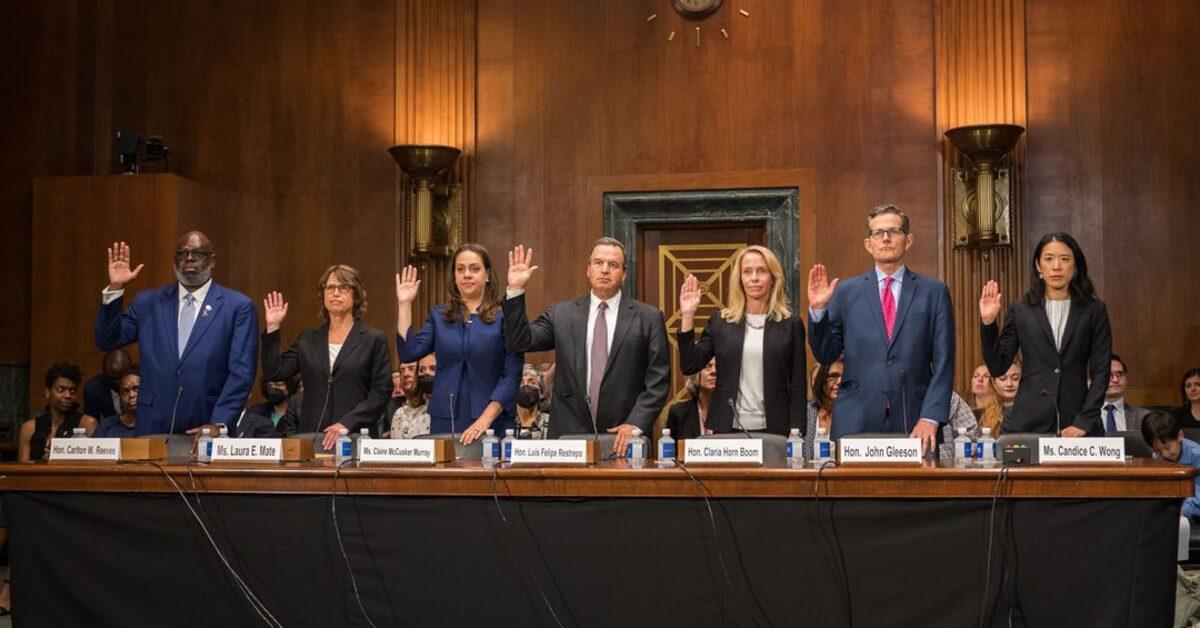
The U.S. Sentencing Commission voted on Nov. 13, 2026, to amend its Rules of Practice and Procedure so that representatives of the Judicial Conference’s Criminal Law Committee and the Federal Public and Community Defenders are invited into the Commission’s nonpublic meetings. The change widens who helps shape federal sentencing policy, but it does not alter any guideline or penalty.
Chair Carlton W. Reeves said Congress tasked the Commission with working closely and continuously with these judicial branch stakeholders, and that without their steady presence the work has not been as robust as it should be. He called the change “a simple, common-sense fix” that has drawn broad support across the criminal justice system. The Commission’s announcement did not give a vote count.
What the announcement leaves out matters as much. It does not state an effective date, which meetings the invited representatives may attend, or whether they may vote or only observe. The Commission says the official text of the revised rules will be posted on its website, and its adopted-amendment page notes that technical and conforming changes may still be made and that motions to reconsider may be filed.
What the vote changes, and what it leaves alone
The Commission is an independent agency in the judicial branch, organized in 1985 to develop national sentencing policy for federal courts. Its rules govern how it meets, votes, takes comment and publishes its work. The rules already provide for nonpublic meetings; the new language decides who may attend them.
That distinction is the heart of the story. The vote is not a new sentencing guideline, a retroactivity decision or a change to criminal penalties. Defendants, prosecutors and judges will not see different guideline ranges because of it. Any effect shows up later, in the quality of the information commissioners have when they do change the guidelines. Since the Supreme Court made the guidelines advisory in 2005, they have been a starting point for federal judges, so the process behind them draws close scrutiny.
Why judges and defenders are the ones invited
The two groups come from different parts of the system. The Criminal Law Committee is a Judicial Conference committee drawn from the federal bench. Federal Public and Community Defenders represent a large share of people charged in federal court. In an Oct. 26 letter to the Commission, The Sentencing Project said defenders represent the large majority of people charged with federal crimes but have been excluded from nonpublic meetings and the staff briefings and data analyses discussed there.
The letter also noted that the Justice Department already holds a nonvoting ex officio seat at the Commission, while the 1984 Sentencing Reform Act provided no comparable seat for defenders. It argued that a defender’s presence would balance the Department’s voice and improve the process’s legitimacy, and it cited 28 U.S.C. § 994(o) as giving defenders a statutory role in commenting on the Commission’s work.
From an August proposal to a November vote
The Commission proposed the amendment in late August 2026, in eight parts, and took public comment through Oct. 26. One part would let a Criminal Law Committee representative and a defenders’ representative take part in meetings and public hearings. The proposal also reached beyond participation, including a five-vote threshold for making an amendment retroactive, public release of meeting minutes and materials, and rules on ex parte communications.
The Nov. 13 announcement describes only the participation change and says the Commission will keep evaluating additional revisions it proposed earlier this year. Readers should not assume the other proposals were adopted.
A wider overhaul of how the Commission works
Reeves said the vote grew out of a project launched this summer to examine and improve the Commission’s internal procedures. Earlier changes brought formerly incarcerated people into its policymaking and let outside experts strengthen its research. He said he hopes more steps toward a fairer, smarter process will follow in the coming weeks.
Those steps matter for transparency as much as inclusion. How a body deliberates, behind closed doors or in public, shapes how much outsiders can test its reasoning, and who sits in the room helps decide which questions get asked.
What to watch next
Three things will show how much this changes. The first is the official rule text, which should say which meetings are covered and whether invitees can speak or vote. The second is any reconsideration motion or technical edit. The third is which of the remaining August proposals the Commission takes up. The Commission’s website is where the posted rules and any further notices will appear.
For now, the confirmed fact is narrow and concrete: the Commission voted on Nov. 13 to invite two judicial-system stakeholders into its nonpublic deliberations. It is a process reform inside the body that sets the starting point for federal sentences.
Sources
- U.S. Sentencing Commission: announcement of Nov. 13, 2026 voteussc.gov(opens in a new tab)
- U.S. Sentencing Commission: Adopted Amendment to Rules of Practice and Procedureussc.gov(opens in a new tab)
- U.S. Sentencing Commission: Proposed 2026 Amendment to Rules of Practice and Procedureussc.gov(opens in a new tab)
- U.S. Sentencing Commission: Federal Register notice of proposed 2026 amendmentussc.gov(opens in a new tab)
- The Sentencing Project: comment letter on ex officio defender participation, Oct. 26, 2026sentencingproject.org(opens in a new tab)