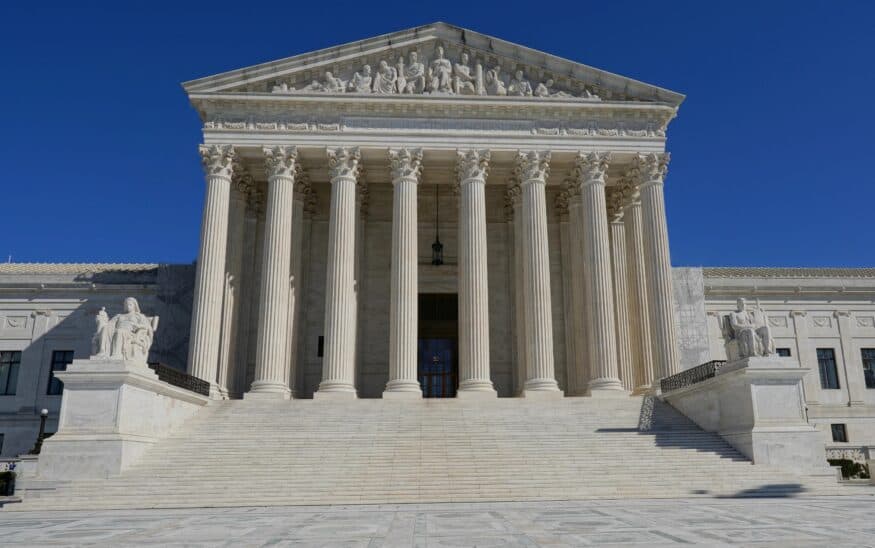

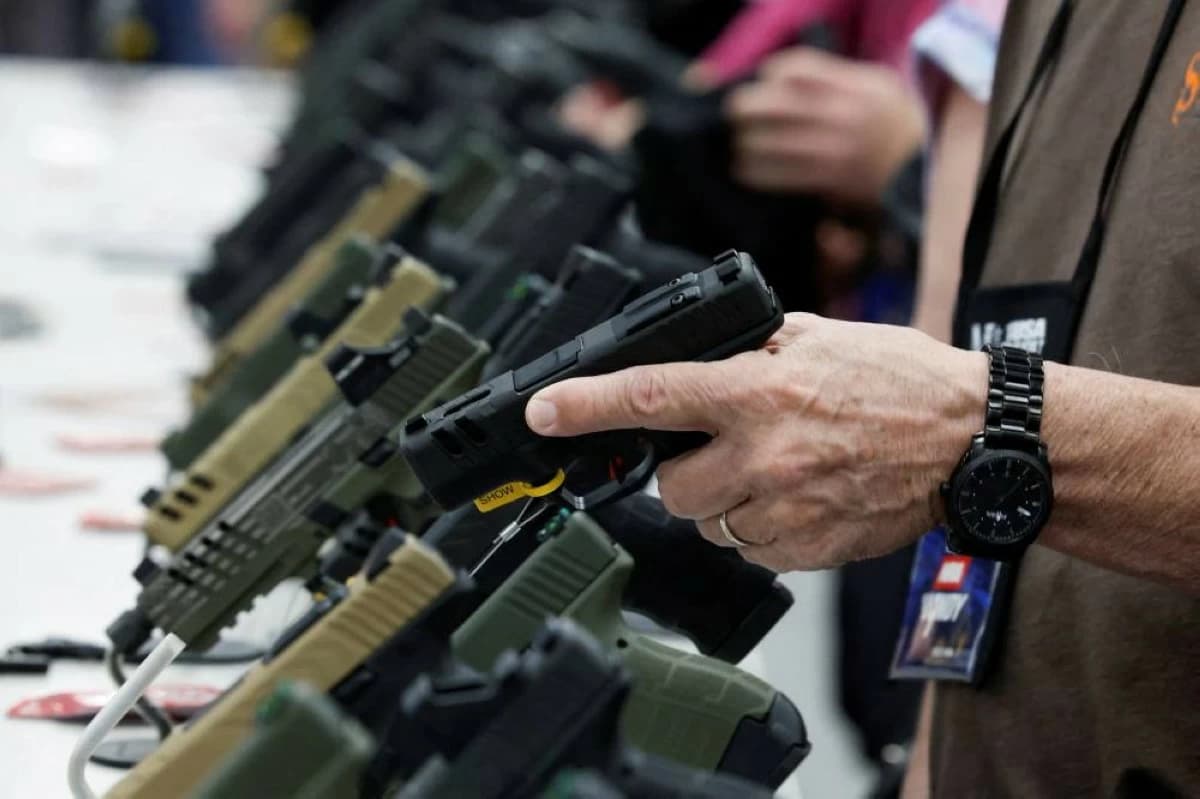
The U.S. Supreme Court handed gun rights advocates two major victories in June 2026, striking down a Hawaii law that blocked licensed gun owners from entering public-facing private businesses while armed, and gutting a decades-old federal statute that barred marijuana users from owning firearms — rulings that stiffen the legal bar every gun law must clear going forward.
The two decisions arrived within one week of each other. Together, they signal a court growing more aggressive — not less — in using the Second Amendment to invalidate gun regulations at every level of government.
The rulings applied the legal test from the court's landmark 2022 decision in New York State Rifle & Pistol Association v. Bruen, which requires all gun control measures to be 'consistent with this nation's historical tradition of firearm regulation' — a standard that has now toppled two more laws.
"Hawaii's regime hobbles what the Second Amendment protects: the right of Americans to carry arms for self-defense as they go about their daily lives.
— Justice Samuel Alito, majority opinion, Wolford v. Lopez (June 25, 2026)
In Wolford v. Lopez (No. 24-1046), the court voted 6–3 to strike down Hawaii's Act 52, which made it a crime for licensed concealed carry permit holders to bring a handgun onto any private property open to the public — a restaurant, a gas station, any shop — unless the property owner gave advance, express permission. Justice Samuel Alito wrote the majority opinion, joined by Chief Justice Roberts and Justices Thomas, Gorsuch, Kavanaugh, and Barrett. Justice Barrett filed a separate concurrence, joined by Thomas and Gorsuch.
Gun rights groups had nicknamed Hawaii's law the 'vampire rule' — permit holders needed an invitation to enter. The court agreed it was constitutionally untenable. Justice Elena Kagan dissented alone, arguing the law had historical precedent in colonial-era property rules. Justice Ketanji Brown Jackson, joined by Justice Sonia Sotomayor, filed a longer dissent, accusing the majority of turning the Bruen test into a tool to 'thwart the will of legislatures.'
SAF founder Alan Gottlieb said the ruling should put other states with similar laws on notice. 'This law was nothing more than a thinly veiled attempt to disarm peaceable citizens,' he said. Hawaii's Attorney General Anne Lopez had not publicly responded as of the ruling's publication.
Case 2: United States v. Hemani — No. 24-1234 | Decided June 18, 2026 | 9–0
Ali Danial Hemani is a dual U.S.-Pakistani citizen born and raised in Texas. He lived with his parents in the Dallas area, held a stable job, and kept a 9mm pistol at home for self-defense. He also used marijuana about every other day. In 2022, federal agents searched his family home, suspecting terrorism ties. Hemani cooperated fully — surrendering the gun, disclosing marijuana, and consenting to an interview. More than six months later, the government charged him under 18 U.S.C. § 922(g)(3), a federal statute banning firearms possession by anyone who is an 'unlawful user of or addicted to any controlled substance.' The charge carried up to 15 years in prison and lifetime disarmament.
The government's theory was stark: anyone who regularly uses marijuana can be automatically disarmed — no individual danger assessment required. The court rejected that unanimously. Justice Neil Gorsuch wrote the opinion, joined by Chief Justice Roberts and Justices Thomas, Sotomayor, Kavanaugh, Barrett, and Jackson. The ruling does not strike down Section 922(g)(3) entirely. It leaves open the possibility that the government could disarm a drug user it proves is genuinely dangerous. But automatic, status-based prosecution for routine marijuana use — with no evidence of actual danger — is now off the table.
The Bruen Test: The Legal Engine Behind Both Rulings
Both decisions turned on the same constitutional framework: the Bruen test, established in New York State Rifle & Pistol Association v. Bruen (2022, No. 20-843). Under Bruen, a gun regulation survives only if the government can point to a deep-rooted historical tradition of similar regulation. Modern public safety rationales alone are not enough. The only gun law to clear this bar cleanly at the Supreme Court so far is the domestic violence restraining order statute, upheld in United States v. Rahimi (2024) — a case where the court found a clear tradition of disarming people who posed a credible physical threat to others. Neither Hawaii's carry restriction nor the Hemani prosecution could make that showing.
Key Case Details at a Glance
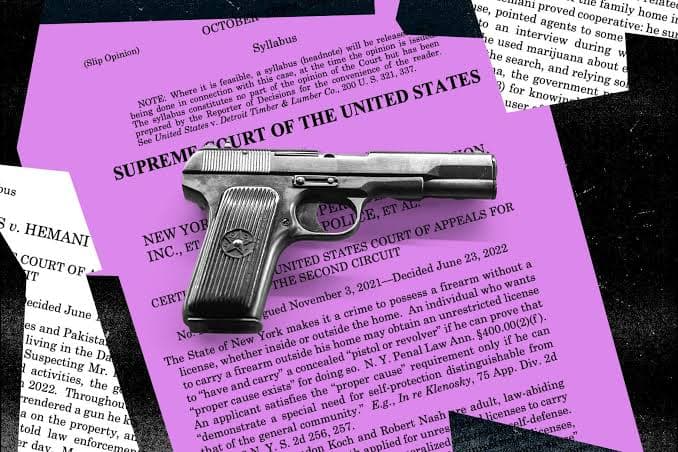
Wolford v. Lopez (No. 24-1046): Argued Jan. 20, 2026 — Decided June 25, 2026. Vote: 6–3. Majority by Alito; concurrence by Barrett (joined by Thomas, Gorsuch); dissent by Kagan; dissent by Jackson (joined by Sotomayor). Struck down Hawaii Act 52's default no-carry rule on private property open to the public.
United States v. Hemani (No. 24-1234): Argued March 2, 2026 — Decided June 18, 2026. Vote: 9–0. Opinion by Gorsuch; concurrence by Thomas; concurrence by Jackson (joined by Sotomayor); concurrence in judgment by Alito (joined by Kagan). Held that automatic disarmament of marijuana users under 18 U.S.C. § 922(g)(3) violates the Second Amendment as applied.
Pepperdine University law professor Jacob Charles said the two decisions confirm the court's 'extreme skepticism about all manner of gun regulations, especially new ones,' creating a test that makes it 'exceedingly difficult for legislatures to create gun laws to protect their citizens.'
Justice Gorsuch acknowledged in Hemani that 'drugs and guns can sometimes make for a dangerous mix' — but held that the government's all-or-nothing theory went far beyond what history and the Constitution permit.
✓ Two Second Amendment rulings in one week — both expand gun rights
✓ Wolford: permit holders can now enter public businesses armed unless told otherwise
✓ Hemani: casual marijuana users who own guns cannot be automatically prosecuted federally
✓ Bruen historical-tradition test now the decisive filter for all gun laws
✓ Only Rahimi (2024) has survived the Bruen test at SCOTUS to date
✓ Court eyeing assault weapons bans, magazine restrictions, and age-limit cases next
Justice Jackson's dissent in Wolford accused the majority of having 'manipulated' the Bruen test 'into a free-for-all that lets the judiciary thwart the will of legislatures by privileging access to firearms above all else.' The majority did not respond to the critique directly.
What the Court Eyes Next: AR-15s, Magazine Bans, and Age Limits
With both June rulings decided, the court is now weighing whether to accept several major Second Amendment cases for its next term, which begins in October 2026. Gun rights advocates are pressing hard, and at least three conservative justices have already signaled interest in taking up challenges to state assault weapons bans.
The five pending petitions — including challenges to California's magazine ban and state bans on AR-15-style rifles — were distributed for the June 25 conference. Results are expected imminently and could bring a cert grant, a grant-vacate-remand, or a denial with written dissents. Cases on age-based handgun restrictions (including McCoy v. ATF, No. 25-24, which challenges the federal ban on licensed dealers selling handguns to adults under 21) were likely held pending Hemani and may now see movement. The next major case to watch is Novotny v. Moore, expected at the court's long conference in late September 2026.
It is critical that the Supreme Court take an AR-15 and magazine case and end the lower courts' rebellion against the court's precedents.— Stephen Stamboulieh, attorney, Gun Owners of America
Justice Brett Kavanaugh, writing separately last year when the court turned away similar appeals, signaled the court 'presumably will address the AR-15 issue soon.' Three other conservative justices dissented from that refusal to hear the cases. With the court's two argued Second Amendment cases now resolved, the path is clear for a new wave of gun rights litigation to reach the justices — and based on this term's results, the court shows no sign of pulling back.