
A federal jury in Brooklyn has convicted Chinese telecom giant Huawei Technologies and three subsidiaries on 10 of 12 criminal counts, a major milestone in a prosecution that began in 2018. The verdict came Nov. 24, 2026, after a trial that ran about 12 weeks.
Jurors cleared Huawei of racketeering conspiracy, the charge that portrayed the company as a criminal enterprise, and of conspiracy to obstruct justice. On Nov. 25, Huawei welcomed the racketeering acquittal, called the remaining convictions "without legal or factual merit" and said it will take legal action. Sentencing before U.S. District Judge Ann M. Donnelly is set for Sept. 14, 2027.
Convicted alongside the Shenzhen-based parent were Huawei Device Co. Ltd., Futurewei Technologies Inc. of San Jose, California, and Huawei Device USA Inc. of Plano, Texas. The Justice Department said at least one defendant was convicted of each offense, so the convictions vary by company.
Jury Splits Its Verdict on Fraud, Theft and Racketeering
The convictions cover conspiracy to steal trade secrets, bank fraud, wire fraud, conspiracy to defraud the United States, violations of the International Emergency Economic Powers Act and money laundering conspiracy, according to the Justice Department. Attorney General Todd Blanche said, "No person or company is above the law." Jurors deliberated for five days, beginning Nov. 18, TIME reported.
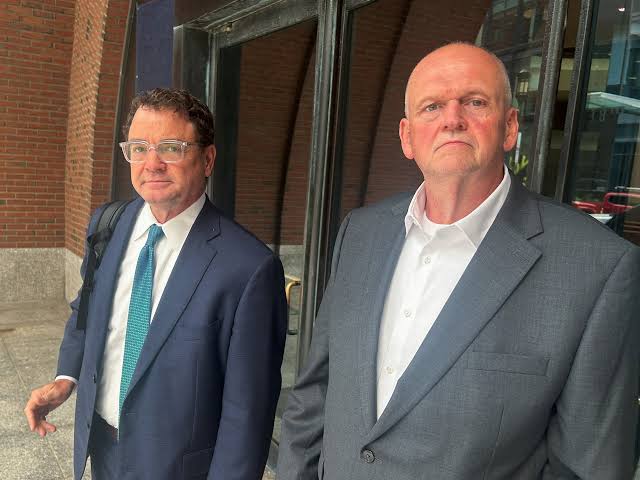
The racketeering acquittal may matter financially. TIME reported that a conviction on that count could have exposed Huawei to forfeiture of parts of its enterprise. Defense lawyer Brian Heberlig said the result vindicated the company's "good-faith compliance culture" and called it premature to discuss penalties, though he said the acquittal could make a significant difference.
What Prosecutors Told Jurors Huawei Did
Prosecutors said Huawei ran its Iran business through a company called Skycom while telling banks, journalists and the U.S. government that Skycom was a business partner. The Justice Department says Skycom was a wholly owned subsidiary and that the misstatements helped Huawei obtain billions of dollars in credit and access to U.S.-dollar clearing. The 2018 indictment alleged that Huawei misled HSBC, Standard Chartered and BNP Paribas.
On trade secrets, jurors watched video that prosecutors said showed a Huawei employee slipping part of a T-Mobile testing robot into a backpack. The government also described the copying of Cisco router source code, the use of a university researcher to reach CNEX hardware, and a patent filing that attached confidential Quintel material. Jurors also heard about an engineer who sneaked into a Fujitsu booth at a trade show to photograph a device.
Huawei's Defense and Its Response After the Verdict
Defense lawyers argued that prosecutors cherry-picked a handful of disparate incidents to support a claim of a 20-year conspiracy. They also said the banks knew about Huawei's Iran business and were competing for its account. Prosecutors called more than 60 witnesses over the trial, and the defense called 15.
In its Nov. 25 statement from Shenzhen, Huawei said the five trade secret disputes the government cited were civil matters resolved over the past two decades. No court ever found the company liable for willful intellectual property misappropriation, it said, or ordered it to pay damages. Huawei said it will review the verdicts, keep operations stable and continue investing in research. Heberlig told reporters the company fully expects to appeal.
Beijing Objects as U.S.-China Tensions Linger
At a Beijing briefing on Nov. 25, Foreign Ministry spokesperson Guo Jiakun said China firmly opposes what he called U.S. suppression and containment of Chinese companies and supports them in defending their legitimate rights. The verdict came five days after President Donald Trump met Chinese President Xi Jinping in Shenzhen during the APEC summit.
The case surfaced in December 2018, when Canada detained Meng Wanzhou, Huawei's chief financial officer and the founder's daughter, on a U.S. warrant. She later entered a deferred prosecution agreement and returned to China, and the charges against her were dropped. Washington put Huawei on a trade blacklist in 2019, and Reuters noted experts say the case has not undermined its business, as the company diversified and became a key player in China's AI push.
Sentencing, Appeal and a Seattle Case Still Ahead
When sentenced, the four defendants face criminal fines, forfeiture and restitution. Motions ahead of sentencing are expected to begin in the third week of January, TIME reported, and the court will weigh the federal sentencing guidelines and other statutory factors. Appeals in federal criminal cases generally follow a final judgment, so any appeal would ordinarily come after sentencing.
A separate federal trade secret case against two Huawei subsidiaries in Seattle has been repeatedly delayed, with trial currently set for October 2027, according to TIME. Watch for the January motions and any filings challenging the verdict. As of Nov. 25, the public record shows verdicts, a sentencing date and Huawei's stated plan to appeal, but no sentence.
Sources
- U.S. Department of Justice: Chinese Tech Giant Huawei and Subsidiaries Convicted of Sanctions Violations, Fraud, Conspiracy to Steal Trade Secrets, and Money Laundering (Nov. 24, 2026)justice.gov(opens in a new tab)
- U.S. Attorney's Office, Eastern District of New York: Huawei and Subsidiaries Convicted (Docket No. 18-CR-457 (S-4) (AMD))justice.gov(opens in a new tab)
- Huawei: Statement on the Jury Verdict in the U.S. District Court for the Eastern District of New York (Nov. 25, 2026)huawei.com(opens in a new tab)
- Reuters via Yahoo News: China's Huawei convicted in sprawling US criminal trial over Iran business (Nov. 24, 2026)yahoo.com(opens in a new tab)
- Reuters via Daily Sabah: Huawei found guilty on 10 counts in sprawling US criminal case (Nov. 25, 2026)dailysabah.com(opens in a new tab)
- TIME: China's Huawei Convicted in U.S. Over Bank Fraud, Iran Ties (Nov. 25, 2026)time.com(opens in a new tab)
- Chinese Foreign Ministry: President Xi Jinping Meets with U.S. President Donald J. Trump (Nov. 19, 2026)mfa.gov.cn(opens in a new tab)