

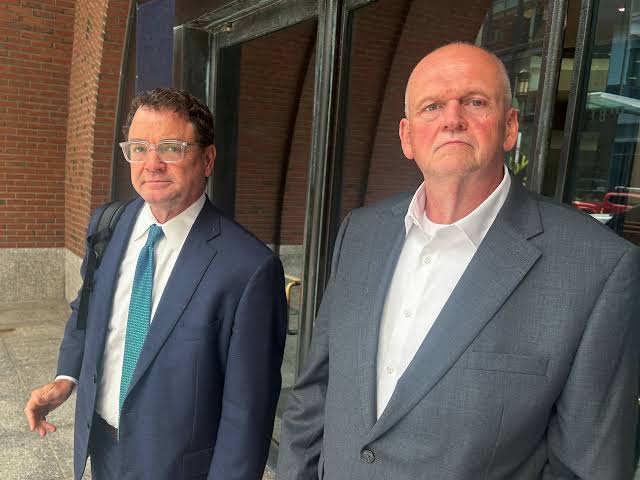
A federal judge in Boston has indicated that she will reduce an $88 million jury award in a hernia-mesh case against Medtronic's Covidien unit, leaving the amount of any eventual recovery unresolved after a closely watched first trial.
U.S. District Judge Patti Saris said November 10 that the award would not stand at its original level and encouraged the parties to consider settlement, according to reporting on the hearing. The materials reviewed do not establish a final reduced amount.
The jury awarded $77 million to Larry Patterson and $11 million to his wife, Tammy Patterson, after finding inadequate warnings about the product's risks. The individual case is 1:22-cv-10153-PBS. It is part of the federal Covidien hernia-mesh litigation, MDL No. 3029.
The dispute behind the verdict
An April 27 court order describes Patterson's allegation that he received a Symbotex Composite Mesh implant during a 2017 hernia operation. He alleged that the mesh adhered to his bowel and contributed to an obstruction and recurrent hernia requiring another operation in 2020.
That order addressed expert testimony before trial. It identifies the product and the theories being advanced, but it should not be mistaken for the later jury verdict or a final determination of the amount owed. Different documents answer different questions about the same litigation.
The underlying claims arose under Alabama law. The court described issues concerning the mesh's barrier, its interaction with surrounding tissue and the adequacy of warnings. Those medical and technical questions were specific to the evidence in the case, not a finding that every mesh implant causes the same injury.
Why the dollar figure is still unsettled
A jury award can face further judicial review before the litigation is finished. Here, Saris has expressed an intention to reduce the amount. That is materially different from a completed order naming a new figure and resolving the parties' remaining options.
Reports of the November hearing describe the judge as finding the award excessive. They also describe competing arguments about the extent and consequences of Patterson's injuries. Those arguments explain why the damages dispute continues after the verdict; they do not provide a reliable basis for guessing the eventual reduction.
The process of reducing an excessive jury award is often called remittitur. Under the federal constitutional principle discussed by the Supreme Court in Hetzel v. Prince William County, a plaintiff must be given the relevant opportunity to choose a new trial rather than simply having a lower award imposed without that option.
How that principle applies to a particular order depends on what the judge actually directs. Until the written disposition is available, an account should not declare that the Pattersons accepted a smaller sum, that a new trial has been scheduled or that payment has occurred.
A bellwether does not decide every related claim
The Patterson case is a bellwether within a larger group of product-liability disputes. Such trials allow parties to test evidence and arguments in selected cases. They can influence assessments of litigation risk, but one jury's award does not automatically determine what other plaintiffs receive.
The federal multidistrict-litigation statute allows civil actions sharing factual questions to be transferred for coordinated or consolidated pretrial proceedings. Its purposes include convenience and more efficient handling. Centralization does not erase differences in each plaintiff's medical history, claimed injuries or applicable law.
The master federal reference is 1:22-md-03029-PBS. It should be distinguished from the Pattersons' individual civil case number. The two identifiers connect the particular lawsuit with the broader proceedings without implying that every related claim was tried alongside it.
Reports describe thousands of related claims nationally. Different totals may count plaintiffs, individual lawsuits or cases within a particular federal proceeding. Those measures are not interchangeable, so a single unexplained number can give a misleading picture of the litigation's size.
What a settlement discussion would mean
Saris encouraged the parties to consider settlement. That invitation is not evidence that a deal has been reached. A negotiated resolution would require agreement, and its terms could differ from both the original verdict and any amount the court ultimately considers supportable.
The judge's remarks also should not be described as erasing every aspect of the jury's decision. A challenge to the size of damages raises a different question from whether the company is liable at all. Any order altering liability would need to be identified and reported on its own terms.
For other people following the litigation, the next meaningful development will be a written ruling, a documented settlement or another formal step clarifying the result. The original $88 million remains the historical jury award, not a confirmed final payment to the family.
The next court document, rather than speculation about a percentage cut, will establish that figure.
As of November 11, the public material supports a planned reduction and continuing post-trial proceedings. It does not supply a final replacement amount. Keeping that limit clear preserves the significance of the judge's intervention without presenting an unfinished damages dispute as a completed outcome.
Sources
- District of Massachusetts: April 27, 2026 order and case numbersgovinfo.gov(opens in a new tab)
- November 10 hearing report and source referencesmassarbitration.co(opens in a new tab)
- Reuters report summary: judge's remarks and party argumentsblotter.fyi(opens in a new tab)
- 28 U.S.C. 1407: multidistrict litigationlaw.cornell.edu(opens in a new tab)
- Supreme Court: Hetzel v. Prince William Countylaw.cornell.edu(opens in a new tab)