
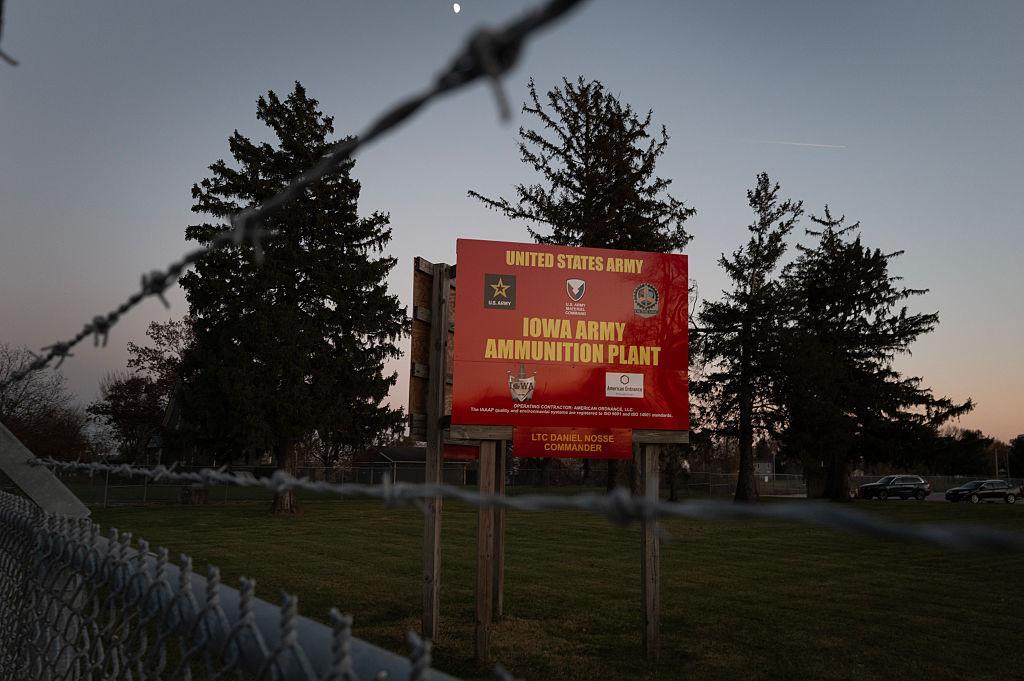
The Eighth Circuit on Monday refused to block the Army’s planned detonation of 68 drums of degraded lead azide at the Iowa Army Ammunition Plant, denying an emergency request from environmental groups and lifting the temporary hold it had placed on the EPA permit behind the operation. The ruling clears the way for the Army to proceed, but it does not decide the groups’ broader challenge.
Judges Shepherd, Grasz and Justin D. Smith issued the unsigned opinion in Iowa Environmental Council v. EPA, No. 26-3374. The council and the Sierra Club, represented by Earthjustice, had asked the court to freeze the emergency hazardous-waste permit the EPA issued Nov. 13. The panel acknowledged the plan’s dangers but sided with the agency for now.
The Army says the detonations will go ahead Wednesday morning, Nov. 25. Acting Army Secretary Adam Telle said the decision had the unanimous backing of the agencies involved and the support of Iowa Gov. Kim Reynolds. Earlier Monday, President Donald Trump said he had ordered the Army to wait until the appeals court agreed, and the coverage reviewed does not say whether that instruction still stands.
"mindful of the very real risks
— Eighth Circuit panel opinion, Nov. 23, 2026
The Army found in March that changes in the storage solution had let the lead azide recrystallize, making it more sensitive to shock and friction. The material, nearly five tons, sits in earth-covered magazines at the Middletown plant.
The EPA’s Nov. 13 permit allows continued storage and, for the first time, detonation in place inside those magazines. It runs through Feb. 11, 2027. The groups filed their motion last week, and the court entered a one-sentence administrative stay on Nov. 20 while it considered the request.
The Army first set the blast for Nov. 20, then moved it to Nov. 23 and again to Nov. 25, citing weather and time to put safeguards in place.
Why the Panel Thinks the Permit Will Likely Hold Up
The court treated the request like a bid for a preliminary injunction, with likelihood of success the weightiest factor. It concluded the groups were unlikely to show the permit was arbitrary, pointing to its conditions: containment barriers, weather restrictions, advance public notice, updated air-dispersion modeling, environmental monitoring, soil and surface sampling that begins within 24 hours of the blast, and a remediation plan.
On alternatives, the Army had weighed on-site chemical treatment, closed-chamber thermal treatment, moving individual drums and detonating in place. Its explosives experts judged that disturbing the degraded material risked an uncontrolled explosion, and the panel held the EPA could reasonably rely on that assessment.
The 45-Day Comment Rule and a Choice Between Two Explosions
The groups argued emergency permits still require 45 days of public comment. The panel read the regulations as a whole and held the full period is not a prerequisite when it would clash with the emergency. It added, without deciding, that a military-function exception in the Administrative Procedure Act might also matter.
On harm, the court agreed the detonation will bring environmental and health risks, a point both sides shared. But it framed the choice as a planned, controlled detonation versus an uncontrolled one, noting that freezing temperatures could set off a chain reaction. A controlled blast allows weather timing, advance notice and immediate cleanup.
What the Ruling Decides and Leaves Open
Here is where the case stands as of Nov. 24.
✓ Emergency stay motion denied; the Nov. 20 administrative stay is lifted
✓ The groups’ petition for review of the EPA permit is still pending
✓ The court did not rule on the Army’s separate emergency-exclusion notice
✓ The Army is not a party to the case
✓ The Army says the detonation is set for Wednesday morning, Nov. 25
The order addresses emergency relief only, not a final judgment on the permit.
A Second Legal Route the Court Left Alone
On Nov. 21 the EPA told the court the Army intends to invoke a federal hazardous-waste exclusion for emergency ammunition and explosives, which would permit detonation without the challenged permit. An explosives specialist made the required threat determination, according to the notice. The panel expressly declined to address it, because the Army is not a party and the stay sought targeted only the EPA’s permit.
Wednesday’s Blast and the Questions That Remain
Illinois officials are preparing as if the detonation will happen Wednesday, though current weather data suggest the plume is not expected to reach the state. Residents there are advised to stay indoors on blast day and keep windows closed for 24 hours.
The environmental groups warn that lead dust could settle on nearby homes and farmland. Iowa Gov.-elect Rob Sand did not explicitly endorse the detonation and called for more public information.
extensively mitigated, carefully controlled detonation— Acting Army Secretary Adam Telle, in a statement on X
For now, the appeals court has let the permit stand while the lawsuit continues. Watch for the Army’s exact timing and plume maps, any filing on its emergency exclusion, and whether the president’s earlier instruction to hold off still applies.
Sources
- U.S. Court of Appeals for the Eighth Circuit: opinion in No. 26-3374, November 23, 2026 (via Justia)cases.justia.com(opens in a new tab)
- Earthjustice: emergency motion to halt planned detonation at ammunition plant in Iowaearthjustice.org(opens in a new tab)
- Iowa Public Radio: Court lifts administrative stay, allowing lead azide detonation to move forwardiowapublicradio.org(opens in a new tab)
- CBS 2 Iowa: Army confirms Wednesday morning detonation of degraded lead azide in Middletowncbs2iowa.com(opens in a new tab)
- Illinois EPA: Iowa Army Ammunition Plant updates, November 23, 2026epa.illinois.gov(opens in a new tab)
- CBS News Chicago: Lead azide detonation paused after lawsuits are filedcbsnews.com(opens in a new tab)
- CBS News: Army plans to carry out detonation at Iowa plant on Wednesdaycbsnews.com(opens in a new tab)