
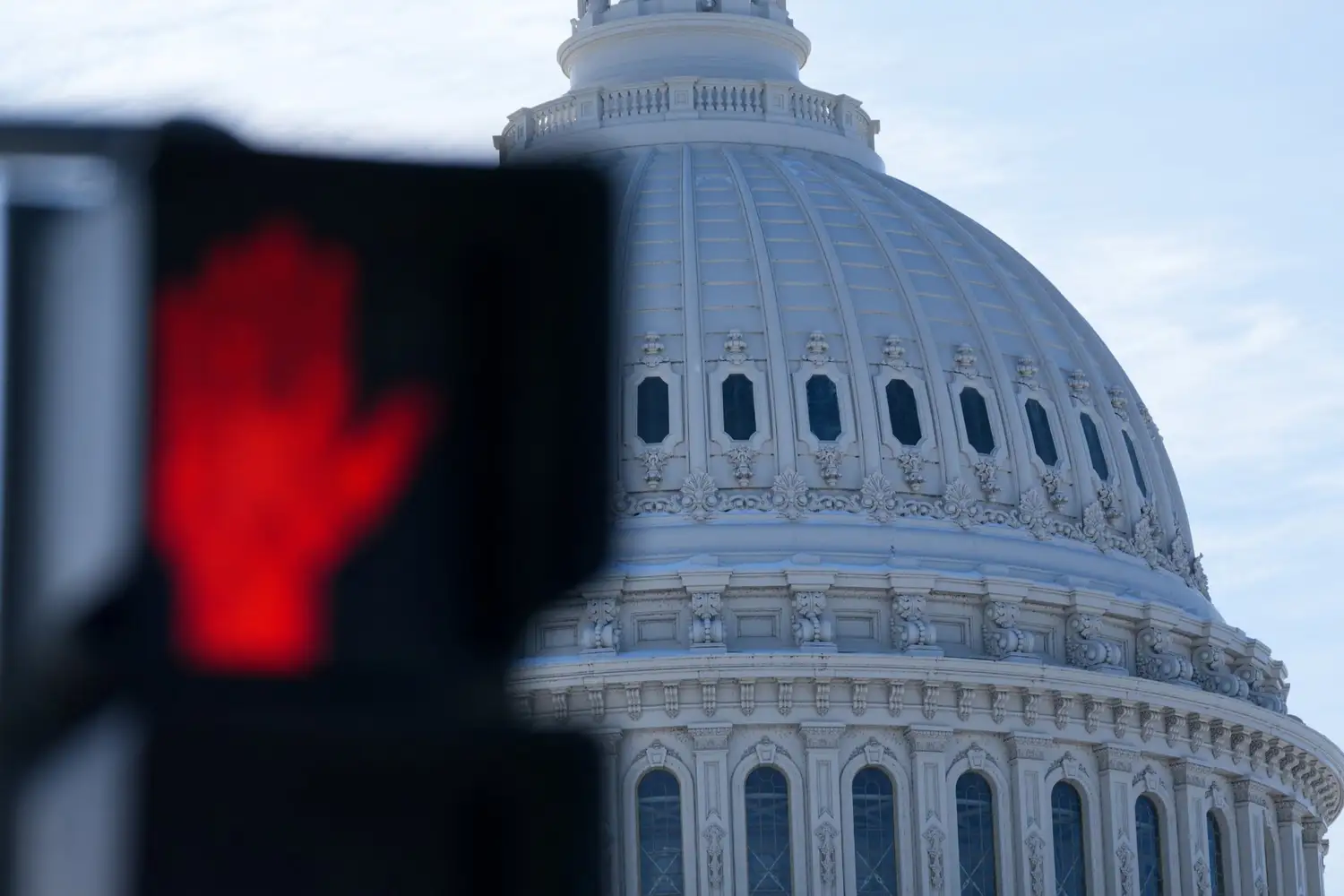
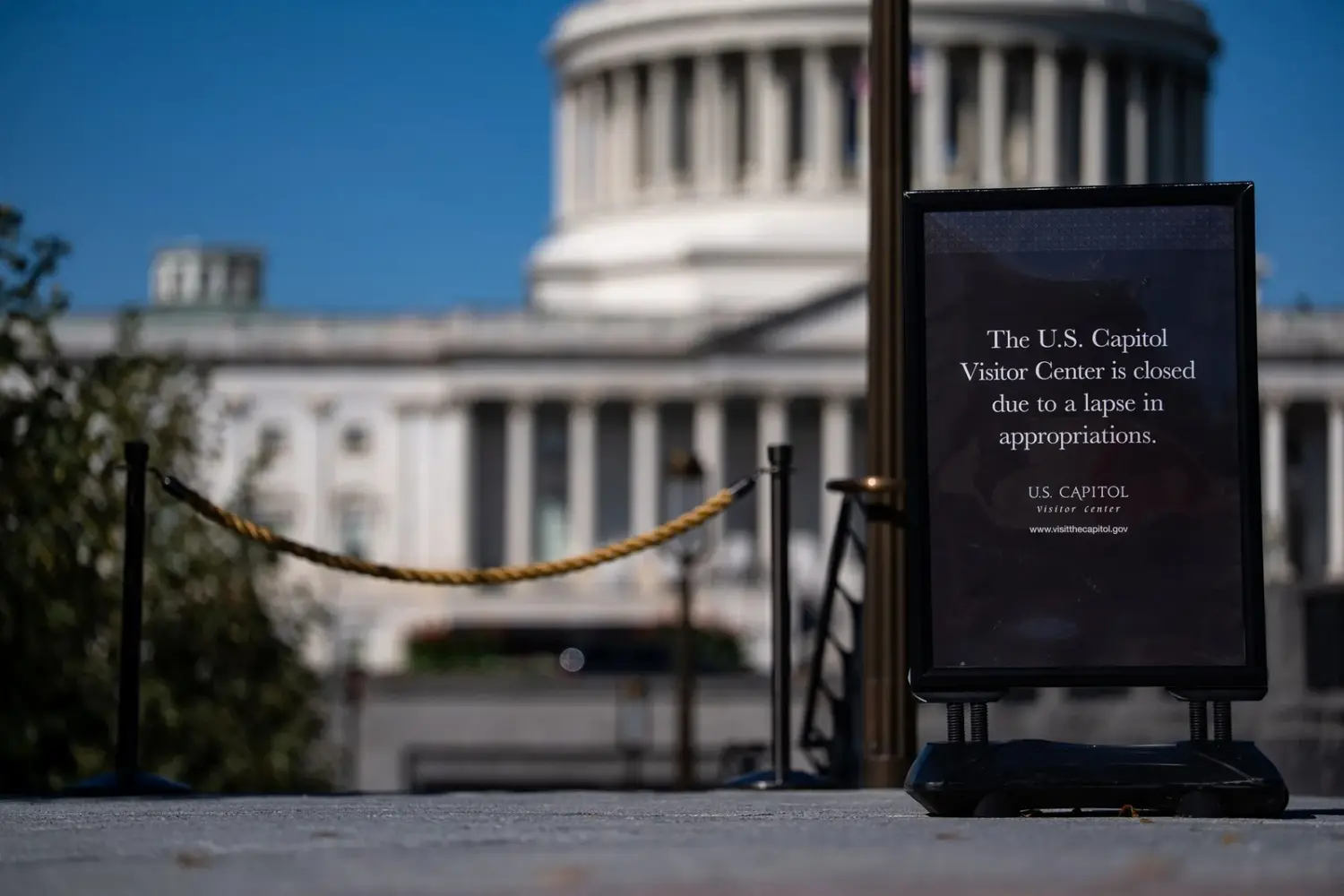
Dozens of federal agencies saw their funding lapse at 12 a.m. Saturday, kicking off a partial government shutdown after the Senate passed a funding package late Friday.
The Senate approved the deal hours before the deadline following a bipartisan agreement, but the package still needs House approval. The lower chamber is expected to return to Washington on Monday.
Democrats reached an agreement with the White House after objecting to funding for immigration agencies. It includes passing five long-term spending bills while extending Department of Homeland Security funding for two weeks to allow negotiations on reforms to immigration enforcement.
"The only thing that can slow our Country down is another long and damaging Government Shutdown. Hopefully, both Republicans and Democrats will give a very much needed Bipartisan 'YES' Vote.
— President Donald Trump
House Rules Committee is scheduled to consider the Senate-passed funding package on Monday at 4 p.m. ET. If it advances, a procedural vote on the rule would follow, though some conservatives have warned they may withhold support unless demands are met.
Speaker Mike Johnson may need to rely on a simple majority through the Rules Committee route. Suspension of the rules (requiring two-thirds) is unlikely without Democratic help, as Democrats have signaled they won’t support it.
House Minority Leader Hakeem Jeffries and Speaker Mike Johnson held a call Saturday. Democrats conveyed they won’t assist on suspension, meaning Johnson will likely need a Rules Committee path.
Senate Passage and Democratic Demands
Senate Majority Leader John Thune secured a time agreement after Sen. Lindsey Graham lifted his hold following assurances of future votes on sanctuary city legislation and lawsuits related to Jack Smith’s investigation.
Senate Majority Leader Chuck Schumer emphasized Democrats’ unified stance: no long-term DHS funding without strong ICE reforms, including body cameras, judicial warrants, and ending roving patrols.
Shutdown Impact and Next Steps
Affected agencies (Defense, Homeland Security, State, Treasury, etc.) were directed by OMB to begin orderly shutdown preparations. Agencies with prior funding (Justice, VA, FDA, EPA) remain unaffected.
Key Developments
The shutdown could be short-lived with minimal effects if the House approves early next week. There is little appetite for a prolonged shutdown like the 43-day one in 2018–2019.
✓ Senate passed funding package 71–29 late Friday
✓ House returns Monday; Rules Committee meets at 4 p.m. ET
✓ DHS funding extended two weeks for reform talks
✓ Democrats demand ICE accountability measures
Senate rejected several amendments before final passage, including proposals on ICE funding, foreign aid, and other earmarks.
What Happens Next
The House is expected to act quickly Monday to avoid prolonged disruption. Negotiations on DHS reforms will continue over the two-week extension.
Both parties appear motivated to resolve this swiftly, with significant political pressure to avoid a drawn-out shutdown ahead of key policy debates.
We have to deal with the issue of reining ICE and the Department of Homeland Security in with the fierce urgency of now.— House Minority Leader Hakeem Jeffries
The partial shutdown’s impact remains limited for now, but the coming days will determine whether Congress can finalize funding and move forward with DHS reform talks.
State and local officials continue to monitor developments closely.