
Federal court documents made public this week contain a startling admission: attorneys for Immigration and Customs Enforcement have acknowledged that an internal agency memo they previously cited to defend the mass arrest of immigration court attendees never, in fact, provided that authorization. The disclosure came in filings submitted to a federal judge in New York overseeing a civil rights lawsuit brought by the New York Civil Liberties Union and allied advocacy organizations.
The admission surfaced through the office of Jay Clayton, the U.S. federal attorney, after an ICE attorney contacted that office to clarify that the May 2024 agency memo prosecutors had relied on throughout the litigation did not — and never had — authorized the specific enforcement actions being challenged in court.
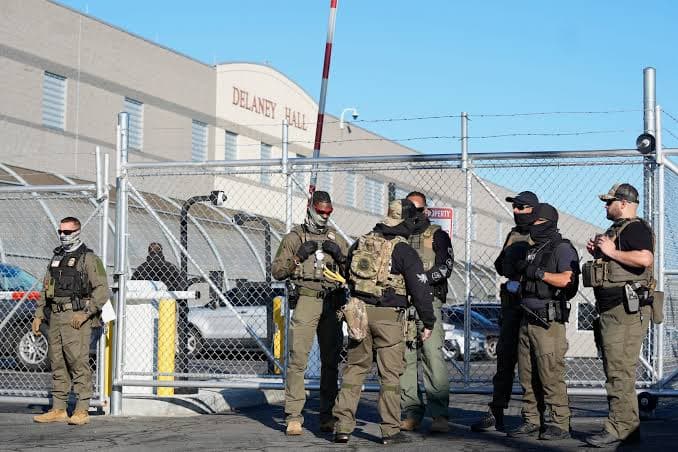
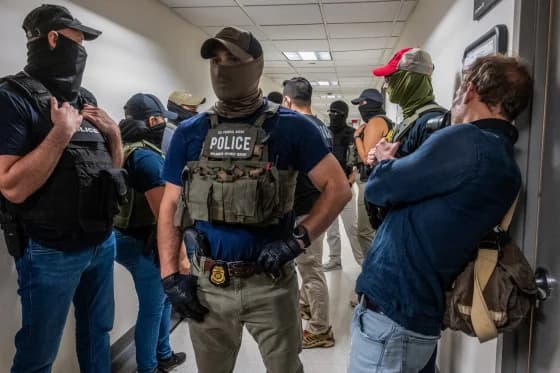
For months, ICE had been pointing to that memo to defend a practice that has drawn fierce condemnation from immigration attorneys and civil rights advocates nationwide: stationing agents outside immigration court buildings and arresting individuals the moment they exit after hearings, including people who had appeared voluntarily in an effort to secure lawful status.
The New York Daily News was first to report on the contents of the new filings. The NYCLU, which filed the lawsuit alongside other civil rights organizations, called the development a significant turning point in the case.
"The implications of this development are far-reaching. Defendants have continued arresting noncitizens at their immigration court hearings, resulting in their detention — often in facilities hundreds of miles away.
— Amy Belsher, Attorney, New York Civil Liberties Union
In a letter addressed to U.S. District Judge Kevin Castel, who is presiding over the case in New York City, NYCLU attorney Amy Belsher laid out the cascading consequences of the government's reliance on a memo that its own lawyers now concede provided no legal cover for the challenged arrests.
Belsher noted that because the court had previously declined to grant the plaintiffs preliminary relief — in part on the basis of the government's earlier representation about the memo's scope — ICE had gone on making arrests outside immigration courts during the intervening months. Many of those taken into custody were transferred to holding facilities far from the cities where their legal cases were pending, severing them from their attorneys and support networks.

The government's own assistant U.S. attorney, Tomoko Onozawa, wrote to the judge expressing regret over what she characterized as an error that had surfaced late in the proceedings, after both parties had committed substantial time and legal resources to the case. Onozawa maintained that the mistake had not been the result of carelessness on the part of the attorneys who had handled the litigation.
NYCLU Says ICE Never Produced a Valid Legal Basis for the Arrests
The NYCLU has been unsparing in its assessment of ICE's conduct throughout the course of the case. The organization argued that the agency had failed from the outset to present any legitimate legal justification for deploying agents at immigration court exits — characterizing the arrests as part of a broader enforcement posture under the Trump administration that has consistently prioritized detention numbers over adherence to due process.
Civil rights attorneys tracking the case said the admission is likely to carry consequences well beyond this single lawsuit. If courts accept that the arrests were carried out without valid internal authorization, individuals detained during this period may have grounds to contest the legality of their confinement, and potentially to challenge removal orders that followed.
Advocates have also underscored that the courthouse arrest strategy has had a deeply chilling effect on the immigration court system itself, discouraging people with genuine legal claims from appearing at scheduled hearings out of fear that simply showing up will result in their arrest.
A Practice With Sweeping Reach Across the Country
The scale of the enforcement tactic under scrutiny is substantial. ICE agents have carried out arrests outside immigration court buildings in cities across the United States, with federal data suggesting that thousands of people were taken into custody in this manner since the policy was significantly expanded in early 2025.
The courthouse arrest approach marks a notable departure from longstanding, if informal, norms in U.S. immigration enforcement. Federal agencies had historically observed a general practice of refraining from arrests at or near courthouses, grounded in the principle that the integrity of the judicial process depends on individuals being able to access courts freely and without fear of immediate detention. That norm has been steadily dismantled under the current administration's enforcement priorities.
Key Facts in the Case
The following details have been confirmed through court filings and statements from parties to the lawsuit as of March 31, 2026.
✓ ICE attorneys acknowledged a May 2024 internal agency memo did not authorize courthouse arrests
✓ That memo had been cited repeatedly by government lawyers in court to defend the detention practice
✓ Filings were submitted through the office of U.S. Federal Attorney Jay Clayton in New York
✓ The lawsuit was filed by the New York Civil Liberties Union and allied civil rights organizations
✓ U.S. District Judge Kevin Castel is overseeing the proceedings in New York City
✓ Thousands of immigration court attendees have been arrested under the challenged practice since 2025
✓ Many detainees were subsequently transferred to facilities far from their home cities and legal counsel
✓ The New York Daily News was first to report on the newly surfaced court filings
The case has emerged as one of the most closely watched immigration civil rights matters currently before the federal courts. Legal observers say the government's concession regarding the memo's scope is likely to significantly complicate ICE's defense of the broader policy going forward, and could accelerate calls from civil rights organizations for a court order halting courthouse arrests while the litigation continues to unfold.
A Chilling Effect on Those Seeking Legal Status
At the heart of the civil rights concerns driving this lawsuit is a troubling dynamic: people who are legally required — or strongly incentivized — to appear before immigration courts are being arrested the moment they comply with that requirement. Immigration attorneys say that some clients have begun declining to attend hearings even in circumstances where appearing would improve their legal standing, a direct consequence of ICE's sustained presence at courthouse exits.
The NYCLU has argued that this practice effectively weaponizes the immigration court system against the very people it exists to serve, converting a legal proceeding designed to adjudicate status into a mechanism for detention and removal.
The government's own admission that the memo underpinning the policy never provided the claimed authorization may now compel the court to take a harder look at whether the practice can legally continue in its present form while the case remains unresolved.
ICE and the Department of Homeland Security had not issued any public statement addressing the memo disclosure as of the time of publication. The case is expected to return before Judge Castel in the coming weeks, with the NYCLU widely anticipated to renew its request for a preliminary court order halting courthouse arrests.
We deeply regret that this error has come to light at this late stage, after the parties have expended significant resources and time to litigate this case.— Tomoko Onozawa, Assistant U.S. Attorney
The revelation adds a significant and troubling new dimension to the national debate over immigration enforcement, due process, and the integrity of the judicial system. For the thousands of people arrested outside immigration courts under a policy now acknowledged to have lacked clear internal legal authorization, the path forward — and the possibility of any meaningful legal remedy — remains deeply uncertain.