
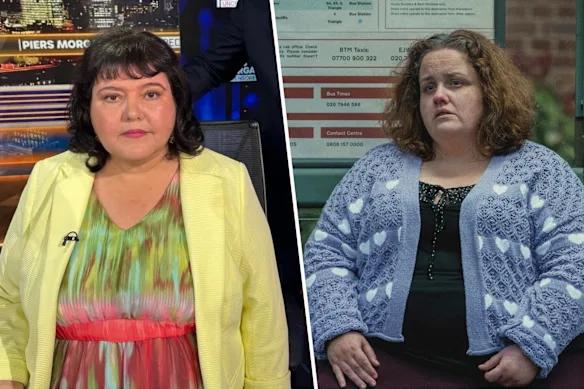
A Scottish former lawyer who says she is the real-life inspiration for the stalker in Netflix's Baby Reindeer has refiled her defamation lawsuit against the streamer, restarting a case that sat idle for more than a year while Netflix pursued an appeal.
Fiona Harvey filed a First Amended Complaint on Tuesday in the U.S. District Court for the Central District of California, according to TheWrap. The new filing is about 20 pages longer than her original June 2024 complaint and adds information that surfaced after the case began. TheWrap reported that Harvey argues Netflix promoted the series as a true story while knowingly including fabricated events and criminal allegations about her.
The refiling follows an Oct. 6 order from the Ninth Circuit Court of Appeals, which told Netflix it had 14 days to dismiss its appeal or explain why the court had authority to hear it, and put briefing on hold. LBC later reported that the appeals court dismissed the appeal, a step that clears the way for the case to move toward trial in Los Angeles.
At the center of the dispute is a single question: what a viewer is entitled to believe when a show opens by telling them it is based on a true story. Harvey says the Martha character, played by Jessica Gunning, was recognizably her, and that scenes showing Martha convicted of stalking and jailed were false. She also points to depictions of a sexual assault, an attack with a glass, waiting outside the creator's home for up to 16 hours a day, and stalking a police officer.
Harvey has said she was never charged with stalking the series' creator, Richard Gadd. Netflix has denied that Martha is Harvey.
In September 2024, U.S. District Judge R. Gary Klausner refused to strike Harvey's core defamation claim under California's anti-SLAPP law, writing that the series appears to present itself as fact. Her negligence-based claims and request for punitive damages were dismissed at that stage, according to reports at the time.
Why Netflix's appeal ran into trouble
Anti-SLAPP motions are designed to end lawsuits aimed at speech on public issues early. When Netflix lost its motion, it appealed in October 2024, which paused the district court case and delayed a trial once planned for May 2025.
The legal landscape then shifted. In October 2025, the full Ninth Circuit ruled in Gopher Media LLC v. Melone that federal appeals courts generally cannot review the denial of a California anti-SLAPP motion before final judgment. Citing that decision, the court said in October 2026 that it might lack jurisdiction over Netflix's challenge. The question is procedural; the court has not ruled on whether Harvey's allegations are true.
What Harvey is asking for
TheWrap reported that Harvey seeks more than $50 million in actual damages, more than $50 million in compensatory damages that include mental anguish and lost business, and more than $50 million in profits from the series, along with punitive damages, attorneys' fees and interest. She has requested a jury trial. Her original suit sought at least $170 million.
Netflix argued earlier that her first complaint did not identify a provably false statement of fact. The amended filing appears aimed at that objection by spelling out specific scenes and claims.
What to know about the case
The filing resets the schedule in the district court, and Netflix has not yet publicly answered the new allegations.
✓ Harvey filed an amended complaint on Nov. 3, 2026
✓ The Ninth Circuit questioned its jurisdiction over Netflix's appeal on Oct. 6
✓ Judge Klausner's 2024 ruling on the core defamation claim remains in place
✓ No trial date has been announced
Netflix did not immediately respond to TheWrap's request for comment on the amended complaint.
What happens next
Netflix is expected to respond to the amended complaint, and the district court will need to set a new schedule before any trial date can be fixed.
Harvey's attorney, Richard Roth, has said Netflix is doing everything it can to avoid a trial. Netflix has argued that her allegations do not meet the legal standard for defamation.
The series premiered in April 2024, won six Emmy Awards and has drawn about 103 million views, according to TheWrap, which gives the case unusual weight for media and entertainment lawyers watching how courts treat "based on a true story" labels.
All allegations described here are claims made in court filings and have not been proven. This report is based on coverage from TheWrap, Law Commentary, Courthouse News Service and LBC.
Sources
- TheWrap: ‘Baby Reindeer’ Defamation Suit Reopens After Martha Inspiration Amends Complaint (Nov. 5, 2026)thewrap.com(opens in a new tab)
- Law Commentary: Netflix’s ‘Baby Reindeer’ Appeal Faces Dismissal (Oct. 7, 2026)lawcommentary.com(opens in a new tab)
- Courthouse News Service: Netflix must face defamation claim (2024 ruling)courthousenews.com(opens in a new tab)
- LBC: Baby Reindeer lawsuit will go to courtlbc.co.uk(opens in a new tab)