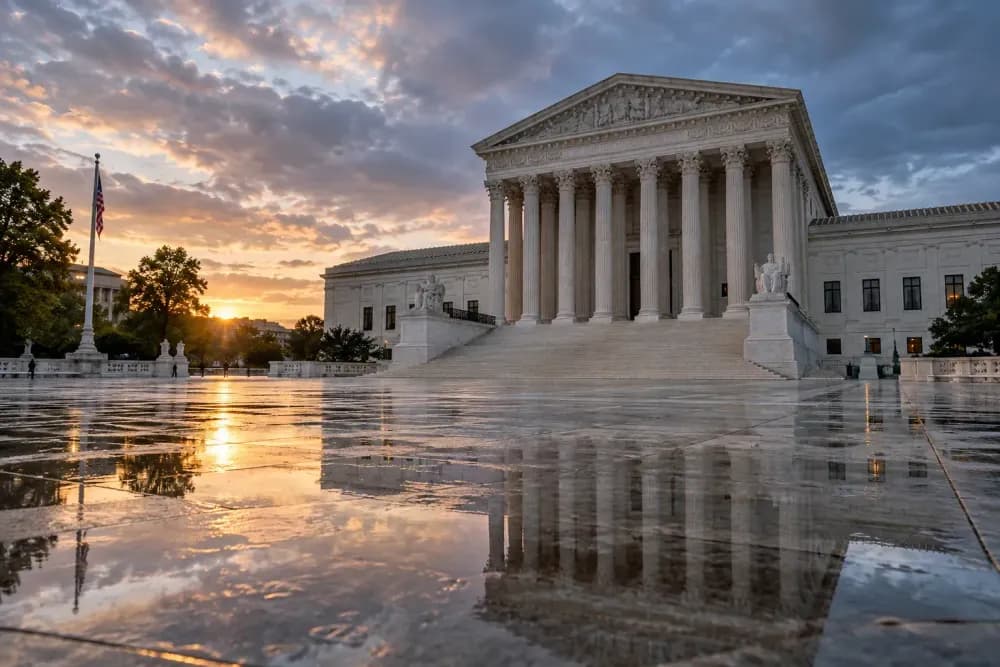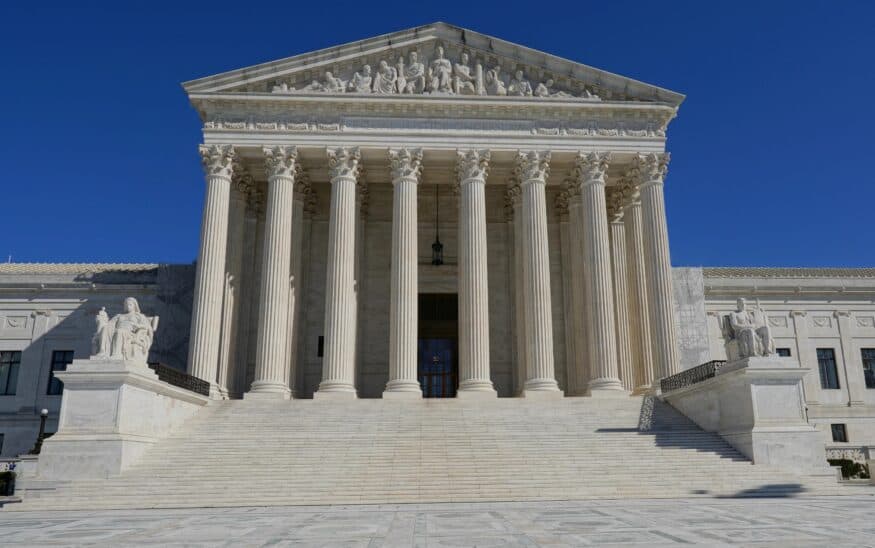

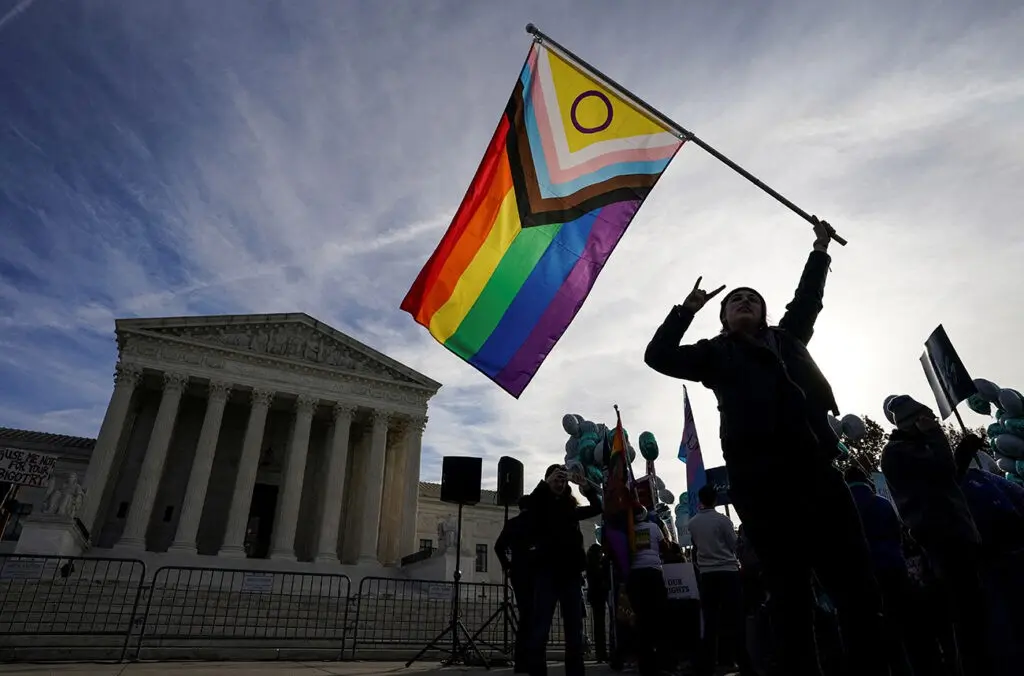
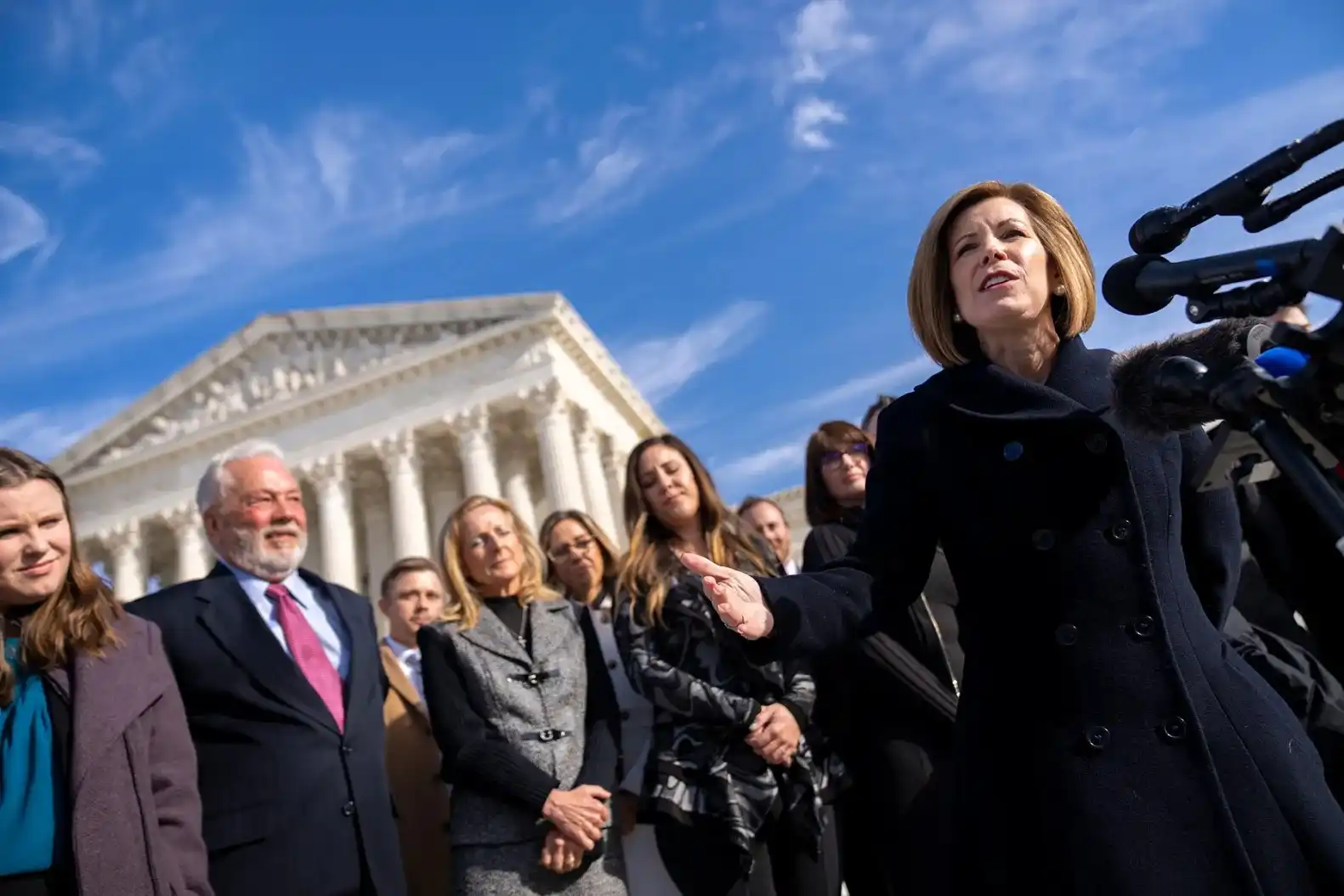
The U.S. Supreme Court on Monday declined to take up a closely watched case out of Massachusetts in which parents sued a public school district for supporting their child's gender identity without their knowledge, leaving intact a lower court decision that had sided with the school.
The justices offered no explanation for their decision not to hear the appeal, as is standard practice when the court turns away a case. The move effectively preserves a ruling by the Boston-based 1st U.S. Circuit Court of Appeals, which had upheld a lower court's dismissal of the lawsuit brought by Stephen Foote and Marissa Silvestri, parents of a student who attended Baird Middle School in Ludlow, Massachusetts.
The parents had argued that school officials crossed a constitutional line when they honored their child's request to use a different name and set of pronouns at school — without telling the parents. Their child, identified in court documents only as 'B.F.,' had begun identifying as genderqueer, a term used to describe individuals who do not align with traditional binary gender norms, around the age of 11.
According to court filings, the student asked school staff to use a chosen name and different pronouns while also requesting that teachers and officials continue referring to the child by their birth name and original pronouns when in contact with the parents. School personnel complied with both requests.
"Parents remain free to strive to mold their child according to the parents' own beliefs.
— 1st U.S. Circuit Court of Appeals, 2025 ruling
The parents, represented by the Alliance Defending Freedom — a prominent conservative Christian legal organization — contended that the school's conduct amounted to a violation of their fundamental rights under the 14th Amendment's Due Process Clause. The Supreme Court has long recognized that parents have a constitutionally protected interest in directing the upbringing and care of their children, and Foote and Silvestri argued those rights were undermined when the school withheld critical information about their child's social transition.
Their lawsuit, filed in 2022, named the town of Ludlow, the Ludlow School Committee, and several school officials as defendants. A federal district court dismissed the case that same year, finding that the parents had not made a sufficient legal claim. The 1st Circuit affirmed that dismissal in 2025, reasoning that the school's use of a different name and pronouns for the student did not constitute medical treatment, and therefore did not infringe on the parents' right to direct their child's healthcare.

The appeals court also emphasized that the school's deference to the student's privacy wishes did not prevent parents from exercising their authority at home. The policy, the court noted, simply allowed students to express their identity at school without fear of backlash, and placed no legal restraint on what parents could do or say outside the school environment.
A Broader National Debate
The case is far from an isolated dispute. Across the United States, school districts, state legislatures, and courts have been grappling with how to balance the privacy interests of transgender and gender-nonconforming students against the rights of parents to be informed about their children's lives at school. The outcomes have varied dramatically depending on jurisdiction.
Just last month, on March 2, 2026, the Supreme Court took a notably different approach in a California case, blocking a state policy that would have limited the circumstances under which school officials could share information about a student's gender identity with parents without the child's permission. That decision signaled that at least some justices are willing to intervene in this arena — though Monday's denial suggests the court may be selective about which cases it uses to set precedent.
The Supreme Court also declined to hear similar parental rights challenges originating from Wisconsin and Maryland back in 2024, indicating a pattern of allowing lower court decisions in this area to stand rather than using the high court's docket to resolve the national debate definitively.
Legal Arguments and Parental Rights
At the heart of the Ludlow case is a question that courts have been reluctant to answer directly: does a school's decision to honor a student's gender identity — including using a different name or pronouns — without parental notification constitute a violation of constitutional parental rights?
The 1st Circuit's answer was essentially no, at least on the facts presented. The court was not persuaded that the school's use of affirming language was equivalent to providing medical care, which is the area in which parental rights receive the strongest constitutional protection. The parents had argued that facilitating a 'gender transition' — even a social one limited to names and pronouns — was inherently a medical matter that required their involvement and consent.
The Alliance Defending Freedom, in its Supreme Court filings on behalf of the parents, pushed back hard against that reasoning. The organization argued that by actively concealing the child's evolving gender identity from the family, school officials effectively inserted themselves into a deeply personal family matter and disrupted the parent-child relationship in ways that carry lasting consequences.
Key Facts
Case name: Foote v. Ludlow School Committee, No. 25-77.
Student identified as genderqueer at approximately age 11.
School honored student's request for confidentiality from parents.
Lower courts found no constitutional violation by the school.
✓ Supreme Court issued no written explanation for denial
✓ Alliance Defending Freedom represented the parents
✓ 1st Circuit ruled school policy did not constitute medical treatment
✓ Similar challenges in Wisconsin and Maryland also rejected in 2024
Where This Leaves Schools and Families
With the Supreme Court declining to step in, school districts in the 1st Circuit — which covers Maine, Massachusetts, New Hampshire, Puerto Rico, and Rhode Island — can take some comfort that their gender-supportive confidentiality policies are on solid legal ground, at least for now. Nationally, however, the picture remains murky.
The high court's broader track record on transgender issues has been mixed. In June 2025, the justices upheld a Tennessee law restricting gender-affirming medical care for minors, a significant win for states seeking to limit such treatments. A ruling on whether states can bar transgender athletes from female sports teams is also still pending, and that outcome could further shape the legal landscape for gender-related policies in schools.
Meanwhile, the Trump administration has been actively pushing to roll back protections for transgender individuals across federal agencies and institutions, adding political pressure to an already charged legal environment. Executive orders and agency guidance have sought to redefine gender in binary terms for federal purposes, with implications rippling through education, healthcare, and employment policy.
The deference by school officials to the wishes of students about whether to disclose their gender identity to parents allows the children to express their identity without worrying about parental backlash.— 1st U.S. Circuit Court of Appeals
For Foote and Silvestri, Monday's decision marks the end of a legal road that began in 2022. Their case drew national attention and became a rallying point for parental rights advocates who argue that schools have overstepped their bounds in matters of gender and identity. While the Supreme Court's silence is not a ruling on the merits, it leaves the 1st Circuit's reasoning in place — a result that supporters of student privacy are calling a significant, if quiet, victory.
The debate itself, however, shows no signs of quieting. With multiple cases working their way through federal courts, fresh state legislation emerging regularly, and a deeply divided national conversation showing no signs of resolution, the question of how public schools navigate gender identity between students and their parents is likely to land before the high court again — perhaps on terms that make it harder to decline.